La Aurora’s Dominican factory bridges cigar history and modern innovation. Since its founding in 1903, the León family has committed to craft and tradition to create a storied band. Now, it’s taking it up a notch.
All images provided by La Aurora
There’s a museum-style exhibit just inside the main entrance of the La Aurora cigar factory in Santiago de los Caballeros, Dominican Republic. One of the most striking artifacts on display there is a cigar tube. Tapered at both ends and opening on a hinge that runs along part of the length of the tube, it looks — all at once — like the past and future of cigars. Like a spaceship in one of those 1950s Martian invasion movies. It’s quaint, yet novel. It’s a relic, yet cutting edge.
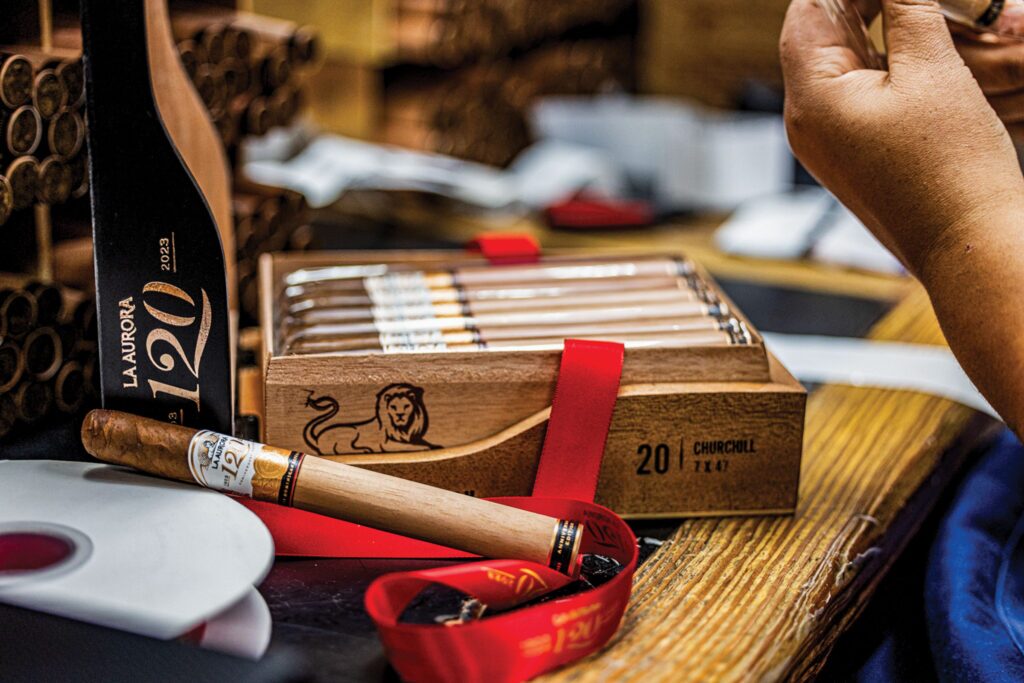
“I noticed this tube in there that was from 1903-ish,” said Ed McKenna, CEO of La Aurora USA, of his first encounter with that tube on display at the factory. “It just kind of clicked. Holy cow. This has been around for 120 years. A lot of brands say stuff like that, right? But that’s real. That’s a piece of metal that was honed back then to hold a shape that we’re still making today. The authenticity of this brand is amazing.”
For the last five years or so, La Aurora has been working to move into the spotlight of the cigar world, intent on reminding you of its claim to be one of the industry’s cornerstone legacy brands.
A real legacy
That hinged tube — a version of which was created for the 2023 release of the company’s 120th Anniversary cigar — jumped out at me the moment I walked into the La Aurora factory’s museum-style exhibit, not just because it’s so unusual, but because my first cigar was a La Aurora Preferidos Ruby (which features a Brazilian maduro wrapper). It was a birthday gift from a friend in 2004. Ever since, the La Aurora brand has been imprinted in my mind, and I was fascinated enough by the sense of tradition and innovation the brand exuded to explore more of the Preferidos line. The empty ruby tube, along with a Sapphire tube that I was gifted the following year by the same friend, is still in a shoebox in my house with other mementos.
Despite the long tradition and unique packaging that grabbed my attention, smokers haven’t always felt the same affinity for the La Aurora brand story as they do for other major players in the market. And yet, research commissioned by La Aurora shows not only that the brand is not punching above its weight in terms of brand awareness, but also that people’s perception of the brand is generally positive.
“We have 50 different brands that we threw out there [in focus groups]. I was surprised to find that we were above a lot of brands that I know are bigger in the category at this moment,” McKenna said. “But from an awareness perspective, people know [La Aurora] and they generally have a very positive opinion of it. There is something to build around here. We just gotta give it the right love. It’s like a plant that just needs more water and fertilizer now to grow the way it needs to, because it’s been neglected.”
“The brand itself wasn’t necessarily top of mind for a lot of consumers,” said La Aurora Brand Manager Elvis Batista of his interactions with smokers during his time on the retail side of the business years ago. “If you asked consumers about brands, it wouldn’t have been in the top 10 that came to their minds. And if you asked them to think specifically about Dominican cigars, maybe it would come up, but it wasn’t one of the top three or four if you have asked a consumer.”
Fortunately for La Aurora, the company’s rich past can’t be undone, so it’s always available to nourish the brand’s future.
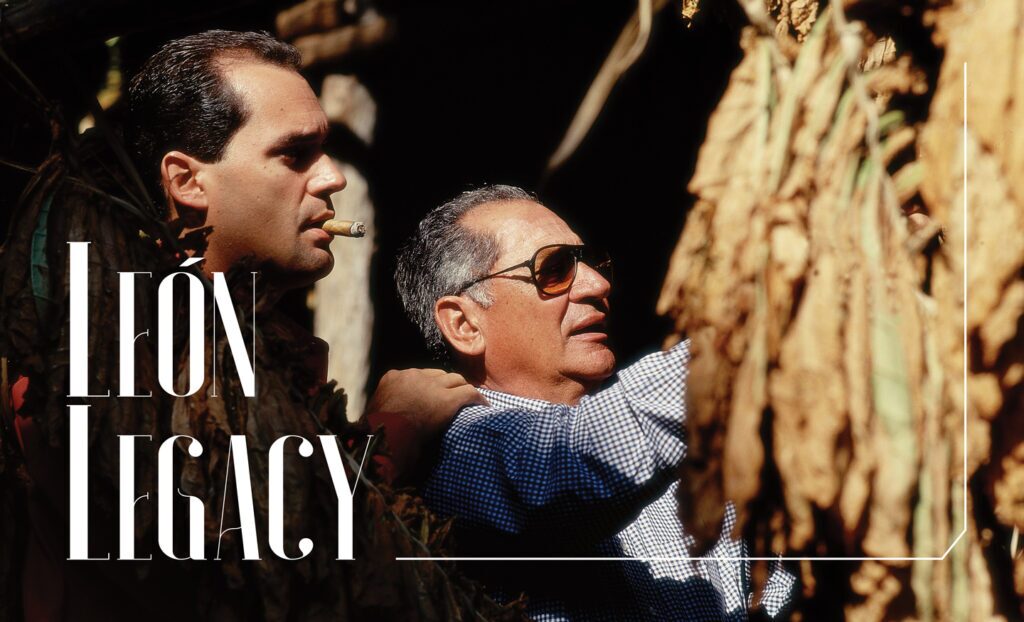
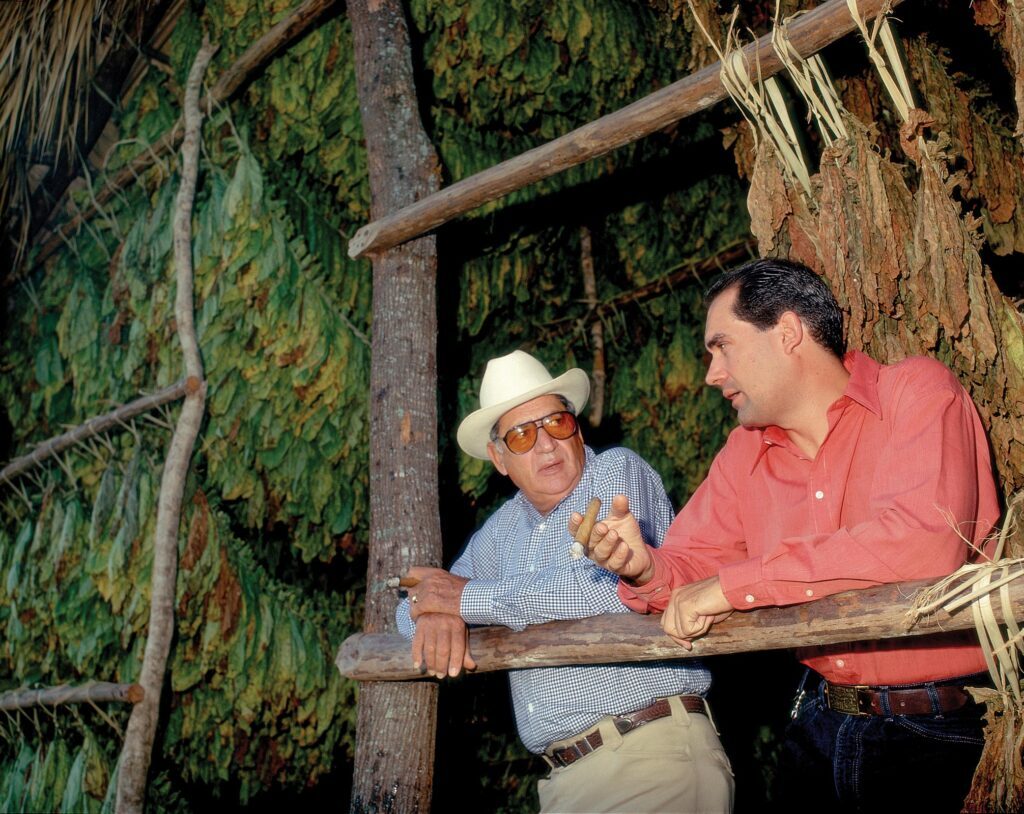
La Aurora was born in 1903 with Preferidos — which remains the company’s halo brand — when 18-year-old Eduardo León Jimenes, son of a second-generation tobacco grower, opened the La Aurora factory in Guazumal, a neighborhood on the outskirts of Santiago de los Caballeros, Dominican Republic. By 1912, things were going well enough to move the factory to the Calle Independencia in the heart of the city. This is when the company adopted the lion as its emblem, (an apt symbol, as León is Spanish for lion), though it wouldn’t make any appearances on cigar bands until 1926.
The family and its business endured, not only clearing the usual hurdles over which so many other businesses stumble, enduring through the 31-year dictatorship of Rafael Trujillo, which was particularly hostile to private businesses that represented competition to Trujillo’s own ambitions of enriching himself with a state tobacco monopoly.
In the course of the nearly 125 years since the first La Aurora factory opened, the family business expanded beyond tobacco.
“In the Dominican Republic, La Aurora is the place to work,” McKenna said. “It wins all these awards every year, competing with every other industry as well. Grupo León own banks. They owned Presidente beer, they owned all these things. They are woven into the fabric of Dominican society.” E. León Jimenes is still a minority owner of Cervecería Nacional Dominicana, producer of Presidente, in partnership with Anheuser-Busch InBev.
La Aurora was the cigar division of the holding company E. Leon Jimenes until 2011, when Guillermo León, who had been running the cigar division of E. León Jimenes, bought the brand. He has been the president of the cigar company ever since, representing the fifth generation of the family in the tobacco business and the third generation to head La Aurora.
“The León family has always been the epitome of Dominican excellence,” said Batista, who joined the company in 2023 after working in a variety of roles with La Galera Cigars, Blackbird Cigars, and some major South Florida retailers. “Everything they do — Presidente, the banks, the insurance companies — everything they’ve owned and done has been to promote Dominican excellence in a certain way. When you’re from the country and you understand the culture, you know what that means. They represent that higher standard of Dominican excellence.”
Getting the gringos
La Aurora has set up an interesting challenge for itself: walk a tightrope balancing the desire to bring smokers into the rich family history of a Dominican tobacco institution while recalibrating the portfolio to appeal to what La Aurora believes are the demands of the typical American palate. Machine-made cigars, flavored cigars, and even cigarettes are a sizable portion of the La Aurora business. But the commitment to the renaissance and lasting relevance of the León Jimenes premium cigar legacy shows in the fact that production spiked from about 10 million to 13 million handmade cigars about three years ago.
It’s about more than manufacturing volume, though. The qualitative nature of the company’s new direction is encapsulated in the La Aurora Family Creed Series, which was announced in April. The idea is to broaden La Aurora’s horizons by incorporating tobaccos, especially non-Dominican tobaccos, that you might not have previously associated with the brand and present those blends as part of a retelling of La Aurora’s markedly Dominican story.
The name of the Family Creed Series refers to the real León family creed that is printed on the inside of every cigar box lid:
We are a proud family of rural origin, forged with persistent work under a strong sun. Humble and honest people. People who, along with cultivating the land, cultivate love, happiness and faith.
For this I promise:
To work for the common good, maintaining integrity, authenticity, frankness, perseverance, honesty and passion for excellence, which distinguishes us as a successful family. A family which values and loves its roots, and which yearns to preserve that legacy that, by the grace of God, we have received from our parents. This intangible inheritance is what we pass on to our children, with passion and conviction. That is our greatest wealth.
“The Family Creed has helped guide La Aurora since my father and uncles created it,” León said. “Made to help us stay true to who we are and where we come from, the creed intends to preserve the lessons my grandparents instilled in them. For us, it’s more than a set of principles; it’s our compass. My personal mission is to pass the same values to my family and the generations to come.”
Each blend in the Family Creed Series will take its name from the creed itself, with the debut cigar being called Fuerte Sol (Spanish for “strong sun”). The first sentence of the creed is also printed, in its original Spanish, on a sleeve that dresses most of each cigar between the primary band and the foot band. It features San Andrés wrapper, Nicaraguan binder, and a filler blend that includes tobaccos from Nicaragua, Pennsylvania and the Dominican Republic.
“I used to develop my blends according to directives from Guillermo and our internal team,” said La Aurora master blender Manuel Inoa. “Now we are seeing things in a different way. Those focus groups we did have taken us out of our comfort zone. What are Americans looking for? What does that market seek? That guided us on sizes of cigars as well as the blends we should be developing. That’s why when you look at the blend for Fuerte Sol, it’s a blend that’s totally different from what is usually made at La Aurora.”
–
–
–
–
–
–
–
Adjusting La Aurora’s blending approach to put additional emphasis on appealing to American palates has taken some getting used to. Especially at the start of this process, the blends that the company was betting so heavily on were well outside of the typical La Aurora tasting panelist’s personal preferences — so much so, Inoa said, that even he and León had their doubts about how Fuerte Sol would be received at its trade show debut.
“It was a huge hit,” Batista recalled. “Everybody that smoked it at the PCA trade show was like, ‘I can’t even believe this cigar’s made by La Aurora.’ That’s exactly the answer we were looking for.”
“The big challenge has really been here in the Dominican Republic,” Inoa noted. “Every year we do a retraining and reestablish standards for tasting and evaluating cigars, because we do a daily panel here to taste products and make sure that the profiles are right. One of our panelists came to me and said about a particular cigar, ‘This cigar is good, but it’s not the sort of thing I like.’ And you know what? That cigar turned out to be the one that got the best ratings from American cigar reviewers. There is a gap that we are solving for between the profiles of the cigars we are developing and the subjective preferences of the panelists who are helping create those blends.”
The adjustment also requires that La Aurora’s blenders and tasters learn to speak American smokers’ language.
“I have had the opportunity to smoke a lot of cigars from around the world,” Inoa said. “They aren’t really what we’re accustomed to. It took me about two or three years to adapt. Why do people seek this out? What do they see in these cigars? Why are they always talking about strength? At first I thought that they were referring to power, to nicotine, when they mentioned strength. But no, it’s the flavor intensity that they’re after. It’s easy to make a cigar that packs a nicotine punch. The hard thing is to blend for those robust notes that the market is after.”
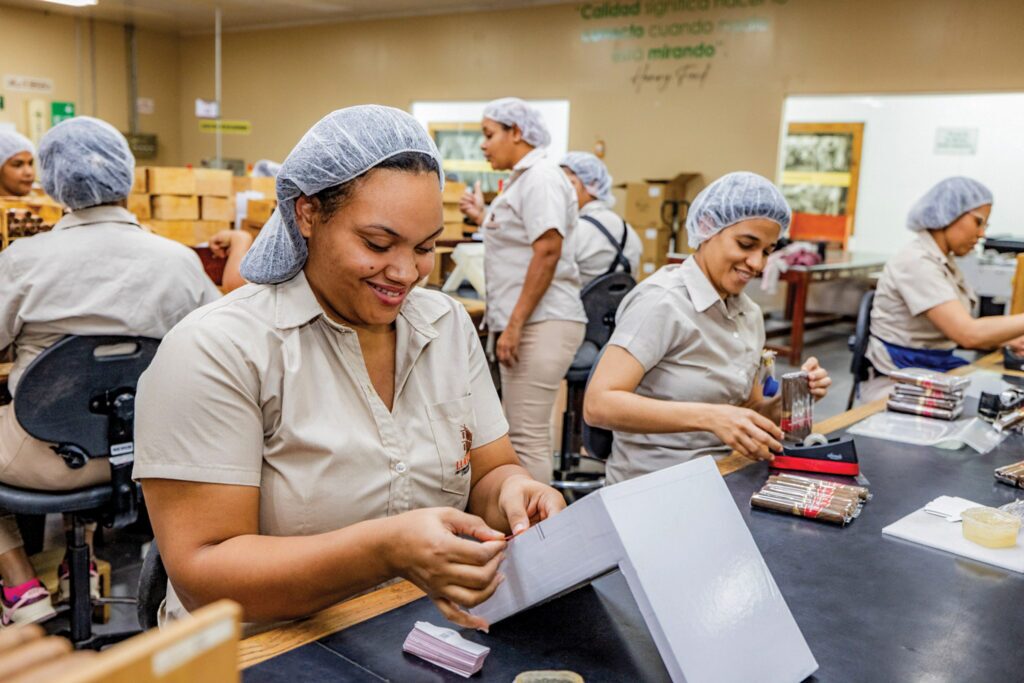
Rejiggering La Aurora to meet these market demands has also required tangible changes at the factory. Many of the tobaccos that will feature prominently in the brand’s portfolio moving forward,like the ones that make up the Fuerte Sol blend, were used sparingly, if at all, before this shift. That necessitated tapping new sources of tobacco, starting with leased farmland in Nicaragua’s Estelí and Jalapa regions, while expanding facilities for fermentation and aging. Growth also meant bringing new tools into the La Aurora factory, like those necessary to produce box-pressed cigars such as the Fuerte Sol, which will be more of an emphasis for the brand moving forward.
It doesn’t mean that La Aurora is shedding the cigars that have been core to its identity. For instance, La Aurora’s premium cigar product strategy will continue to rely on Cazadores as its most affordable line, while its Time Capsules and 107 Tobaccos of the World offer smokers a way to hone their palates with a variety of tobaccos before graduating to Family Creed, Preferidos, anniversary releases, and other more limited cigars.
“Preferidos is the heart and soul of the company,” McKenna said. “Right now we’re trying to reformulate the double barrel aged tubo that came out in a limited quantity several years ago. The story of Preferidos has to stay kind of very much in the wheelhouse of what marketing’s gonna do to tell the story of the brand.”
Distilling the family story
In 2013, León showed up to the International Premium Cigar and Pipe Retailers Association trade show, now known simply as PCA, with something new up his sleeve: a super premium rum bearing his family’s name.
“In 2013 we launched the E. León Jimenes 110 Aniversario rum, celebrating 110 years since the founding of La Aurora,” said La Aurora sales and marketing director Iturbides Zaldivar. “The initial focus of that E. León Jimenes rum was to pair it with cigars. It’s a Dominican rum made with 100% sugarcane. The process took three years. We ended up with a great product and began to promote it not just as a cigar pairing but plainly as a super premium rum.”
The 110 is delicious, and even on paper, that it gets 10 years of true age — eight years in Bourbon barrels and two years in French oak barrels — makes it a special spirit. Made at the Barceló distillery, it took another three years or so to develop this product before it hit the Dominican market, and it was well-received enough to make it clear that it should be introduced elsewhere, including the U.S..
In order to make the León Jimenes foray into rum more widely accessible to consumers, a second rum was developed: E. León Jimenes 1903. Barrel aged for eight years (six and a half years in Bourbon barrels and another year and a half in spent Jerez sherry casks), the rum is excellent for sipping, but intended to make just as much sense in making cocktails.
“I was involved in the creation of both our rums,” León said. “110 Aniversario back in 2013, and 1903 E. León Jimenes Rum just a couple of years ago. Both are a way for us to share a piece of La Aurora in a glass. They are rums that reflect the same craftsmanship and tradition of who we are. My favorite pairing is the 110 Aniversario rum with Guillermo León Corona Gorda. It’s a combination that feels very close to me since the 110 marks an important achievement for La Aurora, while the Guillermo León is a personal project of mine.”
By all accounts, León provided the vision for the project and Iturbides was the driving force for the execution of this expansion into rums. But others in the company have reaped the benefits of the rums’ development.
“You see that bottle right there?” asked Inoa, pointing to a bottle of the 110 on a bookshelf in his office at the La Aurora factory. There’s not a drop left. His grin widens. “We want to make absolutely sure that there’s not a single discordant note in this rum.”
Outside of Inoa’s office, the rum has also become a valuable tool in drawing casual smokers, and even non-smokers, who might never have heard of the brand, into the La Aurora world.
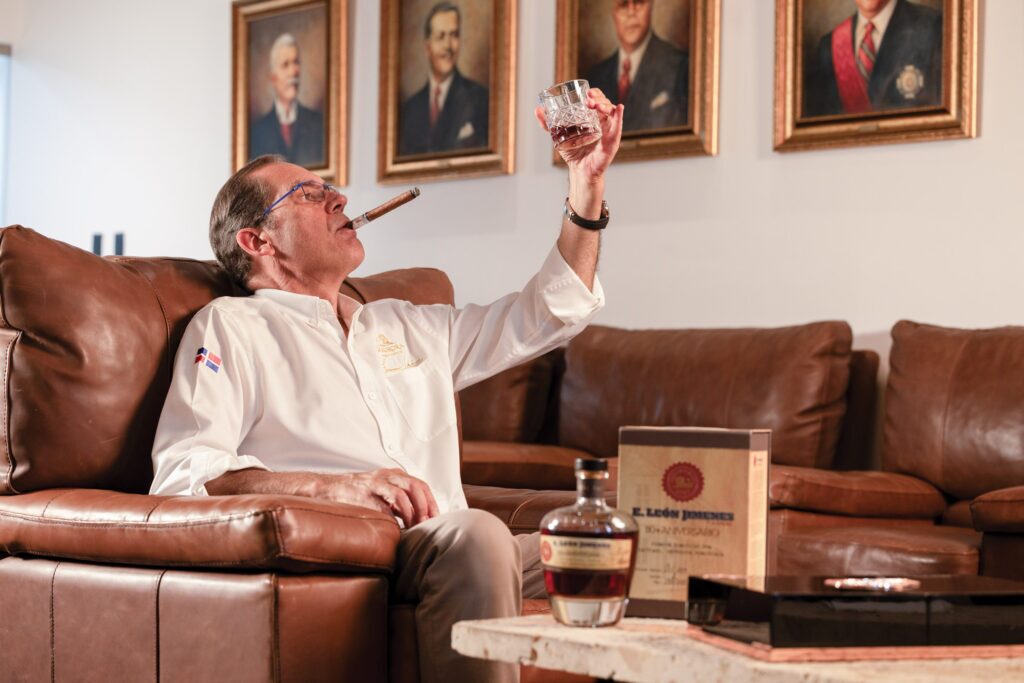
“So far we’ve done very well launching the rum and presenting the rum,” Batista said of the spirits’ role in La Aurora’s on-the-ground marketing efforts. “That has helped as far as brand awareness. When people don’t necessarily know cigars, but do drink rum, they’ll ask, ‘Oh, you have a cigar too?’”
“This rum, unlike a lot of others on the market, is authentic,” McKenna said. “This is a real rum developed by the owner of the company that is meant to pair with cigars. Not just for us to say that it does, but that’s what it’s for. That’s the reason it exists. And if we sold one bottle or a million bottles, that’s why it would exist. It’s not a gimmick. It gives us a differentiated way for people to experience our products beyond a cut-and-light.”
The rums are available in several U.S. states, and distribution through Caribbean Sunrise Spirits, which was established specifically to import these products, is expanding. Considering the broader appeal of spirits, rum might prove to be invaluable in helping Guillermo León and his team achieve their cigar brand recognition goals. Once people know the León Jimenes name, it becomes that much easier to tell them the La Aurora story.
“When people think of La Aurora, I hope they see more than a cigar,” León said. “I hope they see a family built on honesty, integrity, faith and excellence. Our collaborators are part of that family, and we treat them with the same respect and care we share among ourselves. Most of all, I want smokers to feel that they, too, are part of our family. We want to be there with them in the big and small moments of their lives, and when they choose to spend those moments with a La Aurora cigar, we feel proud and honored.”