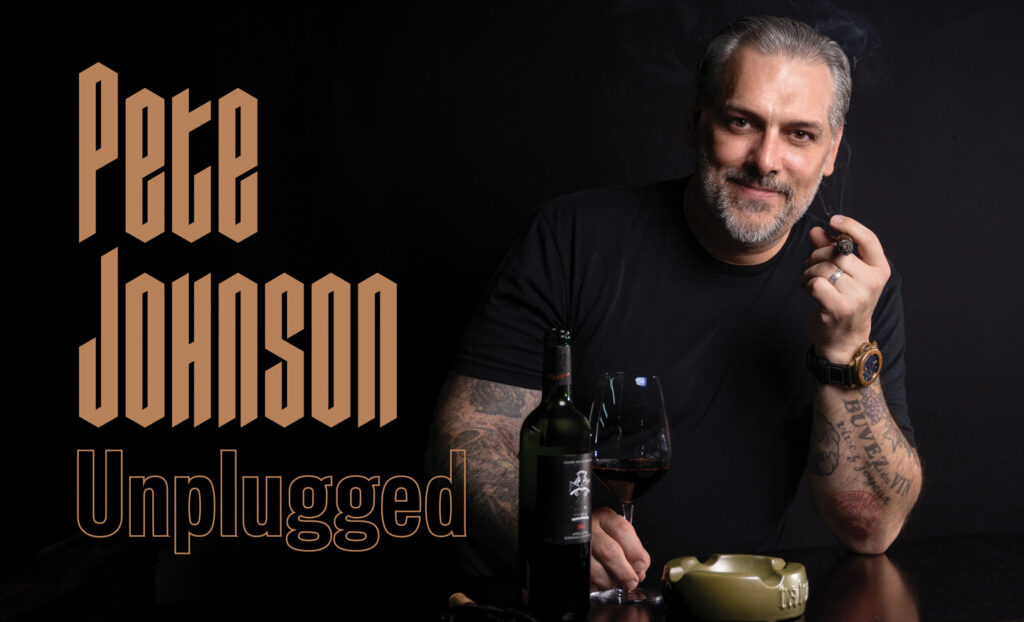
A stalled rock career sent Pete Johnson to the humidor; he became a self-professed “cigar nerd”
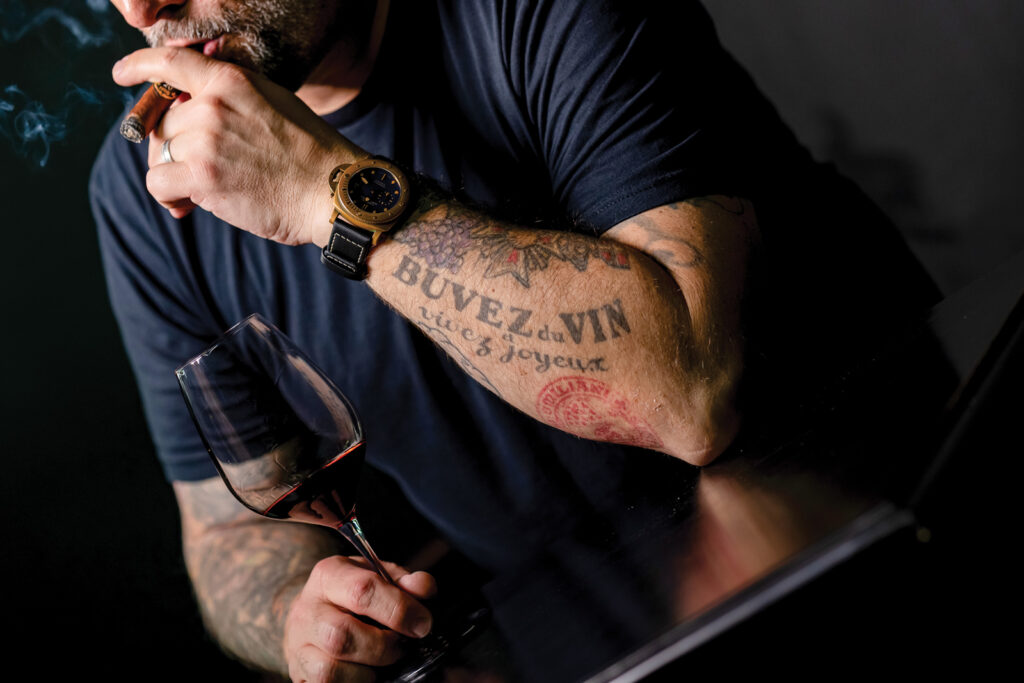
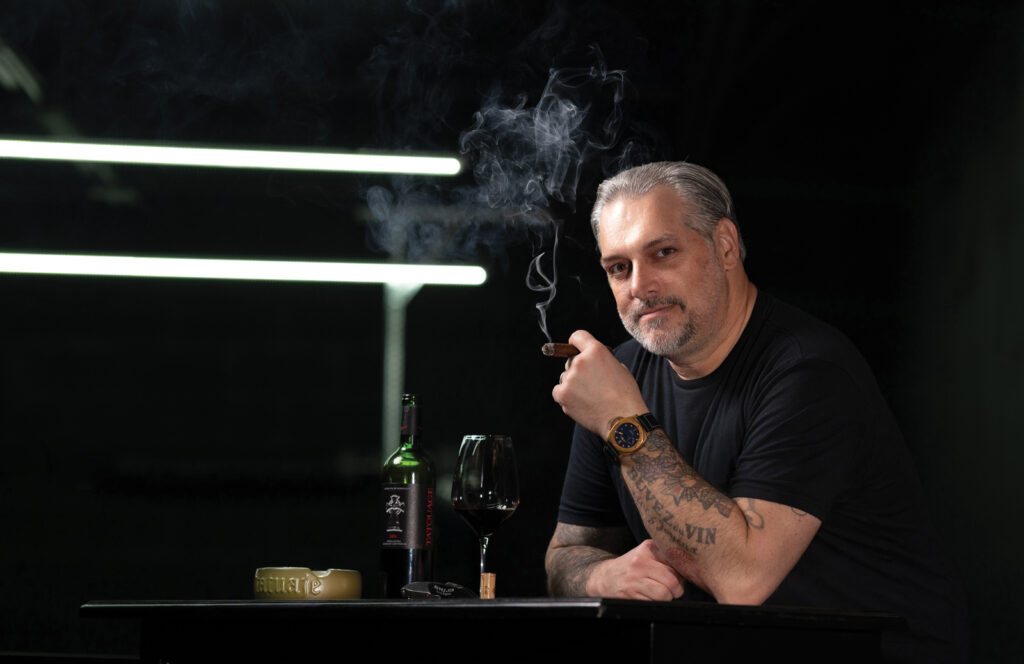
For Pete Johnson, it was the ink first, then the cigars. Johnson became so absorbed by body art that 13 years after Marvin the Martian was tattooed on his right shoulder in a downtown Los Angeles parlor, he named his cigar brand Tatuaje — Spanish for tattoo.
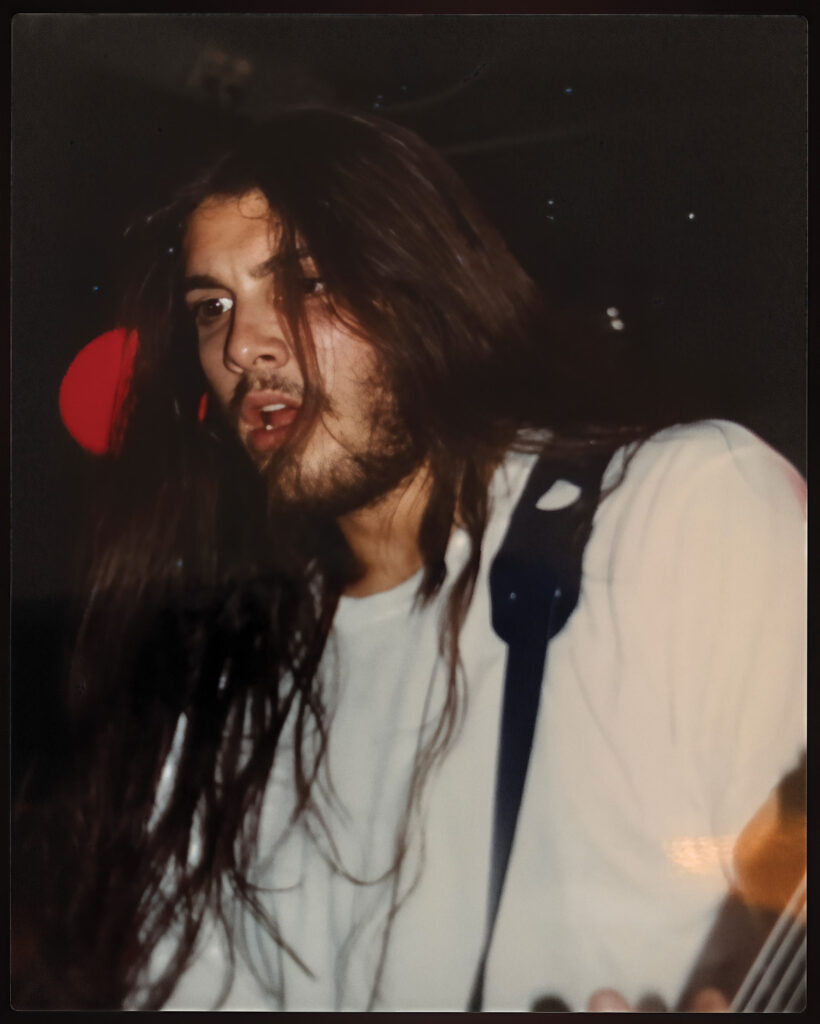
It was 1990, and Johnson was pursuing a life as a Sunset Strip rocker, playing bass in Hung Jury, an abundantly coiffed metal band joining the throng of acts vying to be the next Guns N’ Roses.
“I went to Shamrock Studios on 3rd Street with our singer,” Johnson, 55, says. “He got Yosemite Sam and my favorite cartoon character was Marvin.”
The guy who would become known for his esteemed cigar brand, Tatuaje, hadn’t tried his first cigar yet.
A year after that first tattoo, he was getting his first sleeve. His first cigar came around the same time.
“It was a Bering Imperial that I bought at a liquor store for 50 cents,” Johnson says. He’d seen people on television smoking cigars, dressed up, looking classy. “They were having a good time, and I thought that it looked relaxing.”
His perception turned out to be right. He smoked it and was pleased with the peace and quiet that came with the moment.
Like the tattoos increasingly covering his body, Johnson wanted to know more about this intoxicating new pleasure.
“I didn’t even know there were real cigar stores, but I went to the Sherman Oaks Galleria and there was a cigar store, where I bought a Pleiades petite corona for $2.50 ($32.85 today) which was a lot of money for me. But I loved it and that was the start of the rabbit hole.”
That pursuit led Johnson to become the self-professed “ultimate cigar nerd” he is today.
Hair Metal Fade
He’d come west from his native Maine to become a rock and roll star. He’d considered the East Coast, but the Sunset Strip was hopping and he’d visited the city and fell in love with it.
But by the time he was established, the scene was fading. Big label advances, once the dream of every MTV hopeful on the Strip, were flowing toward earthier bands as the Pacific Northwest started drawing the money. Nirvana’s breakthrough Nevermind album in 1991 didn’t just start a fad.
“Grunge killed the scene in L.A.,” Johnson says.
Still, he kept working. He was doing demos with a fledgling combo that included drummer Randy Castillo, who spent time in Ozzy Osbourne’s solo band, and guitarist John 5, who would soon land with Marilyn Manson.
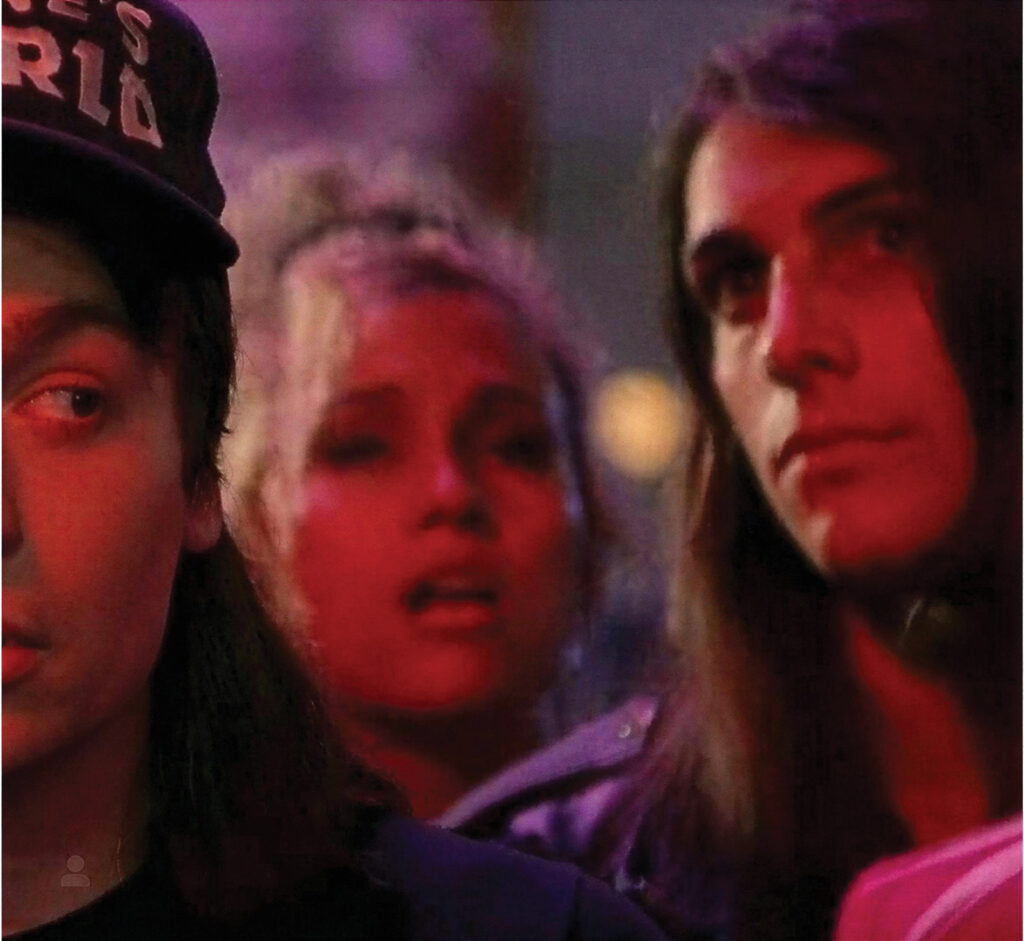
During his musician days he was also taking whatever jobs he could to fill in the gaps between gigs. One filler job was movie extra work. It got him an on-screen blink-and-you’ll-miss-it moment in the movie “Wayne’s World” — a full face shot in the loft party scene as Wayne, played by Mike Myers, pursues the character played by Tia Carrere.
The casting call was for “guys with long hair…any guy with long hair they wanted, and it was a way for us to eat catering food and pay rent. We shot for five nights.”
The scene has Johnson starting in the wings and is suddenly fully in frame.
“(Director) Penelope Spheeris pushed me in front of the camera,” Johnson says. No SAG card, no credit. Just a couple of meals and something cool to tell people 35 years later.
As his music endeavors came to a close, he also worked crowd control, called a floater, at a strip club, smoking cigars when he patrolled the parking lot, wondering what was next.
Starting Behind the Counter
The supergroup went in a different direction, which is a kind way of saying Johnson was fired — “the singer wanted his bass player,” Johnson says.
But it didn’t matter; in his mind, he was already gone.
“I wasn’t interested any longer in music,” he says.
It was 1993 and an acquaintance who managed a local cigar shop that was Johnson’s favorite asked if Johnson wanted a new direction.
“Would you be interested in working Sundays in a cigar shop?” he asked.
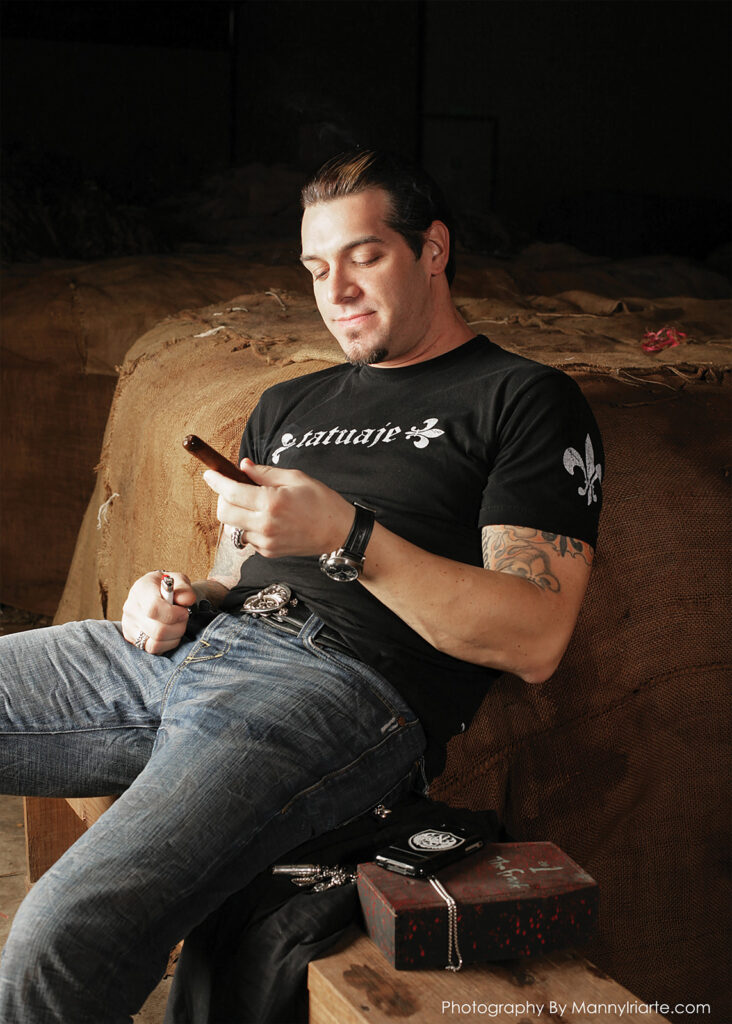
Johnson started the next week at Gus’s Smoke Shop, the oldest tobacconist in the Los Angeles area. It was known for its humidor and advanced varieties of pipe tobacco. Sundays turned full-time. He soaked it all up—the different tobaccos, every cigar in the humidor, working and smoking his way straight through the stock. At the same time, he became a student of the leaf, reading books and magazines about the history of cigars and how the industry worked.
Johnson left Gus’s and tinkered with the idea of creating his own cigar.
The idea came from legendary QVC pitchman Jan Muller, whose son, Jason, was a Hung Jury bandmate of Johnson’s.
“He asked if I wanted to make a cigar. I was going to the Dominican Republic and said I could see about it.”
It was an early lesson in what newcomers don’t know.
“The places I wanted to work with were too busy and the few people who said ‘yes we can make you a cigar’ just handed me a cigar. I said, ‘that’s your cigar’ but they said they would put my band on it.”
He returned to the U.S. humbled by how difficult that part of the cigar-creating process is.
“I realized that I did not understand that part of the industry. It was the creative element.”
He moved over to The Big Easy in West Los Angeles briefly, but his education took a leap forward when he took a job at the Grand Havana Room in Beverly Hills, which was looking to expand.
The cigar world was enveloping him. For one thing, “the people in the cigar industry were a lot nicer than the people in the music industry,” he says.
But also “cigars were this great equalizer. I could hang out with anyone in cigars, people who were doctors, lawyers, agents. I learned a lot.”
By 2003, he’d grown weary of working someone else’s counter.
“I was convinced that my cigar industry journey was going to be over. I couldn’t find what I was looking for as far as opportunity. I was concerned I was going to be behind the counter forever. I wanted something that would be my own.”
Cojonú
Johnson had given up on making his own cigar, discouraged by his first try.
Then a sales rep asked if he’d meet a Cuban who might be able to make something interesting in cigars. Johnson asked for samples. They weren’t great.
A few months later, the Cuban showed up at Grand Havana to meet Johnson. He gave him more samples — again nothing that knocked him out.
But the Cuban in his shop was José “Pepin” Garcia, who had spent 40 years in his native Cuba as a torcedor, a master roller. He could make whatever Johnson needed, Garcia told him in Spanish.
“What do you want?” he asked.
Johnson produced a Juan Lopez petit corona, a Cuban cigar. Something medium to full.
“Can you do this with the tobacco you have?” Johnson asked.
Using the same tobacco that produced blends Johnson didn’t like, Garcia rolled something “as close as you could get to the Cuban that I liked. And he did it right there. It was magic. He’d built this to my palate.”
They refined it. Johnson was happy.
“What he blended for me first was just medium to full, purely what I thought of as a Nicaraguan cigar, with not too much depth. But as soon as I told him I wanted something like a Cuban cigar, it worked. He understood more about that than he did Nicaraguan tobacco.”
The name of Johnson’s new company was easy; in the mid-1990s, he’d been dubbed “Tattoo Pete” during a trip to the Dominican Republic by Robby Levin, Carlos Fuente and Wayne Suarez, enamored of his OpusX tattoo.
“People knew me in the industry for my visible tattoos regardless of what they are,” he says. The OpusX work, which he got at a Big Smoke in Boston, gave him some real “in-it-to-win-it” cred.
He would name his company Tatuaje — a tweak of the Tahitian word tatau, to mark, brought back to the New World by 18th-century explorers.
With Johnson’s bountiful body ink, the name was personal.
He started small: six sizes, 50 boxes each, rolled at the Garcias’ El Rey de los Habanos factory in Miami in 2003. He had to sell them and had no idea how.
“Grand Havana was my first, and for a while, my only client,” he says. Within two months, he was at the Retail Tobacco Dealers of America trade show — known today as the Premium Cigar Association — in Nashville and scored five clients.
They started ordering, slowly. Too slowly.
“I started getting calls from the factory asking if I needed more cigars, and I thought, ‘not really.’ But they needed to keep their rollers working, so I would order cigars I didn’t need.”
In 2004, he hit the Las Vegas trade show and came back with more accounts. By 2005, the rollers couldn’t keep up.
By 2006, he walked into the trade show with 125 accounts and left with 350.
He was an overnight success. It only took three years. Johnson left his day job at Grand Havana.
“People were recognizing the product and by then we had some ratings and it was making things happen,” Johnson says.
He made noise almost immediately with the Selección de Cazador line, specifically a variation he called “Cojonú” — Cuban slang for “the ballsy one.”
“Pepin made me a cigar that was super strong and he laughed and called it thermonuclear, it was so full of ligero,” Johnson says.
It was Pepin, though, who referred to it as “cojonú.” As the name of the new smoke was discussed, the Garcias tried to dissuade Johnson from giving it that name — which would appear on front-facing boxes.
“They said, ‘no, it’s a bad word,’ but I didn’t care. Once he said it, I was obsessed with the word.”
It marked the start of a crusade for Johnson, who maintained a candid, welcoming demeanor, open to any idea.
He may have been the first premium cigar maker to create his own version of the fan club when he launched Saints & Sinners in 2011, a group for dedicated followers of his cigars.
It started when friend Sean Casper Johnson (no relation), who was a tour manager for some bands, pitched the idea of a private club.
“I wanted it to be our version of the Kiss Army,” Pete says. “It became a way to promote the brands that we do without taking anything away from our core brick and mortar base.”
For $225 a year, members received a package of cigars and swag that included prototypes and experimental smokes.
“Everything in the kit is club-only,” he says. The club has 2,000 members and meets infrequently. The last gathering, in December in Charleston, S.C., drew 200 devotees.
The club’s experimental cigars have become regular releases, most notably the La Mission L’Atelier 1959 Mission. The blend was somewhat changed but members got to taste it first.
Speaking of L’Atelier…
In a confusing twist of branding, Johnson in 2012 decided he wanted to put together a supergroup. He considered Tatuaje his solo act; this would be a different thing.
“I was looking to branch off a little, to include some friends and family in the industry,” he says. And, he adds, it had to be something outside Tatuaje.
He brought in his brother, K.C. Johnson, kept Sean Casper Johnson and added Dan Welch.
“I wanted people to think of it as a separate entity with four guys making decisions instead of one,” he says. But after five years, he noticed that it was confusing; shipping and billing were separate but coming out of the same building. He kept it separate until 2017.
“Now, it’s all under the Tatuaje umbrella,” Johnson says.
One of his shrewdest moves was the Monster Series — an annual Halloween release that first ran from 2008 through 2019.
It started with “The Frank,” a nod to Frankenstein, and ran 13 installments from there, with all the greatest hits: the Mummy, the Wolfman, Dracula, and, for younger adult smokers, Chucky and Freddy Krueger. Monster Series releases were limited to 666 boxes of 13 cigars sent to 13 retailers, plus 1,300 additional 10-count boxes, creating a cool and collectible allure.
In 2021, he began Monster redux, reissuing the series, which continues.
Monster had started as a sports play.
“A buddy of mine owned a retail store in Boston and he was a sneaker head,” Johnson explains, referring to a group of shoe collector enthusiasts. “He kept telling me I had to do a theme cigar. I wanted to do sports rivals, so I was looking at that. I’m in his shop and he shows me this pair of Nikes that had Frankenstein on them.”
Johnson had loved monsters growing up, rapt by the old black-and-white movies. “By the time I left his shop, I had conceived this whole idea.”
He trademarked the idea of a cigar box in the shape of a coffin, in case anyone has any ideas.
The relationship with Pepin and the Garcias endures. The Garcías continue to produce Johnson’s cigars. And he’s still the guy who asks, “Can you make this?”
“They tell me when they have new seeds or tobacco on the farms, and when I want to develop a new line, I go to them and tell them what I am looking for,” Johnson says.
It is that day in Grand Havana, writ large.
Boutique Musings, Streaming in Blue
What began with a false start, Johnson wandering around the cigar factories of the Dominican Republic asking who could make him a cigar, has turned into one of the sector’s most successful brands.
“The style of company that the Garcias and I had was this boutique thing and at the time it was a new trend, where people were coming to the trade show looking for the next boutique,” Johnson says.
After his explosive showing at the show in 2006, where he nearly tripled his customer base in a weekend, he had to rethink that. He’d told an interviewer in the early days that he never wanted to get over 3 million cigars produced annually.
He says he’s around that now — “I haven’t done the math” — but considers himself “mid-tier.”
“Right now we are a good-sized company with a series of smaller boutiques,” he says. As long as he can meet demand, he’s happy.
“I never go into it with a super plan.”
He can always fall back on the Hung Jury royalties, at 3 cents to 5 cents per stream.
The band’s album, “Screaming in Blue,” was released several years ago, available on CD and most of the streamers.
A label that was putting out music from the old Sunset Strip bands asked to release it.
“We were like ‘whatever,'” he says.
The band still gets together to meet, usually in Las Vegas.
And you know who brings the cigars.