
Tabacalera Oliva
Oliva Cigar has undergone a transformation and adopted new technologies that might revolutionize the way premium cigars are made.
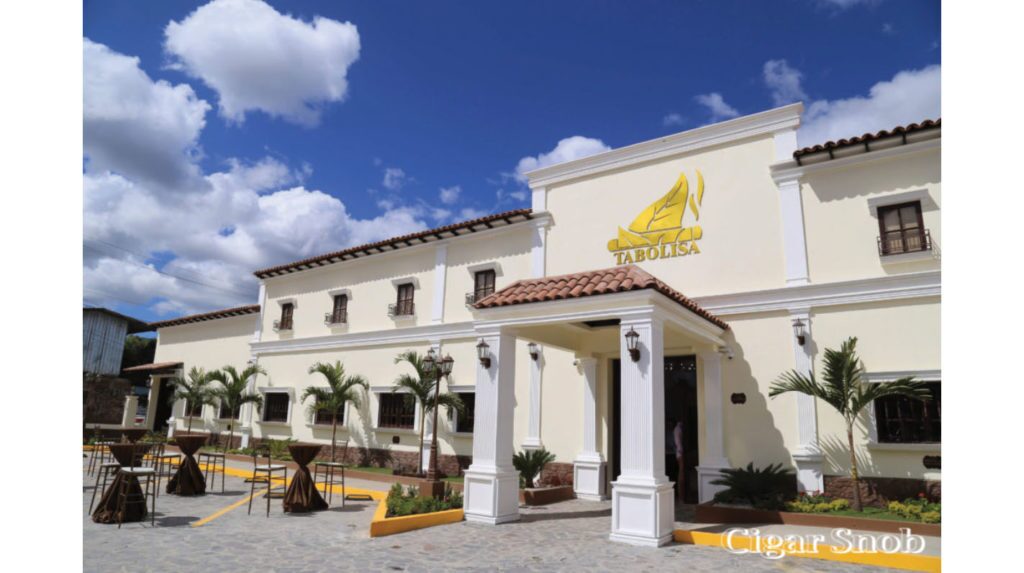
There’s something paradoxical about life in Estelí. At least it looks that way to me, an outsider, whenever I visit that Nicaraguan town that’s become one of the world’s cigar capitals.
On the one hand, it’s a city that’s been characterized by relative economic boom. Yes, there’s still poverty in Estelí. But there’s been an undeniable growth in this small city over the last 10 to 15 years. Any casual observer who’s been more than once will tell you they’ve seen palpable transformation — from the energy that you feel on the street to the emergence of new service industry jobs, entrepreneurship, nightlife and hotels. Or, as we like to do half-jokingly at Cigar Snob, you can look to what we call the chicken restaurant economic index. Estelianos love their chicken — fried, roasted, grilled — and each time we’re in this place it seems that another half dozen chicken joints have popped up, whether big, polished brands like RostiPollos or small tin-roofed shacks that make you salivate from across the street.
Sorry about that chicken tangent, but it’s a thing. And I like chicken. Anyway, where’s the paradox? The paradox is that even as fast food, new cars, modern nightlife and consumer technology become more ubiquitous in an increasingly modern Estelí whose prosperity has more or less served as a force field shielding it from the political and economic volatility that are so common in other Nicaraguan towns, there’s no escaping the fact that all that is due to one of the most traditional, anti-modern exports imaginable: handmade cigars. Not only are they made in roughly the same way they were a century or more ago, but they’re also manufactured by businesses that have been slow to abandon analog anything. There’s stubbornness to the cigar industry. Maybe that even contributes to the romanticism around cigars. You can see it in the tools and the facilities. In the clinging to paper and pencil over apps and spreadsheets whenever possible.
Commitment to old school methods might set cigars apart from much of the rest of our lives, but within the cigar world, it’s the standard, the conventional wisdom.
That’s what makes the transformation of Oliva Cigars so groundbreaking.
THEN AND NOW
Oliva was acquired by Belgian cigar manufacturer J. Cortès in July 2016. At the time, there was concern — as there often is in cigar circles on news of this sort of acquisition — that the change would impact the quality of the cigars that so many had come to love. Carlos and Gilberto Oliva were stepping back from their respective roles with the company, and José Oliva, then the CEO, would be transitioning to a position as the chairman of Oliva’s board. Gilberto Oliva, Sr., the company founder and family patriarch, was in the twilight (and, as we later learned, the last year) of his life.
So what would it mean when a company known to American smokers for some of the best handmade cigars in the world was taken over by J. Cortès, which makes more than 500 million cigars a year for (primarily) the European market?
It wasn’t long before we realized that this transition was a best-case scenario. For one thing, the relationship hadn’t sprung out of the blue. Back in 2013, J. Cortès was making machine-made cigarillos for Oliva — using Oliva tobacco — for distribution in Europe. They were called Oliva Viejo Mundo. So the two companies, and indeed the two families, had had ample time to feel each other out. The Olivas and the Vandermarlieres were a natural fit for one another; both are proud of their cigar heritage, concerned with legacy, committed to quality, and — in the parlance of Cubans — buena gente.
The cigars didn’t change much under new ownership. Oliva fans breathed a sigh of relief.
In isolation, the fact that the cigars hadn’t changed much was just reassuring. A sign that Fred Vandermarliere and the J. Cortès team were committed to preserving all that smokers loved about Oliva and acting as stewards of the family’s legacy.
But that fact didn’t exist in isolation. More than being reassuring, the preservation of Oliva quality has been a genuine feat in light of the fact that it was achieved even during the process of a top-to-bottom transformation of the manufacturing processes behind the cigars.
Cigar Snob publisher Erik Calviño and I were in Estelí in December for the grand opening (or… re-opening?) of TABOLISA, the factory that produces most of Oliva’s premium cigars. We had lunch with another Estelí cigar maker and let him know what had taken us to Nicaragua
“Oh, they did some incredible work,” said the brand owner I’m not naming because, well, you never know in the cigar business. “I haven’t been in there, but even the new facade of the building… it’s nice to see. I’m happy for them.” We heard similar things from the handful of cigar industry people we caught up with over the course of our trip.
We took our second full day in town to check out all that Oliva had been up to. And holy smokes, had they been busy.
WHAT’S NEW
The factory’s new facade is, indeed, impressive. What was once a spartan, bland building has been given a Spanish colonial makeover that put a bright, fresh face on the end of what had been a long, nerve wracking process for much of the Oliva team. Things came down to the wire, with much of the construction, wiring and other aspects of the renovation being completed the very day of the grand opening ceremony and the first tours of the factory. In a way, it was a fitting way to cap off the two years leading to this day.
“The quality [of cigars] was consistent in the last two years,” said J. Cortès CEO Fred Vandermarliere during an interview on a balcony at the Oliva residence in Estelí. “You know, after we acquired [Oliva Cigar and the factory], I was very proud. But while refurbishing a whole factory, it’s like living in your own house while you’re refurbishing your own house. You can imagine [what it’s like] when you have to start cooking in your bathroom, you know? Maybe you don’t cook the same way or with the same quality as you cook in your own kitchen. But here we could [keep up quality]; and we did it very slowly over a two-year period. We wanted to respect the quality of the product and we did not want anybody to have a feeling like, ‘Something is going on there.’”
The tour of the factory began, as would any tour of a home, at the front door. What had once been a crowded office space just feet from the primary rolling floor is now a proper reception area leading to a break room, conference rooms and offices — all of which were being worked on mere hours before, so there wasn’t any furniture in there yet. Erik and I both felt a little underwhelmed; the tour hadn’t quite started with fireworks. But the first big, pleasant surprise was just around the corner.
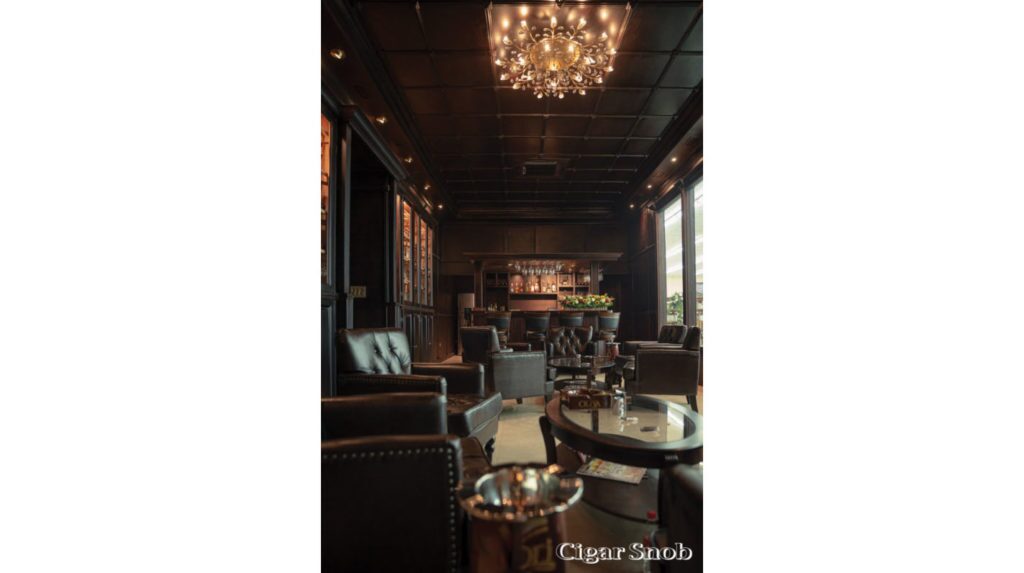
Our jaws all but dropped to the ground when we were ushered into the factory’s VIP lounge. You read that right. Not many cigar manufacturing facilities have this sort of thing, although some do. For instance, ABAM (the Dominican factory that makes Villiger products like La Flor de Ynclan) and La Aurora both have nice lounges, and they both feature floor-to-ceiling windows overlooking production from above. But two things are special about Oliva’s lounge. First, it’s rich. Deep, dark wood and leather and a bar and the kind of lighting and ambience you might expect from your city’s swankiest cigar lounge (if your city has anything like this at all). Second, this lounge is on the ground level. While that might not seem noteworthy, it makes all the difference in this case, because it’s adjacent to TABOLISA’s sprawling new rolling floor. Unlike some other factory lounges, this one doesn’t require that you walk up to windows or peek over at TV screens to see the action. Here, you feel like you’re right in it.
“We wanted to remember the Havana of the 1930s, ‘40s, ‘50s, with a big bar, dark woods,” said Oliva COO Fidel Valdés Rodríguez. “We want visitors to come into the factory and be part of the process. That’s the idea. When you are sitting there, you are in the production. We are not hiding you from the process. We are not hiding you from our employees. You are there, seeing how they do it. When [smokers] have that experience, the next time they enter a retail store, the first image that comes to them will be the factory where they sat and had a cold beer or whiskey with employees working, rolling the cigars.”
There are plans to offer tours in the future, so you will have your opportunity to experience this lounge for yourself. That said, there are plenty of great cigar lounges in the world — many of them with bars and leather chairs. What’s really special about this one is the view. And that, in a way, is available for you to experience right now.
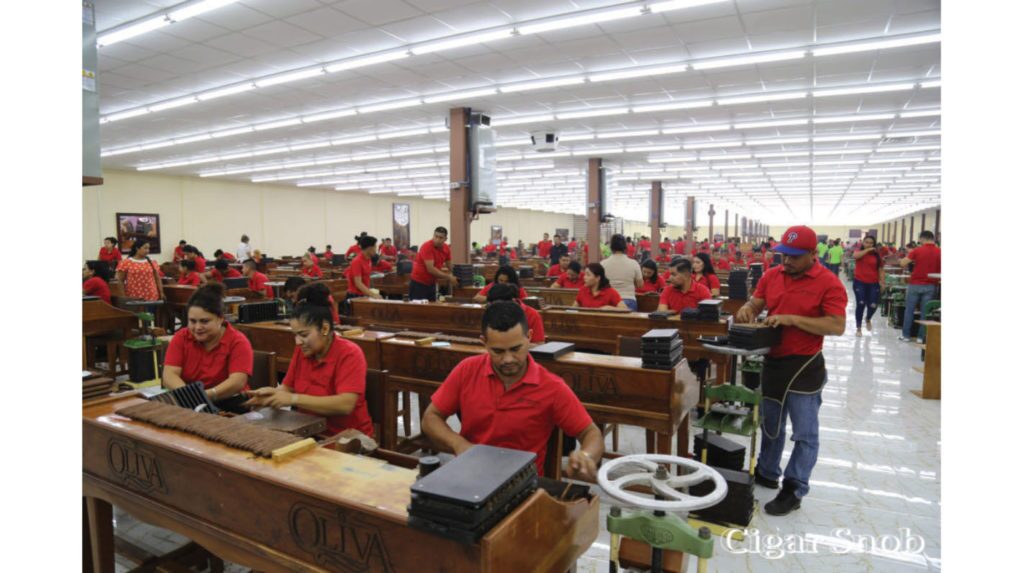
Before the overhaul of TABOLISA, cigar manufacture happened in several spaces. Today, there is one sprawling rolling floor. The lighting is bright and the floors are shiny — eat-off-them shiny. Unusual for a cigar factory, to be sure. As you walk through the rest of the facility, you’re struck by just how clean everything is. And by how thoughtfully the process has been laid out. That thoughtfulness is possible because the whole thing was reimagined from soup to nuts. And the contrast is so stark because, in the past, Oliva had been forced to grow its facilities piecemeal, as its business grew.
“We made the new building more future-proof,” said Fred. “It was a beautiful factory, but clearly a factory that grew step by step.”
As I mentioned earlier in this piece, cigar manufacture at TABOLISA used to happen in multiple areas. Similarly, there were areas for tobacco storage scattered about, and they couldn’t always be next to each other. The same was true of other parts of the tobacco processing and cigar making process. Because growth was dealt with and adjusted for bit by bit, this was the first time in a long time that the maps had been redrawn — not only to account for the current status of the company, but in anticipation of future growth.
“When you’re looking from the outside, it became an illogical flow, you know?” added Fred. “When you really want to make good cigars, it’s very difficult to do that when the flow is not perfect.”
Through this transformation, Fidel was the tip of the spear — and there are very, very few people in the cigar industry who would have been capable of leading this effort and executing it the way he did, not only when it came to designing new systems, but also when it came to finding opportunities to bring new technologies into the production process.
Fidel was born in Cuba, where he studied to be a telecommunications and electronics engineer. He was managing related systems for 18 airports in Cuba, with 250 technicians under him, when he left Cuba in 1996.
Scratch that. When he escaped Cuba in 1996.
But that’s the kind of failure it takes to find real, groundbreaking successes. And where Fidel did find technological solutions, he hit home runs.
“Moving is when you get a visa and you can go. I escaped,” Fidel said. “Economically, I was living fine in Cuba. All my motivation was political. I wanted a different life. I didn’t want that future for my daughter.”
Heading first to Venezuela, it wasn’t until 1999 that Fidel arrived in the United States. He started his first job in the U.S. on his second day. At the airport in Albany. That is, the McDonald’s at the airport in Albany. Familiar stomping grounds. Not quite a familiar gig.
“I said that one day without work is one dollar that I don’t have in my pocket,” he said.
It wasn’t long, though, before Fidel found himself a new programming job at a cable company, and then later as a technician at SEPSA, a company that manufactures equipment for railroad transportation. By his second year at SEPSA, he was the director of engineering, and then later he was put in charge of all North American operations. All this while getting himself an MBA.
All of which is to say that Fidel is insanely capable and that Oliva just about hit the jackpot when they somehow learned that he’d moved to Miami after SEPSA was sold.
“I don’t know how they found my résumé because I really was not looking for any position at that moment,” Fidel said. Still, he had an interview, then a meeting with José Oliva, and Fidel “fell in love with all the problems they had.”
At first, Fred was a little skeptical. He wondered whether it was the right move to bring someone in who’d never worked in cigars. What’s more, Fidel wasn’t even a cigar smoker at the time.
“José was right, you know? He said the part of the passion, the part of the tobacco, the part of the blends, the part of the cigars … That was okay. The cigars had a proven track record. But there were some things that we could make sure that we could deliver because one of the biggest hiccups when we acquired Oliva was indeed the delivery of the products. And I think in that sense, Fidel was a very smart choice. Fidel is a very smart guy and smart guys are very often also quite stubborn, so if Fidel says, ‘it’s this way,’ to get him off that you really have to come with very convincing points, evidence.”
Fidel came into the job a little cocky, by his own admission.
“It was a big change, but I said, ‘I can do this so easily.’ [A project] in the transportation system could have 25,000 or 55,000 components. The [cigar] has five, six, seven? Then you have the box, the rings, so it could be like 11, 12, components. You know? Piece of cake!” he said, before adding the much simpler reality he ran up against. “No.”
Fidel learned the hard way that there were parts of this cigar thing that robots and technology just weren’t equipped to tackle. For instance, if you’ve ever toured a cigar factory you know that an important part of the process is color sorting, especially for wrapper leaf. Any factory will have at least one room in which workers — usually women, because they tend to be able to see color better — examine leaves, rapidly sorting them into piles of like colors. Fidel’s idea was to accomplish this with high-quality cameras for automated optical sorting. This sort of thing is common in wine, for example. Take a picture of any cigar and zoom way in; you’ll see that even a square millimeter of the leaf contains variation in color and texture.
So when Fidel built a robot using “the best camera in the world” for this sort of thing and “failed day and night,” he realized what he was up against. The process is far more complicated than the number of components would suggest.
But that’s the kind of failure it takes to find real, groundbreaking successes. And where Fidel did find technological solutions, he hit home runs.
Take, for example, the process of monitoring pilones of fermenting tobacco. In an operation like Oliva’s — which is by no means the largest in Estelí, let alone the world — you’re talking about 500 pilones of fermenting tobacco at any given time. The pilones are literally just piles of tobacco in which the weight of the pile generates heat that spurs fermentation. Standard practice is for each of those pilones to have a long thermometer somewhere near the midway point of the pilón, with an analog dial just outside the pilón so you can read the temperature. A worker — maybe more than one — goes from pilón to pilón reading the thermometer and making note of its internal temperature on a nearby clipboard.
Mime that process. Or just imagine it in your head. You walk up to a pilón. You take a look at the thermometer, perhaps moving some tobacco out of the way — gingerly so you don’t damage it — then you walk another 5 feet or so to the clipboard, where you note the temperature. Repeat that process 500 times.
As we approached the pilones of fermenting tobacco at TABOLISA, Fidel and Fred, who led a tour together, made sure everyone had gathered around before the big reveal of Oliva’s diminutive innovation. Fidel explained the typical method of monitoring temperatures and Fred explained the pitfalls. There’s no guarantee that you’ll check the temperature at exactly the right time. The reason you’re monitoring temperatures is that when your pilón hits a certain threshold, you’re supposed to start the process of “turning” the pilón. That is, a small group of workers will move the tobacco into a new pile, rearranging the leaves so that a new set of leaves is in the hottest part of the pile. Turn it too soon, and you’ll have stopped short of the intended flavor and color. Turn it too late, and you’ll have overheated and damaged the tobacco. In either case, you’ll have ruined priceless tobacco, or at least you won’t have gotten all the value you could from it.
Fidel reached into the pilón and pulled out a small plastic device, about the size of a pen. The device is attached by a cable to a square piece attached to the wood panel that separates this particular pilón from the next.
“That’s a revolution in the tobacco industry,” said Fred, with more enthusiasm and pride than almost anything else he’d pointed out on the tour.
The pen-sized device is a Wi-Fi connected thermometer and hygrometer. Every one of Oliva’s pilones is connected wirelessly to a system that allows monitoring of all these temperatures from one computer. When any pilón reaches its threshold temperature, the system automatically sends a message to a manager’s phone alerting them to the need to reshuffle the tobacco and start the fermentation process again. The system worked almost too well; Fidel hadn’t anticipated that the technology wouldn’t care how soundly managers were sleeping and they all got notifications at 2 a.m. at first.
Maybe it sounds simple. But this is a big deal. Every bit the “revolution” that Fred says it is. What’s more, the technology is brand spanking new, developed by Oliva and Swift Sensors, a U.S.based company. We never got the particulars of the deal, but Fred and Fidel noted that Oliva will be getting a cut of anything Swift Sensors makes selling this new technology for tobacco monitoring to other factories.
There’s also the new system for regulating humidity in fermentation and other stages of tobacco processing.
“We also implemented a new humidification system,” said Fidel. “It’s one of the systems that produces the best humidity output with 5 microns of water, which means it avoids any type of dripping, avoiding the damage of the leaf.”
While it might sound less cool than a WiFi-connected pile of tobacco (Erik took to calling them “SmartPilones”), this too is a big deal. Moisture is a necessary ingredient in the fermentation process, as well as aging and just about any stage at which humidity matters. When you’re managing the humidity levels for 500 pilones of fermenting tobacco, it can be hard to do so in a graceful, precise way. You want humidity, but let a drop or two of water fall on your tobacco, and you might just blemish it, making it unusable as wrapper on a premium (and especially super premium) product. If the water released by the system keeps water to 5 microns, that ceases to be a concern.
For reference, 5 microns is about the size of a single red blood cell. So… pretty small. In addition, the water at the Oliva factory is filtered five times before it ever comes in contact with tobacco. They’re all measures that add precision, predictability and efficiency to the existing process rather than creating a brand new one.
Not all the change has been in those aspects of the operation that touch tobacco directly. Employee satisfaction, sustainability and social responsibility were also a major focus of the transformation at Oliva. It’s important not to lose sight of the fact that, despite all this new tech, we’re still talking about a factory in a place where life outside the workplace can be rough. So Oliva has paid special attention to how their employees’ lives are made better by having jobs at this company. For one thing, the building is now one that Oliva workers feel like boasting about. For another, the facility has several outdoor picnic areas you might see and confuse for small courtyards in an apartment complex. And, most importantly, Oliva has gone all in on supporting a primary school called Escuela Oliva, which offers an exceptional education to the young children of Oliva employees among its nearly 2000 total pupils.
“We have to make the same transformation at that school as we did for the Oliva factory because we believe that if we want to make a big change in the community, it has to start with education,” Fidel said. “We don’t just want to say it. We want to really practice it.”
Oliva is also working on becoming energy independent, relying as little as possible on the local utility. For now, they’re at a place where the company is able to run without interruption in the event of a power outage, which isn’t infrequent in places like Estelí. The company’s roadmap, though, calls for an extensive installation of solar panels and other measures.
THE BOX FACTORY
There’s a lot more that’s changed about the way Oliva makes and sells cigars, but there’s not enough room to get into all the minutiae here. Especially if we’re going to get into how cool it was to visit Oliva’s brand new box factory.
“The Olivas had a box factory almost from the beginning. They started [making boxes] very, very, very soon when they were still quite small,” said Fred. “I think that’s the most entrepreneurial part of the whole equation. I have to say, I don’t know if I’d really start from zero immediately making my own boxes, but they did. And now at the end of the day, of course I can be very happy and proud that we have [the factory]. When I arrived, the box factory was clearly also something that started from scratch. Almost in a hut.”
The Olivas’ hut-like box factory was slated for an upgrade before J. Cortès acquired the company, but the Vandermarlieres kept the Oliva plans and built out a box operation that is absolutely stateof-the-art. We had a chance to tour that factory in the early evening and I can’t imagine a factory for wooden boxes feeling any more modern. In fact, this facility and the cigar factory are both up to American and European standards of safety in manufacturing. You’re just more conscious of it at the box factory because it’s a process that involves more noise, sharp tools and safety goggles. It feels like a lot could go wrong — and I imagine that in more hut-like conditions, which are not uncommon in Nicaraguan cigar box factories, it often does go wrong. But this factory would be right at home in any American town, and it’s producing first-rate products, from the Serie V Melanio boxes with the false bottoms for Boveda packs to some slick new Nub humidors.
“I don’t think it’s necessary to make your own box to make a good cigar. But across the board, everything will be of the highest possible quality, with respect for the people,” said Fred, adding that it was just as important in the box factory — particularly in areas that involve paint — to ensure that air circulation systems kept workers breathing safely.
While you don’t need a box factory to make a great cigar, a box factory can help ensure you deliver a great cigar on time. Boxes are sometimes the bottleneck that leads to backorder problems. And backorders had, for a considerable amount of time, been an issue for Oliva.
“When the processes started,” said Fidel, referring to the broad process of overhauling Oliva’s operations that began in 2017, “we had a huge backorder of almost 4 million cigars. By March two years after, which was the plan, we had zero backorder in the system, meaning we are making our commitments with retailers, with the end consumer, with distributors, that every purchase order they place with Oliva they are receiving according to the agreement.”
HE’S STILL HERE
So much of the Oliva factory is new, cool and exciting. There’s a small section of it, though — really just a few square feet — that punches way above its weight on emotional impact. The Founder’s Corner came together at the very last minute. Not because it was an afterthought, but because people had deliberated on how to handle the tribute to the Oliva and J. Cortès’ founders — especially Gilberto Oliva, Sr. — for so long, coming up short of any concept that felt right.
If you’re working on the rolling floor, you’re facing its direction in your seat. Nothing fancy or ornate. Just some pictures on the wall. Even that, Gilberto, Sr. might have balked at. He was, by all accounts, about the work. He didn’t want the pomp and circumstance and the idea of cigar celebrity didn’t interest him. How do you memorialize a guy who you’re certain would have preferred to fly under the radar, just getting things done?
“When you entered the front door [of the Oliva factory before the remodel], you’d walk through the second door, and then in the very small room you had a desk and a chair,” said Fred. Those were Gilberto, Sr.’s. “You had Gilberto sitting there and chewing on his cigar and talking about tobacco. When we acquired the company in the beginning, he was the best quality control that I could have. When [the transition after the acquisition] had not gone in a way he loved, I’m sure he would never have sat there. The fact that he stayed there was confirmation for me. I always said, ‘Nothing will change.’ I wanted that image of him sitting there, that desk, somewhere in the factory.”
In the last few hours before the first tour of the newly transformed factory, the Oliva team made a call.
“I think it was an emotional moment for everybody,” said Fidel. “We want him present. But we don’t want to be overly elaborate from the point of view of design. Also, we didn’t want to put anything like ‘In remembrance of Gilberto.’ We also didn’t want the look of a saint or something. We wanted something that said he’s there, his presence is there. At least in the day to day stress when you pass there you remember him. And it’s something employees want to have there.”
Sitting right in front of the wall of photos depicting the Olivas and the Vandermarlieres are a simple desk and office chair — the ones Gilberto Sr. used in his office. Maybe the notoriously austere cigar maker would have rolled his eyes at the idea of WiFi-connected pilones and 5-micron humidification. Maybe he would have preferred to do things that old school way rather than bring tablets and tech into the mix. Oliva is in new hands, and they’re giving it a new form that just might transform the premium cigar industry beyond most people’s imaginations. But through it all, Gilberto’s legacy will continue to imbue that revolutionary approach to cigar making with the soul and tradition that made the cigars famous to begin with.
Subscribe to the Cigar Snob Podcast wherever you listen to podcasts. There, you’ll find the full versions of our interviews with Fred Vandermarliere and Fidel Valdés Rodríguez.