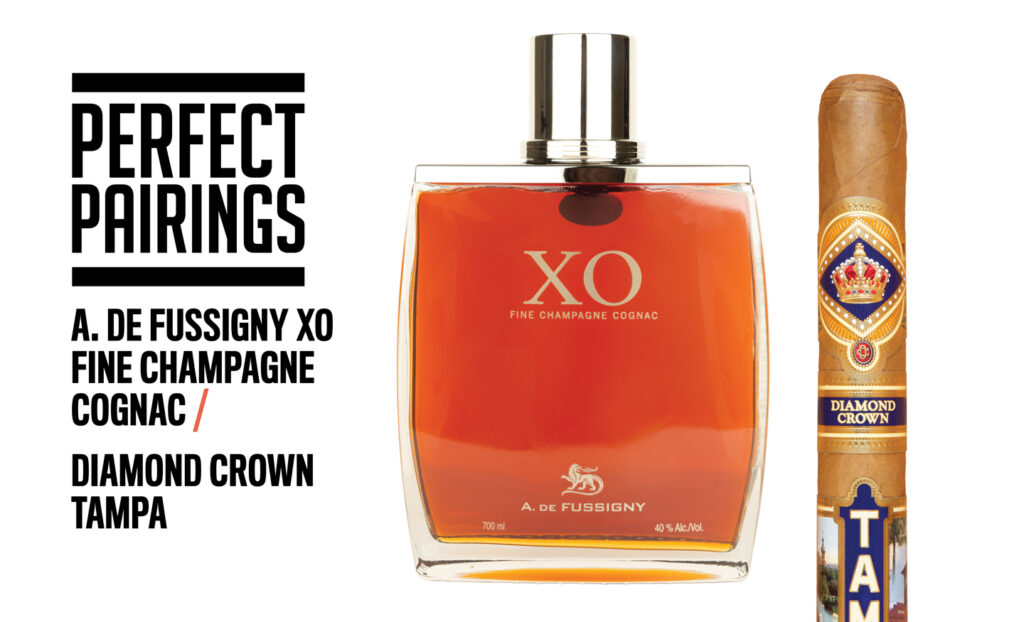
40% ABV
Cognac
France
The House That Alexandre Built
In 1814, Alexandre de Fussigny established his house in the heart of France’s Cognac region with a singular focus: to produce cognac exclusively from Grande Champagne, the most prestigious of the region’s six crus. While larger cognac houses source eaux-de-vie from multiple growing zones to create their blends, de Fussigny took a purist approach, believing the limestone-rich soils surrounding the town of Cognac produced spirits worthy of standing alone.
This dedication to a single terroir was not without risk. By limiting itself to Grande Champagne, the house bet on one region’s ability to deliver exceptional quality year after year. The gamble paid off. Grande Champagne cognacs are known for their elegance and aging potential, developing the most delicate floral characteristics of any cru. For over two centuries, the house has maintained this commitment, working with select growers who share its uncompromising standards.
Over the centuries, the house of A. de Fussigny remained in the family, weathering wars, economic upheavals, and the phylloxera epidemic that devastated European vineyards in the late 19th century. Today, it continues to source exclusively from Grande Champagne and maintains relationships with select growers who share the family’s commitment to quality.
The Art of Extra Old
In the world of cognac, age designations are strictly regulated. VS, or Very Special, must be aged at least two years. VSOP (Very Superior Old Pale) requires a minimum of four years. XO, Extra Old, was historically required to age for at least six years, though that standard was raised to ten years in 2018. The A. de Fussigny XO exceeds these minimums, with the youngest eau-de-vie in the blend aged at least 15 years, and some components reaching 35 years or more.
The extended aging occurs in French oak barrels often previously used for wine or cognac. During this time, the clear spirit from the still gradually transforms. The cognac takes on color from the wood, moving from pale gold to rich amber, and absorbs flavors of vanilla, spice, and dried fruit. At the same time, some alcohol evaporates through the porous oak, a phenomenon called the “angel’s share.” In the humid cellars of Cognac, about 2 to 3 percent of each barrel’s contents is lost to evaporation annually.
The cellar master’s role is crucial in determining when each barrel has reached its peak. Some barrels develop quickly, achieving balance and complexity within 15 years. Others evolve more slowly, requiring decades to reach their potential. The art is knowing which barrels to blend to create a cognac that is greater than the sum of its parts, balancing power with finesse and richness with elegance.
Pairing by: Erik Calviño
Tasting Notes: A. de Fussigny XO Fine Champagne Cognac
A. de Fussigny XO shows a deep amber color in the glass. On the nose, it reveals figs, honey, candied orange peel, white oak, and caramel with a bit of heat. The palate delivers floral notes with wood, dark chocolate, ripe cherry, and a touch of mint. The finish is long and warming, with waves of spice, oak, and fruit. A drop or two of spring water can release a little more, but this cognac is perfectly enjoyable neat, especially after a few moments to breathe in the glass.
Cigar Pairing: Diamond Crown Tampa
The Diamond Crown Tampa is a mild to medium strength toro covered with a supple, light brown wrapper. It draws and burns well. Before the brandy, it produces a profile of sweet spice, cedar, vanilla cream, and nuts with a touch of earth. After a sip of A. de Fussigny XO, the smoke is infused with a wonderful combination of floral notes and toffee that lasts for several puffs.