As we celebrate 250 years of the wonderful experiment that is the United States of America, we offer you places and tools to help you smoke as our forefathers probably did: in the great outdoors.
The fire had burned down to coals by the time anyone spoke. For twenty minutes there had been nothing but the sound of the wind in the trees, the occasional pop from the fire, and somewhere off in the darkness, a creek doing what creeks do. No phone reception for two days. No lounge chairs upholstered in leather. No bartender to flag down. Just a folding chair, a neat pour of something brown, and a cigar that was simply playing its part. Tonight, the stars were the star of the show.
The first Americans to cultivate and smoke tobacco didn’t gather to enjoy it beneath luxurious chandeliers or settled into plush leather chairs. The pioneers smoked beneath open skies, where the weather dictated the proceedings, and the stars were often the only ceiling overhead. Centuries later, we can still conjure up the magic of outdoor smoking in our country’s great national parks.
Camping is the ideal cigar destination. Not in spite of its lack of amenities, but because of it.
Premium cigar culture has spent decades building itself around comfort and luxury: club chairs, world-class service, and temperature control, all of which has its place. But outside the lounge, there’s a different kind of smoke waiting, where the time between draws slows down because there’s nowhere else to be, where the smell of cigar smoke mixes with woodsmoke, and where the view is whatever the sky has in store for us that night.
Camping strips away everything a cigar lounge adds. What’s left is the part that made us fall in love with cigars in the first place: time, patience, great conversation, and a night sky that reminds you why people gathered around a fire with tobacco long before anyone thought to build a lounge.
Why it works
A few practical reasons this combination holds up even better than it sounds:
Time is already slow. Camping runs on daylight and firewood, not meetings or the latest Netflix series. A cigar that takes ninety minutes to smoke isn’t an inconvenience around a fire. That’s the point.
Wind and fresh air helps. With the right temperature and humidity, a well-ventilated outdoor setting keeps a cigar burning beautifully. A slight breeze, not a gust, is close to ideal.
Complementary scents. A campsite offers a cleaner nose for the cigar’s aroma — cedar, campfire smoke, and tobacco tend to complement each other rather than clash.
Fuller-bodied cigars make sense outdoors. Cooler night air and physical activity during the day change how a cigar smokes. A full-bodied blend that could feel like too much after a big, lazy dinner indoors can feel just right after a day of hiking and a meal cooked over a fire.
The tradeoff is logistics — no climate control, no ashtray to rest your cigar, sometimes not even a table. That’s manageable with the right gear, but with no server coming to dispose of your cigar, bottles, and trash, you must be vigilant and considerate. If there is even a remote chance that your cigar is still lit, douse it with water before chucking it. Also, remove the label before leaving your finished cigar in the woods; while the tobacco will return to the earth within days, the cigar’s paper label can take months to decompose. And don’t be that guy/gal; pick up your trash before leaving the park. Lastly, check with the park or campground to ensure that smoking is allowed; especially in dry season, it’s worth a call before a trip.
Where to go
All fire regulations, seasonal closures, and permit requirements below should be confirmed directly with the relevant park service before a visit. These change frequently, especially during dry summer months.
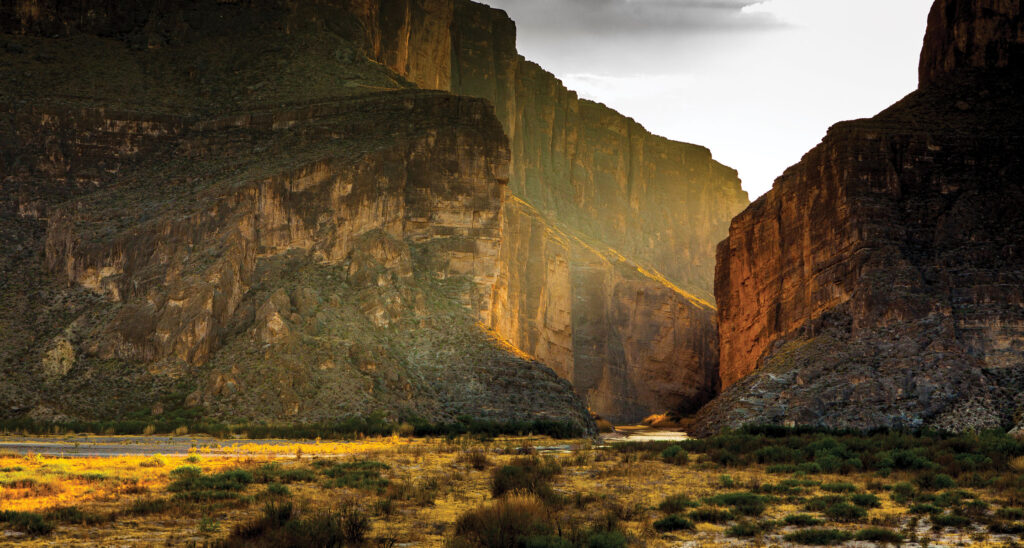
Photo credit : Paulle ong / Adobe Stock
1. Big Bend National Park, Texas
Big Bend holds some of the darkest skies remaining in the lower 48, a result of its remote location. The park’s isolation is exactly why it’s such a perfect spot to disconnect from your devices and plug in to nature. The park spans from the Rio Grande floodplain (around 1,800 feet elevation) up to the Chisos Mountains, where Emory Peak tops out around 7,825 feet. That elevation swing means that you have desert, grassland, and mountain woodland ecosystems packed into a single park boundary. Additionally, the biodiversity at Big Bend is second to none; according to the National Park Service, Big Bend boasts more types of birds, bats, butterflies, ants, scorpions, and cacti than any other national park in the country. But the evening is why we’re here: the unobstructed sky, lack of ambient noise, and enough open desert to make you ponder your place in this world while enjoying your favorite smoke.
The trick is in the timing of your trip. Summer daytime temperatures in the park routinely climb into triple digits, which makes late fall through early spring a more comfortable camping window. But if summer is your time off, just plan around the heat. Arrive early, stay in the shade during peak afternoon hours, and save the cigar for after sundown when temperatures drop.
Good for: desert stargazing, solitude, biodiversity.
Consider: RV sites with hookups at Rio Grande Village, or backcountry permits for more remote camping.
Cigar stop: There are no cigar shops close to the park itself, so stock up in San Antonio before the five- to six-hour drive west. Three options worth the detour: Finck Cigars on West Avenue, family-owned since the 1880s and home to one of the largest walk-in humidors in Texas; Club Humidor on San Pedro, a long-running local shop with a BYOB lounge; and Cigars International Superstore, a 6,000-square-foot destination with a full bar and over 1,300 facings in the humidor. Any of the three will set you up for the trip. Also in the travel mix is El Paso International Airport, the same distance away. If that’s your route, stop in at Kern Place Cigars on your way to the park.
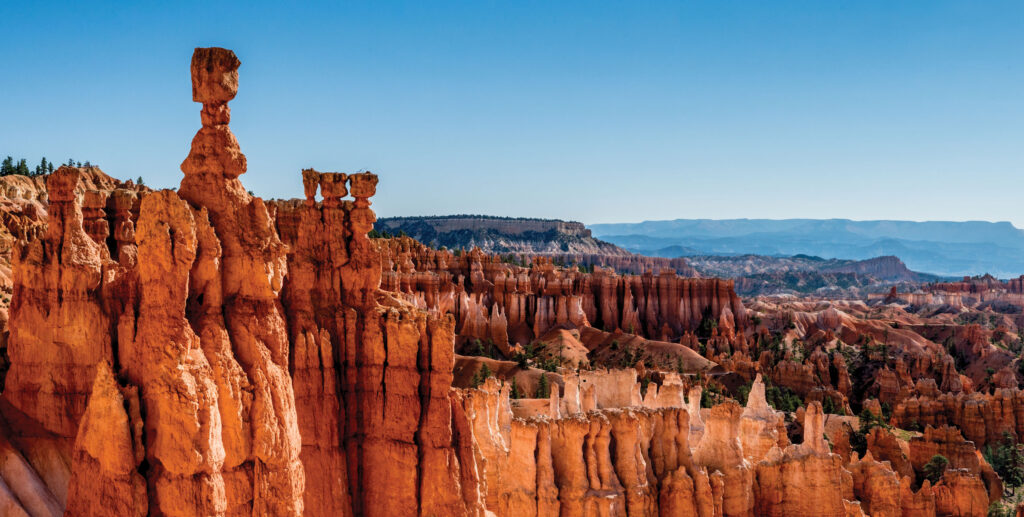
Photo credit : Marc/ Adobe Stock
2. Bryce Canyon National Park, Utah
Bryce sits at high elevation. That keeps summer days comfortable even when the rest of the region is baking, and it makes for dark, clear night skies without the shade planning lower elevations demand. The park runs regular astronomy programs through the summer season, and the amphitheater’s hoodoo formations make for a striking daytime backdrop before the fire gets going at night. Pack layers regardless of the season; at roughly 8,000 feet, you’ll have cold nights even in July. On the flip side, this makes the conditions ideal for something strong in your glass, and a flavorful blend to go with it.
Good for: comfortable summer temperatures, ranger-led astronomy programs, dramatic scenery.
Consider: North or Sunset Campground, both inside the park with easy access to overlooks.
Cigar stop: Most visitors fly into Las Vegas, the closest major airport, then drive north on I-15 toward Bryce. Las Vegas has one of the densest concentrations of cigar bars and lounges of any American city, but the idea should be to stock up on smokes rather than linger at the bar. These four shops are worth a stop before hitting the road: Cigarbox, an off-Strip lounge and shop with a deep, well-organized humidor and a quieter feel than the Strip venues; Cigar Warehouse, focused on selection and price over atmosphere; Las Vegas Cigar Outlet, with more than 3,500 cigars across 1,700 square feet of humidor — one of the largest selections west of the Mississippi; and the Las Vegas Paiute Tribal Smoke Shop, tribally owned since 1978, with a large walk-in humidor and tax-free pricing on every purchase.
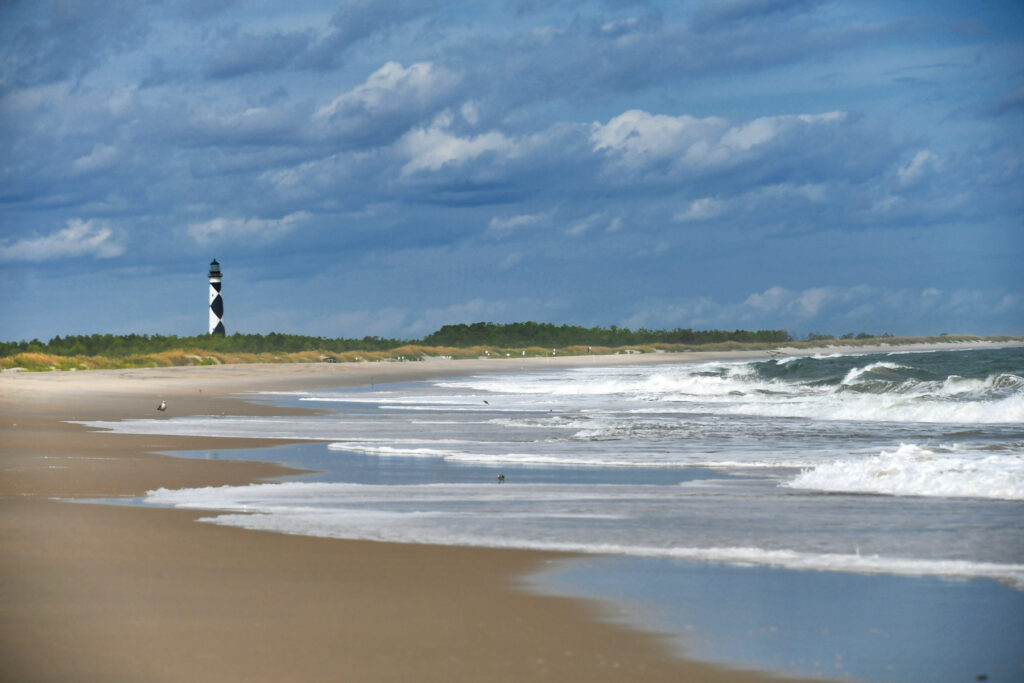
Photo credit : Mar g johnsonVA / Adobe Stock
3. Cape Lookout National Seashore, North Carolina
There’s no bridge, no road, and no town. Cape Lookout is reachable only by boat, which tells you everything you need to know before a single tent stake goes in the sand. Cape Lookout was certified an International Dark Sky Park in December 2021, the first Atlantic coastal Dark Sky Place in the National Park Service. Its 56 miles of undeveloped barrier islands have virtually no light pollution. Camping is allowed across most of the shore, though a handful of specific areas (Harkers Island, Portsmouth Village, the lighthouse complex) are off-limits for camping. There are almost no facilities, so everything from food to shade to water needs to be supplied by you. Not to mention cigars.
Getting there is part of the fun: passenger ferries run from Harkers Island and Beaufort, and a vehicle ferry (4×4 only) runs from Davis for anyone who wants to drive and camp on South Core Banks. It’s a different kind of “roughing it”; it’s flat, often wet, and entirely dependent on tide and weather. But being lulled to sleep by the sound of the surf is worth all the trouble.
Good for: coastal dark-sky viewing, genuine isolation, stargazing with your feet in the ocean.
Consider: book ferry passage in advance and check current wildlife closures before planning a trip.
Cigar stop: Morehead City Cigar & Tobacco, a short drive from the Beaufort ferry docks, bills itself as the Crystal Coast’s finest cigar shop and lounge, and they’re not wrong. Morehead is a dedicated cigar destination rather than a general tobacco or vape counter, and a natural last stop before the ferry crossing.
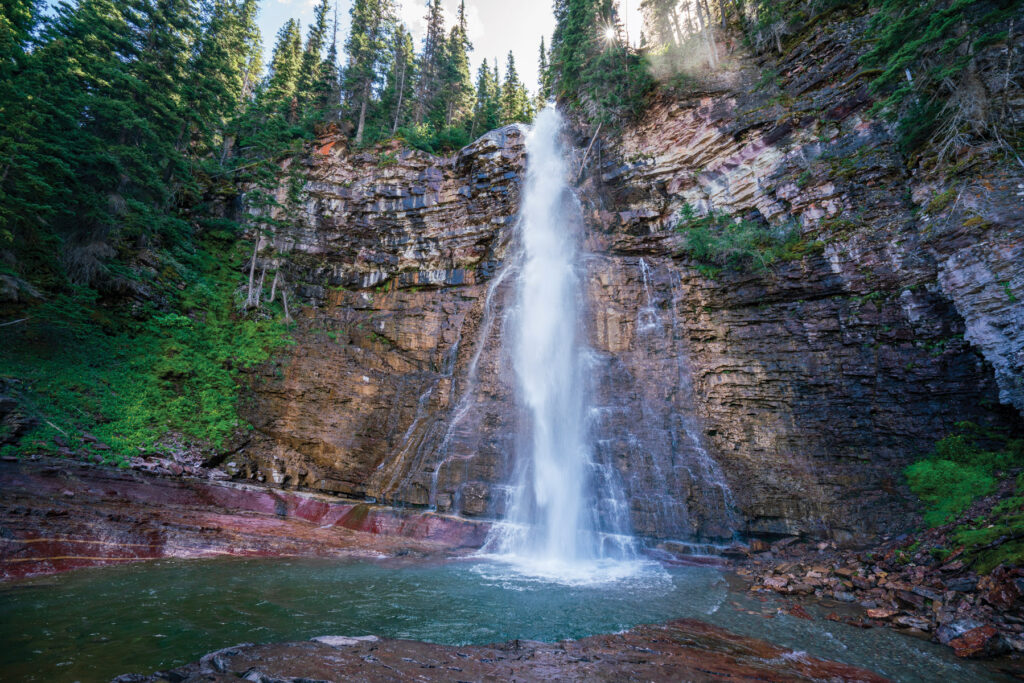
Photo credit : Juliovazquez / Adobe Stock
4. Glacier National Park, Montana
Glacier and its Canadian neighbor, Waterton Lakes National Park, became the world’s first transboundary International Dark Sky Park in 2017, a joint designation that required both countries to overhaul outdoor lighting standards across the parks and their surrounding communities. The payoff was well worth the trouble: the Milky Way is visible on a clear night from just about anywhere in the park, a rarity most Americans never get to see from home. The park hosts Logan Pass Star parties in summer, and the Dusty Star Observatory near the east entrance runs the largest telescope in Montana for anyone who wants a closer look at what’s overhead.
The scenery does its part too, with alpine lakes, jagged peaks, and glacial valleys carved over millennia and mountain evenings that stay cold even in July. That’s a plus for your cigar: cool, dry air and a windbreak of tree cover make for a clean, crisp environment to enjoy a smoke.
Good for: alpine scenery, world-class dark-sky programming, cool summer nights.
Consider: sites fill quickly in summer; reservations are typically needed well in advance.
Cigar stop: If you’re flying straight into Glacier Park International, you’ll be close to A Little Bit of Big Sky Cigar & Lounge, in downtown Kalispell. It’s a locally owned cigar shop and lounge on Main Street. The staff is friendly, and the selection is a solid mix of big brands and boutiques.
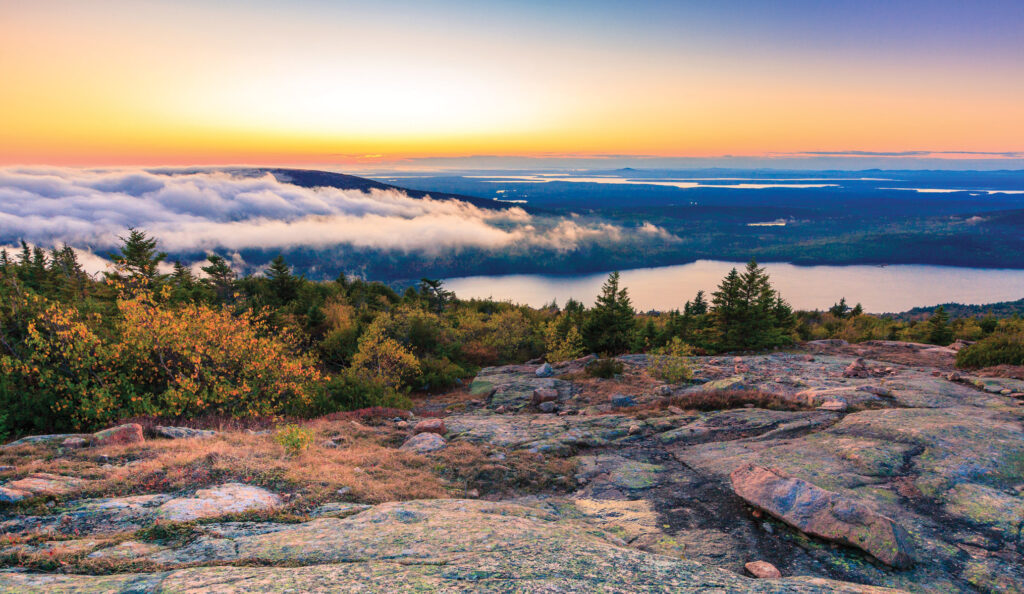
Photo credit : A l exeystoip/ Adobe Stock
5. Acadia National Park, Maine
Acadia was the first national park established east of the Mississippi River, carved out of Mount Desert Island in 1916. Its calling card is Cadillac Mountain, the highest point on the North Atlantic seaboard at 1,530 feet. From October 7 through early March, it’s the first place in the entire United States to see the sunrise. Even outside that window, visitors climb or drive up before dawn to be among the first in the country to watch the light come up over the Atlantic.
The dark-sky draw matches the sunrise one: clear ocean-side skies after dark, with the Milky Way visible from the park’s quieter corners. Four frontcountry campgrounds serve the park — Blackwoods and Seawall on Mount Desert Island, Schoodic Woods on the mainland peninsula, and Duck Harbor Isle au Haut. Duck Harbor is the outlier, reachable only by passenger ferry from Stonington and, by most accounts, the darkest sky in the park.
Good for: coastal scenery, sunrise-driven itineraries, a range from convenient to genuinely remote within one park.
Consider: book the moment the reservation window opens; Duck Harbor requires its own ferry booking out of Stonington.
Cigar stop: Ten minutes from Bangor International, The Cigar & Smoke Shop carries a real cigar selection and features lounge seating in case you want to enjoy one more smoke indoors before braving the elements.