“Milestones are never really recognized right away. It takes fifty or sixty years before people realize what an achievement it is. Take for instance, tobacco… – Bob Newhart, comedian, from “Introducing Civilization to Tobacco,” 1962
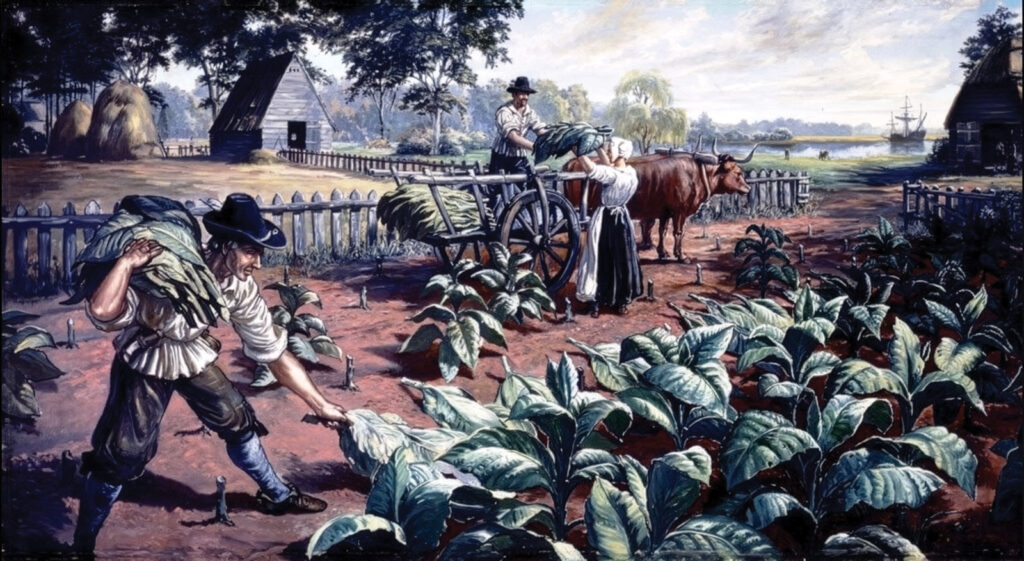
Photo credit: Colonial National Historical Park, NPS. Painting by Sydney E King
Settled in the unfettered fields of 18th century Maryland and Virginia, rows of tobacco graced the landscape, plants reaching nine feet tall. Dozens of laborers worked the fields, a single worker handling two acres, seeding, weeding and finally harvesting. The landowner watched over the steamy process, often carried out all day in the July sunshine. Children scampered about, carrying tools, shifting dirt and taking orders.
By October, large barns, capable of drying up to 18,000 pounds of tobacco, were filled with the cash crop.
The year was 1730, and the Virginia Tobacco Inspection Act transformed tobacco from a quality-plagued mess into a regulated commodity system. The price went from roughly $35 in today’s money, for 112 pounds of tobacco, to $190.
The nascent days of America were marked by ingenuity and toil. To make America into the powerhouse it has become, tobacco was a handy assistant. Of course it was smoked, chewed and used in medicinal tinctures. But it was also currency, with people paying taxes, court fines and even wages with tobacco.
Tobacco financed much of England’s early North American colonies, used as payment for imports that were necessities – clothing, books and furniture.
In the early 1700s, tobacco was the economic foundation of the colonies, stretching its influence from Jamestown, which would have died without the crop, across the seas to Britain, the largest market for colonial American tobacco.
“I am sure tobacco at the time was not differentiated between chewing, pipes and cigars,” says Drew Newman, owner of the J.C. Newman Cigar Company in Tampa.
Cigars were sloppy affairs, “rolled free hand without structure,” he says.
Soon enough, cigars would become the favored way to consume tobacco in the U.S.
From Exotic Seed to Colonial Currency
The tobacco trail started in the U.S. in the Great Salt Lake Desert in Utah, where archeologists in 2021 uncovered four 12,300-year-old charred tobacco seeds.
It’s not certain what form the prehistoric consumption took, but researchers believe the seeds indicated these natives used tobacco leaves and flowering stems, which they smoked or chewed.
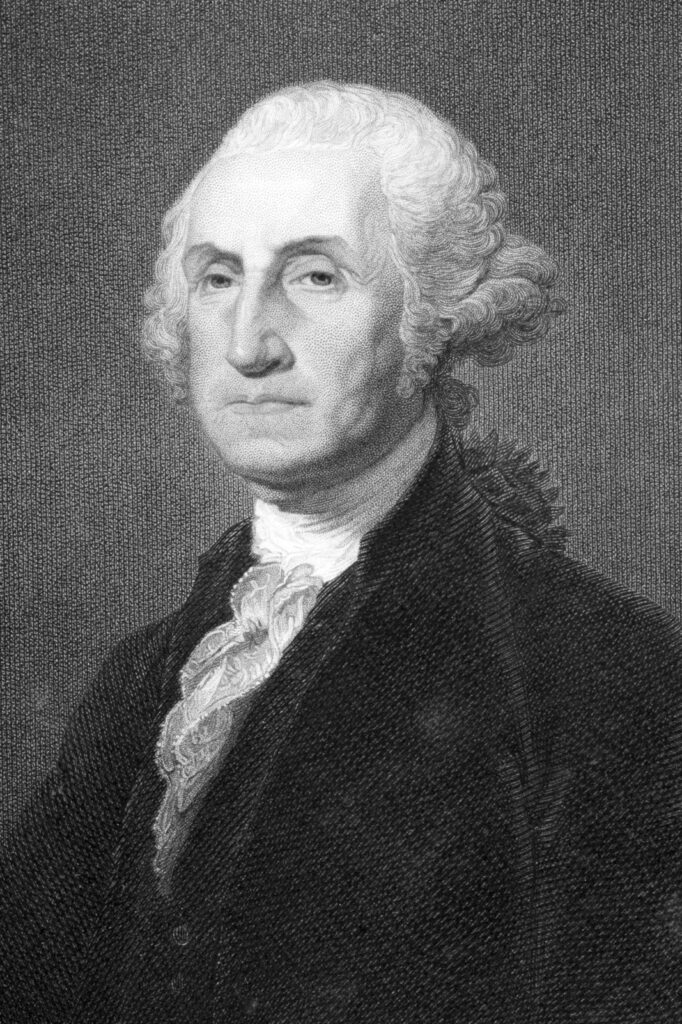
Photo credit: Georgios Kollidas/ Adobe Stock
Tobacco came to the U.S. via Cuba many years later, in 1492, when Columbus landed on the island to discover a wealth of riches.
“When Columbus sent some of his lieutenants to investigate inland and try and find a little more about the people who inhabited it, and what their habits were, one of the first matters they reported back was that these people were smoking,” Iain Gately, author of Tobacco: A Cultural History of How an Exotic Plant Seduced Civilization, told The History Channel in 2020 for a documentary.
“And to them, it was an absolutely surreal habit. They had no idea. They had no precedent for it in Europe. They came across a tribe who were smoking very large cigars.”
The Spaniards picked up the practice of smoking and took it to Europe, while U.S. settlers brought it across the Atlantic. Native Americans were ahead of them, growing acres of tobacco in Connecticut.
Settler John Rolfe is considered the first colonial farmer to raise tobacco for commercial use. It was 1612 in Virginia.
Within a decade, tobacco was an economic staple of our burgeoning country as more European settlers from the Plymouth colony came to Windsor, Conn. and planted tobacco alongside the Indians.
Soon, Britain was importing more than 20 million pounds of tobacco a year.
While most of the tobacco was being used in pipes and for chewing, soldiers coming from Cuba in the late 1700s noted a different kind of consumption on the island – rolled cigars, made entirely from leaf starting with the wrapper.
These soldiers came to North America with some Cuban tobacco seeds that would deliver the first Connecticut wrapper.
Tobacco in the 18th century remained a staple of the colonial economy. George Washington rented Mount Vernon from his sister-in-law starting in 1754. His rent? Every Christmas, he had to ship 15,000 pounds of tobacco to her.
But in selling it across the Atlantic, British merchants set the rate and the exchange. They would short the growers. Washington, who rarely missed a chance to chafe at British rule, complained to his London factory.
“That the Sales are pitifully low, needs no words to demonstrate,” Washington wrote to the vendor in September 1765. “Can it be otherwise than a little mortifying then to find, that we, who raise none but Sweetscented Tobacco, and endeavor I may venture to add, to be careful in the management of it… should meet with such unprofitable returns?”
By the 1770s, Virginia’s prolific planters were indebted to the empire they would soon rebel against. The American Revolution was funded in part by trade deals made by the colonies with France for arms and other supplies in exchange for goods – including tobacco, which was grown in all 13 colonies.
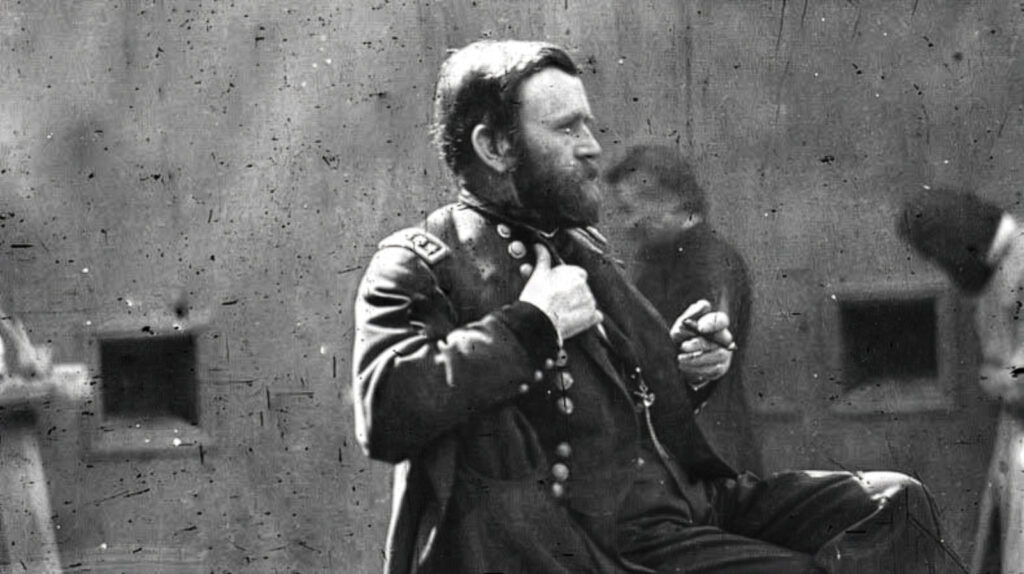
Photo credit: Ulysses S. Grant Presidential Library
Tobacco Goes to War
As Lewis and Clark set out to explore the western territories in 1803, they brought with them tobacco as currency. It was beloved by the Indians, and in their journals, the two discoverers noted how it was used to build trust, make peace, and nail down trading agreements.
Even as cotton, rice, and other crops emerged as valuable trading prospects, tobacco held onto its importance as a commodity and, just as important, a social lubricant.
“After arranging the camp we assembled all the warriors, and having smoked with them, the violins were produced, and some of the men danced,” Meriwether Lewis wrote in 1805, as the expedition headed home.
The cotton gin was developed in 1793, which pushed cotton ahead of tobacco as the primary domestic cash crop by the 1830s.
But in 1807, President Thomas Jefferson signed a total embargo on U.S. exports, including tobacco and cotton, to combat British and French interference with American shipping during the Napoleonic Wars.
Yet tobacco’s allure – people enthusiastically smoked pipes and cigars – held strong. Cuban tobacco continued to be highly valued, including the hand-rolled cigars the country produced.
U.S. tobacco farmers, particularly those growing the Connecticut strain, found themselves with a solid base of sales.
During the Civil War, cigars gained a high-profile fan – Union Gen. Ulysses S. Grant consumed, debatably, 20 sticks a day, giving the cigar a new profile, that of military might and political cache.
The war also created some of the first U.S. taxation systems on a commodity.
“The federal government early in the war is trying to tax anything,” Patrick O’Connor, author of The Political Reconstruction of American Tobacco, 1862–1933, told host Boyd Cothran on his podcast “The Gilded Age and Progressive Era.”
Tobacco producers, by now well-organized, wanted some structure for their enterprises and understood the need to create a tax revenue economy.
They “step into this void and say, ‘we’re going to be the ones to create that, to restructure the entire economy for this commodity,’” O’Connor said. “In doing that, the government is going to be able to extract revenue at some point. Turning this commodity web into what is more familiar to us in the modern context is a commodity chain. Their goal is that the system reflects their interests.”
The result, for better or worse, was a tax and regulation structure that would be used as a starting point for oversight for all crops in the future.
During Reconstruction, Virginia, Maryland and Kentucky produced 60 percent of the annual domestic tobacco crop.
North Carolina, Tennessee, Ohio, Missouri, and Connecticut were joining in, as tobacco blends diversified. Ohio, Pennsylvania and Connecticut were growing tobacco better suited for cigars, while North Carolina, Tennessee and Missouri were developing leaves that lent themselves to the emerging demand for cigarettes.
While the crop was still a key export, more tobacco was being kept on these shores as Americans began to consume more and more of its domestic product.
Cigars were king and somewhere in the mix, there was a new interest in the finer elements of tobacco.
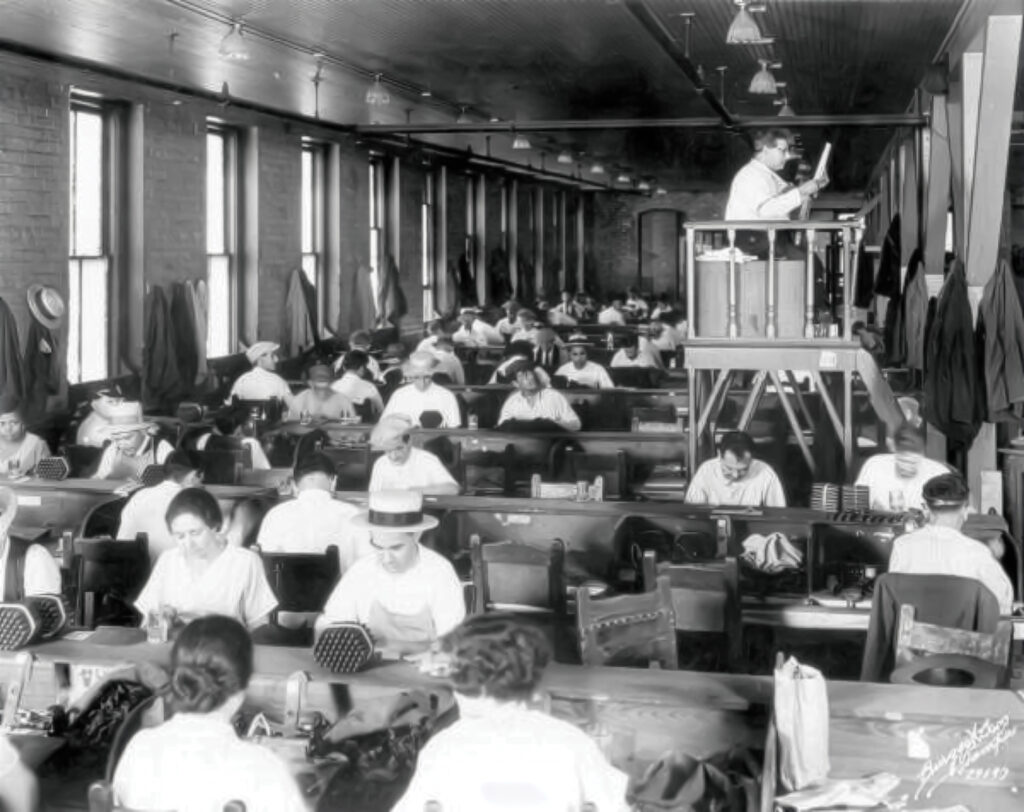
Photo credit: State Archives of Florida, Florida Memory- Photographed by Burgert Brothers
The Rise of the Cigar
The tobacco that was being grown in Connecticut was soon learned to be among the finest available, specifically for cigars.
“The river valley in Connecticut was specifically the best climate for tobacco that people were starting to appreciate,” says Jon Foster of Dunn & Foster Tobacco in Ellington, Conn. His family farm dates to the 1700s. Tobacco was a small part of the crop production in those days, and through its evolution, Foster has become known as the man to provide the best strains of Connecticut tobacco in the U.S.
“Cigars were what everyone smoked, and they were mostly rolled by the wives of tobacco farmers for a while,” Foster says.
Further south, Vicente Martínez Ybor was in the late 19th century developing what became Ybor City near Tampa, settled by Cuban, Italian and Spanish immigrant labor. They were producing some of the finest cigars in America, rolled with Cuban tobacco.
Corn, wheat and cotton had displaced tobacco as a large-scale commodity. But the cigar had emerged as the tastemaker’s tool, a sign of refinement.
The Machine That Changed Everything
It wasn’t the invention of a machine that catapulted cigarettes into the limelight. In fact, when James Bonsack patented the Bonsack Cigarette Rolling Machine in 1881, tobacco producers refused it, insisting that smokers would not want a machine-rolled smoke of any kind.
James Buchanan Duke saw money. He leased two machines for his North Carolina factory, embarked on a massive ad campaign, and slashed the price of a pack of cigarettes in 1889.
It took years of cultural integration, but when the federal government included cigarettes in the soldier rations during WWI, it brought back thousands of newly committed cigarette smokers.
By the 1930s, cigarette consumption permanently eclipsed cigars. Southern farmers growing flue-cured bright leaf varieties of tobacco prospered.
Older school producers in the north began to fade. The Great Depression didn’t help.
Cigarettes were the common man’s pleasure. Athletes including Joe DiMaggio appeared in commercials promoting cigarettes. Lucky Strike published an ad claiming that “20,679 Physicians say ‘Luckies are less irritating’” to the throat.
Cigarettes created an ad platform that beer would soon adopt; celebrity-driven, quirky, fun. Today’s Super Bowl commercials take cues from those old school tobacco ad campaigns.
The party for cigarettes began its end in 1964, when U.S. Surgeon General Luther Terry released a report contending cigarette smoking was linked to cancer. It was the first time the federal government, backed by a scientific review, branded a legal, widely used consumer product a proven cause of disease.
At the time, 42% of Americans smoked, mostly cigarettes.
The Reckoning and the Rebound
The Surgeon General’s report didn’t kill tobacco. But Congress tried its best. Cigarette ads were banned, heavier taxes were imposed on products, and a massive anti-smoking crusade was launched with the help of taxpayer dollars.
Tobacco was again creating social changes. Adult smoking dropped in half to 20% between 1962 and 2002. Today it sits at 11.6%.
The crackdown on cigarettes helped fuel a cigar boom in the 90s. Nicaragua, Honduras and the Dominican Republic took over where the U.S. cigar production market was ailing.
Today tobacco is demonized by popular culture and cigarettes are portrayed as poison. Yet premium cigars are enjoying a new prosperity and prominence, and even the U.S. Food and Drug Administration has been forced by the courts, at least for now, to stop trying to overregulate them.
Tobacco has survived a total embargo, then rebuilt its global supply chain from nothing, and is still fighting a regulatory battle in Washington today. It’s been 250 years of tobacco finding and fighting its way forward, in the best tradition of the American spirit.