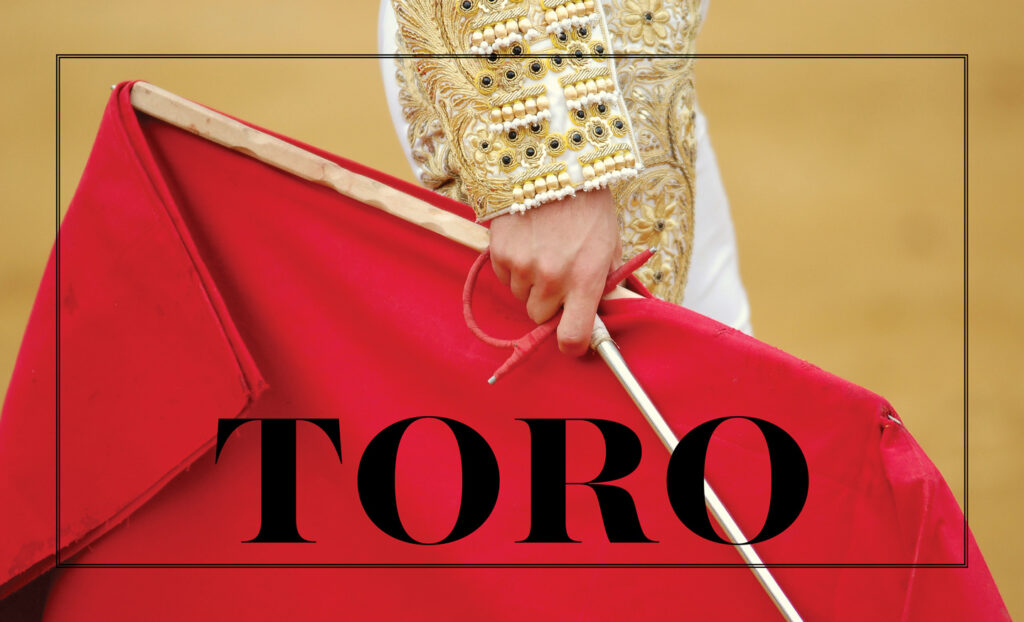
Since the Middle Ages, Spaniards fought and ate toro. The tradition continues in an innovative, new way.
Somewhere in La Mancha, in a place whose name I do not care to remember, a gentleman lived not long ago… and each year when the festival of his village was celebrated, he brought bulls from the meadows to the town square and the villagers fought them. When all the bulls were killed and the villagers were merry, they cooked the meat over a wood fire and together they enjoyed its potent flavor, seasoned by the toro’s rich diet, softened by the wine of a local bodega.
Like the story of Don Quixote, the tradition of the sacrifice and eating of the toro lives on across Spain. But, this culinary story has evolved. The meat of the toro de lidia, the fighting bull, can now be found in Madrid’s most exquisite restaurants, from the savory rabo de toro, oxtail, to solomillo, the tender sirloin of the bull’s rump. Two-star Michelin chef Mario Sandoval has redefined the preparation of toro meat with innovative new dishes and high pressure cooking to draw out its unique and powerful flavor.
Eating the meat of the toro de lidia is a Spanish tradition that goes back to the Middle Ages. Coming face to face with the bull, conquering it, and eating its meat was believed to bring one strength (as well as sexual vigor). Each August, the population of Villar de la Encina, a town of some 150 permanent residents in a hot, dusty plane of La Mancha, swells to more than 700 to honor its patron saint, Rocco. “They are the most important part of the celebration, the dancing and the bulls,” said La Mancha native Jesús Victor Madrid Ruíz, 54. “Bull meat has a strong flavor. By strong, I mean it fills your mouth. It’s the same flavor as beef, but much more intense.”
Jesús, though he now lives in the capital, returns with his family each year to his town to act as the town’s torillero, the man with the proud task of opening the gate to allow the bulls to enter the plaza. Jesús and his friend, the town’s mayor, counted how much money was available for bulls each year, and made a visit to a local bull ranch to choose from the deshechos, the imperfect bulls. Maybe a horn was a bit turned down. Maybe the coat was not as luminescent and beautiful as the others. These bulls were perfect for the small pueblo where Jesus lived and the town plaza he helped build in Villar.
“The passes we did weren’t with the cape. They were with a blanket, a jacket, or whatever cloth we could find. Everyone would just take whatever they had,” he said, describing the excitement and participation of the townspeople, who boldly neared the bull to dare a pass in the plaza. “A lot of times, you didn’t feel the hit of the bull because of the tension that you have when you’re in front of a toro, but it hurts afterward. When it hits you in the plaza, it would turn you into dust!”
When the bull tired and it was time for slaughter, Jesús, the town mayor, and a few other hefty men would grab hold of it from every side. One would lasso it, then someone would grab one horn, someone else the other, somebody would pull the tail, and together they would hold the bull still enough to cut the spinal nerve. Once the bull was dead, they would skin it and hang it up for a day. This way, the meat, tense from the day of fighting, would soften a bit. On the second day of the festival, it would be butchered for a stew that everyone in the village would enjoy.
About seven or eight pots would be set over wood fires. First, the cooks would sauté some onions, tomatoes and garlic, contributed by local farmers. This would be set aside while about 20 pounds of toro beef would be placed in each pot and sautéed until half cooked. Then, about 2-3 carafes of white wine from a local bodega and water would be poured into the pots, and the sautéed vegetables returned. After another hour of slow cooking — as the cooks sipped wine, socialized and stirred — the stew would be ready to enjoy. With a wide smile on his round face, Jesús leaned in for this part of the story, to reveal that the softest cuts with the most concentrated flavor, the solomillo, would be set apart, cut in fillets, barbecued and consumed by the cooks.
The King of Spain put an end to the eating of the toro in most small-town festivals of Spain in 2002. At the height of swirling fears surrounding the outbreak of mad cow disease, Royal Decree 260/2002 required that all meat undergo strict inspection and careful refrigeration. That meant small towns could no longer fight, slaughter and eat bull meat during the same festival.
Jesús said that after the decree, bulls would still be bought and students from a local bullfighting school would fight them, while refrigerated trucks stood by ready to take the bull carcass away to a slaughterhouse. Yet, Jesús makes sure all the fun hasn’t been taken out of his small-town festival. He said he and some friends still get a feisty two-year-old bull sometimes, and take it from bar to bar during the day. Then at midnight, they’ll release it on the dance floor and yell, “¡Antorcha!” or “fire!”
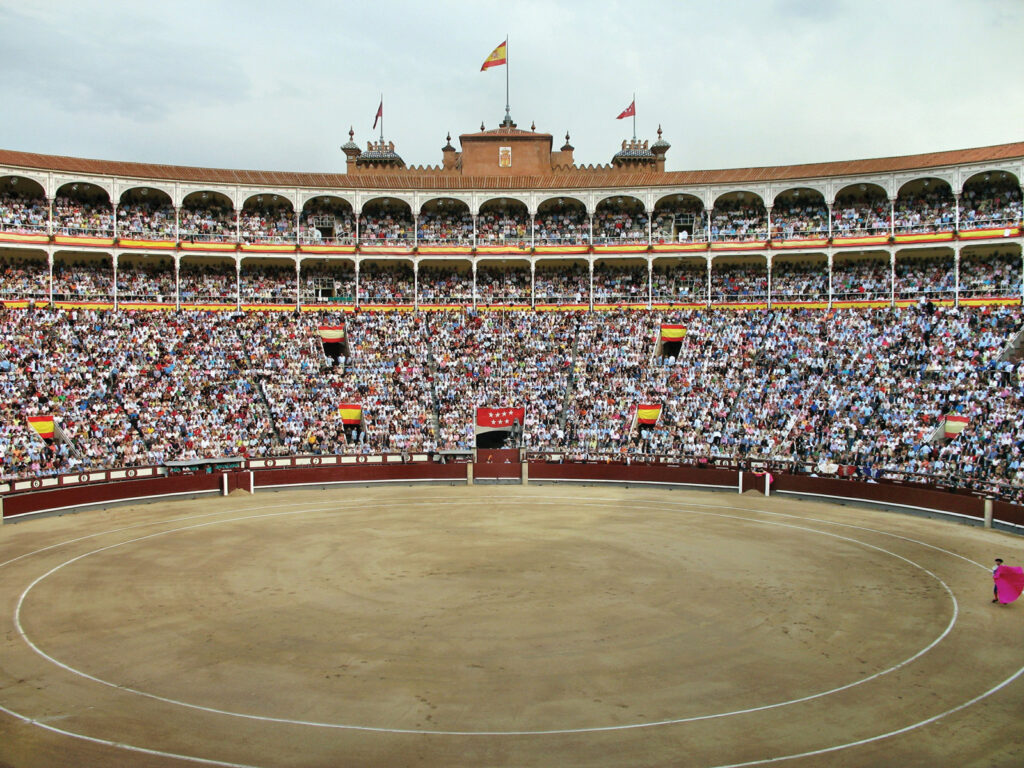
© murasal / Adobe Stock
Matatoros become Matadores
According to bullfighting historian Francisco Aguado, the original bullfighters of the 16th century were not professional matadores in trajes de luz, or the golden “suits of light” seen at today’s bullfights. They were matatoros, bull killers. A team of butchers, to be precise. The team was contracted by the town mayor to provide a spectacle for the townspeople and then to slaughter the bull afterward. Teams of matatoros would compete against each other, with the victors receiving the bull meat.
By the 18th century, in the big cities, such as Madrid, bullfights organized by the king or city government donated proceeds to a local hospital, with the meat given to the poor. In some towns, the best cuts of meat from a toro sacrificed in the plaza were auctioned to the highest bidder. A medieval-style auction still exists during the festival of Saint John in the Castile and León town of Soria, in northern Spain. At noon on Thursday, the bulls are herded from nearby Mount Valonsadero down to the town’s Plaza de Toros, as thousands of townspeople stand by to watch the bulls stampede. On Friday, two corridas, or bullfights, are celebrated at the plaza. The next part of the Festival of Saint John is Saturday of Agés, when cuts of toro meat from the previous day’s fights are distributed to the cuadrillas, or the bullfighter and his team. In the afternoon, the choicest cuts are auctioned to avid carnivores.
Not until the 19th century, Aguado explained, did bullfighting develop a more formal protocol and professional bullfighters begin to appear. Businessmen, who were sometimes also butchers, organized the bullfights. Money lost at the box office could be recouped in the sale of the meat.
While Jesús reminisces about the days when a bull could be fought and slaughtered during the same festival, some of Madrid’s finest restaurants are serving rabo de toro de lidia, or oxtail of the fighting bull, in creative and delicious ways. Meanwhile, one of Spain’s top chefs is creating a resurgence of attention to the meat of the toro by exploring new ways to soften the meat and draw out its grass-fed flavor.
From Plaza to Plate
“It’s a deep red color, and that scares a lot of people,” said Jorge Galindo, longtime butcher at the famed Victor Aguirre butcher shop, a tiny establishment within earshot of the most important bullfighting plaza in the world, Madrid’s Las Ventas.
Victor Aguirre has been cutting and selling the meat of toros de lidia since 1956. Legend has it that its founder and namesake would breakfast on two or three thin slices of bull sirloin, seared in a hot pan and sprinkled with salt, each morning, until he died in March 2016 at the age of 94.
In mid-February, the toro section of the tiny corner butcher shop featured the meat of a bull that fought in the first festival of the bullfighting season, held in the mountain village of Valdemorillo, some 25 miles northwest of the capital. Locals say that before a roof was built on the plaza in 2007, grounds crews would sometimes have to rake snow off the sand in order to celebrate bullfights so early in the season.
Compared side by side in the butcher shop, veal is a pale pink in color, while the toro de lidia attracts the eye with its full, red color, a leaner meat, enriched by a free-range life and the best diet that can be afforded.
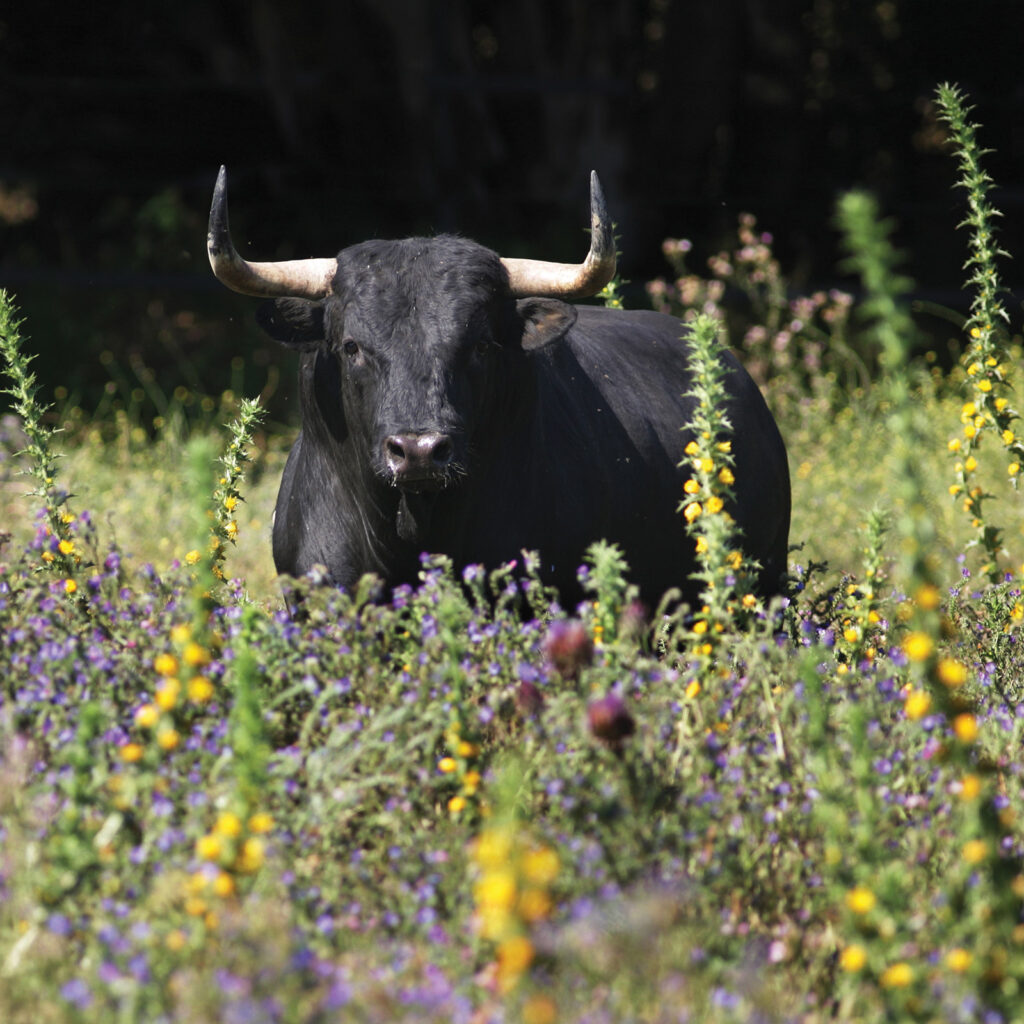
Ranchers spare no expense to have the strongest, most beautiful bull to fight, said Pablo Mayoral, whose family ranch, La Laguna, raises bulls for Spain´s top plazas, and novillos, or bulls under four years old, for slaughter. Mayoral said that until now, ranchers were not concerned with the value of the beef, but rather, with the bull’s valor in a plaza. As such, toro de lidia meat typically sells for one-third less than other beef, despite its leaner quality, potent flavor, and free-range diet. Only since 2015 has the association of bull ranchers, Fedelidia, begun to promote toro de lidia with a special label. The association says that one-seventh of Spanish meadows are dedicated to raising bulls. That’s 1.3 million acres, or an average of 5 acres for each bull to roam and forage. The result is a natural preservation of the Iberian Peninsula’s ecosystem, where endangered species such as the Iberian lynx, Imperial Eagle and Black Stork share a habitat.
Bulls primarily feed on the grasses of these vast meadows, and ranchers limit human contact so that when the bull faces a man on foot with a cape in the plaza, it is the first such experience. This genetically unique race primarily roams free on more than 1,000 ranches in Spain, but some ranchers will run the animals to assure they are in top physical condition. The result of this lifestyle is a lean meat that is low in fat, and high in vitamin D and protein.
“You can always recognize a bullfighter,” said Jorge Trifón, Jr., son of the owner of El Fogón de Trifón. The upscale restaurant takes pride in its signature dish, rabo de toro, and the fact that Madrid’s top bullfighters visit the restaurant to enjoy it. “You can tell by the way they talk, the way they dress, the way they walk.” Two weeks prior, young sensation and Madrid native Alberto López Simón dined on Trifón’s rabo in this castizo, or authentic Madrid restaurant.
During Madrid’s San Isidro festival in May, when bullfights are celebrated each afternoon for 30 days, Trifón serves 300 pounds of rabo. Each oxtail weighs just 2 pounds on an animal that can easily weigh more than 1,100 pounds. The rekindled interest in preparing rabo has led the price to quintuple from about $2 per kilo a decade ago to between $8-12 today.
For Trifón to achieve the savory, fall-off-the-bone quality from a toro bravo, first he soaks the tough meat in milk for 12 to 24 hours. Then he marinates it for 6 to 10 hours in a mix of Tempranillo wine from the Valtiendas region of Castile and León, water, the fat of a cured bellota (an acorn-raised pig leg from Jabugo), chopped carrots and onions, and a dash of pepper. When ready to cook the rabo, the chef sautés garlic in a copper pot, adds the meat, adds the wine and water mix, and cooks on low heat for about four and a half hours; it can be done in 55-60 minutes in a pressure cooker. At the end, the mix is topped off with an ounce of port wine, and served in a shallow bowl of French fries to soak up the flavorful, glistening juice. During the peak of the bullfighting season, from March to September, the rabo comes from fighting bulls in Madrid region. Out of season, the fattier rabo of the Galician blonde cow is used.
Though just a 10-minute walk down Calle Alcalá from Las Ventas plaza, Trifón says he doesn’t serve the toro meat from the famed plaza. “Legend has it that it goes to only one person,” he said. Pressed to reveal who he believed that person to be, both he and his son said simultaneously: “A consumer of rabo.”
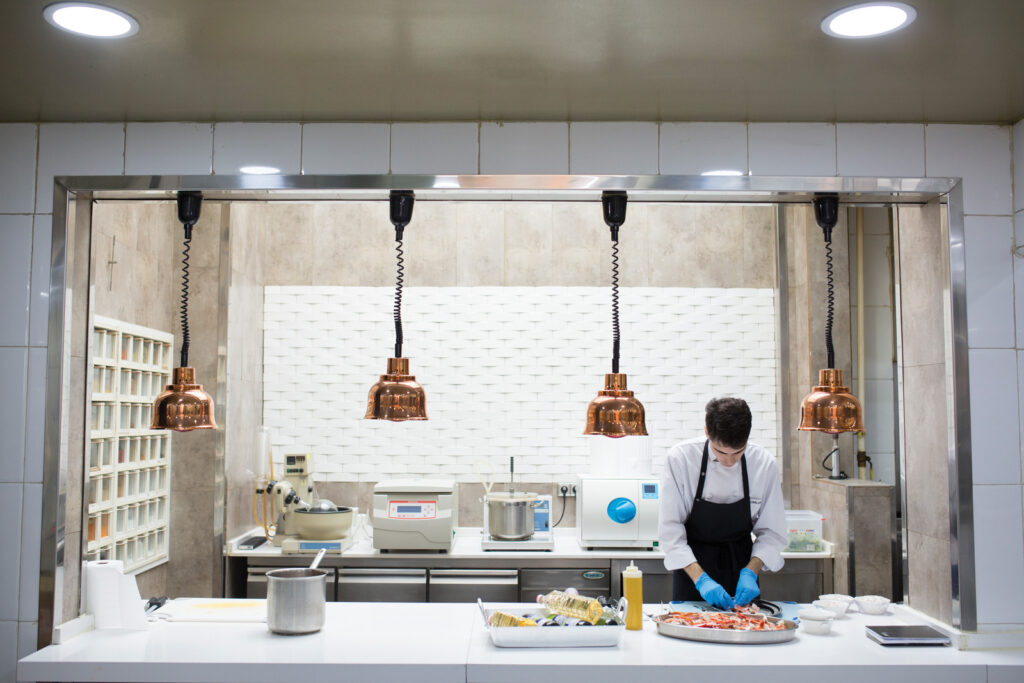
PHOTO: Javier Carbajal
Bull Meat Served on Tables of White Linen
“I am an aficionado, a grand aficionado,” said two-star Michelin chef Mario Sandoval after a tasting of six preparations of toro meat at his restaurant, Coque, in the small town where he grew up, Humanes de Madrid, some 12 miles from the capital. With his trademark raised eyebrow and angular-cut, thinly shaved beard, the chef added, “I am an aficionado, and I also say that after the bull is killed, you can make art.”
Mario, a third-generation chef, first ate a stew of bull meat during the San Fermín festival in Pamplona with his father as a child. Though raised in the kitchen, the chef didn’t begin to experiment with preparing the meat in his restaurant until three years ago, at the urging of his older brother, Rafael, a retired matador de toros. Since then, he has earned two Michelin stars (awarded in November 2015), and his preparation of toro has been nothing less than a sensation in high-end Spanish cuisine. Among aficionados, “Mario Sandoval” is the answer to the question of where to find the best carne de toro. Coque may be the only restaurant in Spain that serves more than one cut of bull meat, but the 40-year-old Mario intends for that to change.
“The objective of all this is to give value to the meat of the toro,” he said. “It’s such a beautiful animal that what I want is to defend it, especially against the anti-bullfighting movement. I want to defend the toro bravo, the brave breed, as a sustainable food supply, and give it value.”
Mario describes the flavor of the fighting bull as singular. “The flavor of the oldest breed in the world has a taste like none other, just like the Wagyu, or the Scottish Angus, or the Kobe,” he said. “There is a great deal of difference.”
Mario sources his toro de lidia from many ranchers — including those known for raising Spain’s fiercest bulls, such as Juan Pedro Domecq and Victorino Martín — and he insists the carne del toro must be enjoyed with a full-bodied Spanish wine of crianza (aged two years, with at least six months in oak) or reserva (aged three years, with at least one year in oak).
PHOTOS: Javier Carbajal
For a set menu ranging in price from $115-$160 ($180-$240 with wine pairings), guests will have the “Coque experience.” Once they pass through the puerta grande, or big door, leading into the restaurant, they begin a circuit of three acts. First, they descend into the wine cellar, where a floor of glass enshrines a “cemetery” of wine bottles resting on white stones, an homage to the restaurant’s first wine menu some 40 years ago; today’s wine list exceeds 1,500 bottles. Guests enjoy a cocktail and appetizer in the cool, modern cellar, surrounded by elegantly lit shelves of wine bottles and barrels. Next, one party at a time, guests take an elevator to the second-floor kitchen, where they are served an appetizer and a glass of wine at the nook of a steel prep table, just beyond the reach of more than a dozen chefs, as they labor over leaping flames. Afterward, the party descends a few steps for another tasting beside the restaurant’s giant, original brick oven, where 80 percent of the dishes pass. Beside it are three smaller smoking ovens, below each of which are tucked distinct cuts of wood: holm oak for meats, game and mushrooms; olive for vegetables and dairy dishes; and ash for seafood. Nearby, guests pass a portrait of Mario’s father, Rafael Sandoval, and a door slides open to reveal an intimate dining room, where the main course is enjoyed. In the final act, guests descend to the first-floor dessert room to choose from an array of locally-inspired creations.
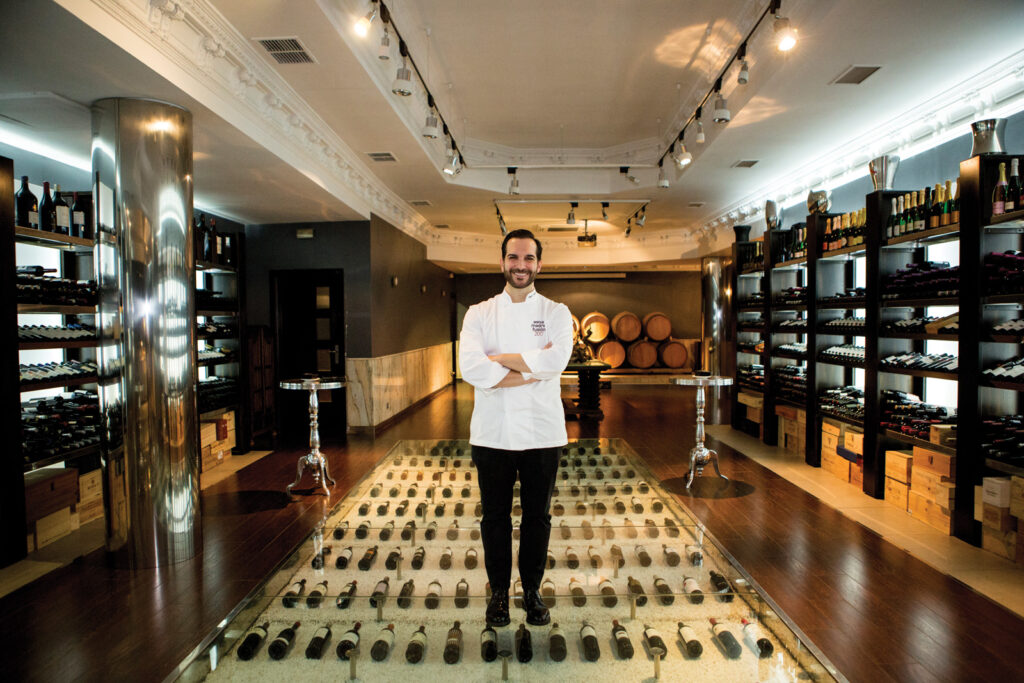
PHOTO: Javier Carbajal
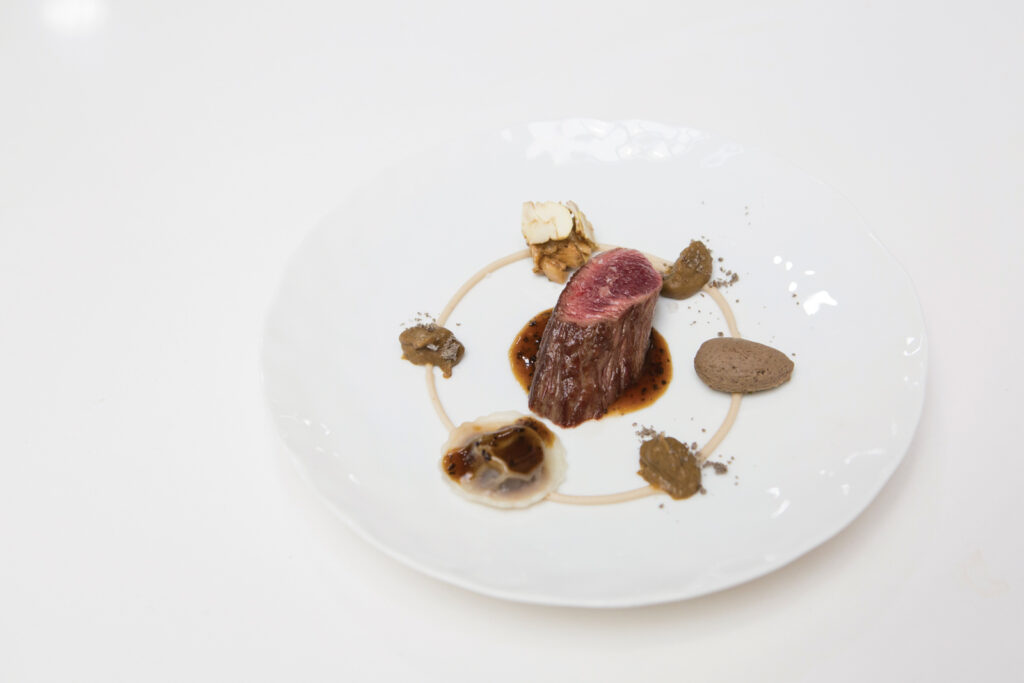
The featured toro dish on a recent visit was a stew of the shoulder chuck and tendon, topped with the yolk of a poached egg, and adorned with French onions and Melanosporum truffle. The shoulder chuck and tendon come from a portion of the bull just behind the head, precisely where a matador must drive his sword in the third and final act of a bullfight. The tendon is the toughest part of the bull, so rigid that it is used to hang the entire dressed bull carcass before butchering. To soften this meat for consumption, Mario cooks it at 176 degrees for 48 hours, then three hours more in a stew. The stew has the consistency of pulled pork and is dressed with tiny pickle slices and topped with thin, curled morsels of southern European black truffle, placed atop the egg by the chef with tweezers. The result is a sumptuous flavor, full and tender, with a hint of barbeque.
Discovering how to draw out the flavors of the fighting bull through high pressure cooking was one of the bigger challenges for Mario, and led the union of bull breeders to team up with him and finance research to help market toro meat. Now, he is trying to follow the same path for creating value that was used by producers of jamón ibérico de bellota, the Iberian, acorn-raised ham that demands premium prices. First, he is exposing people to the flavor of toro meat through dried smoked sausages.
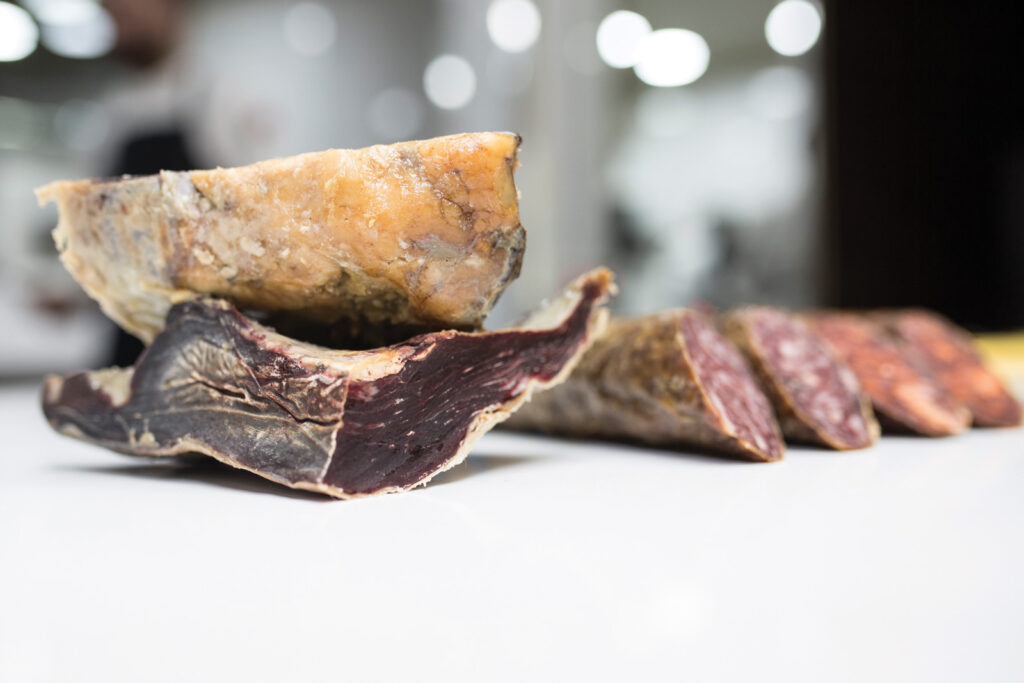
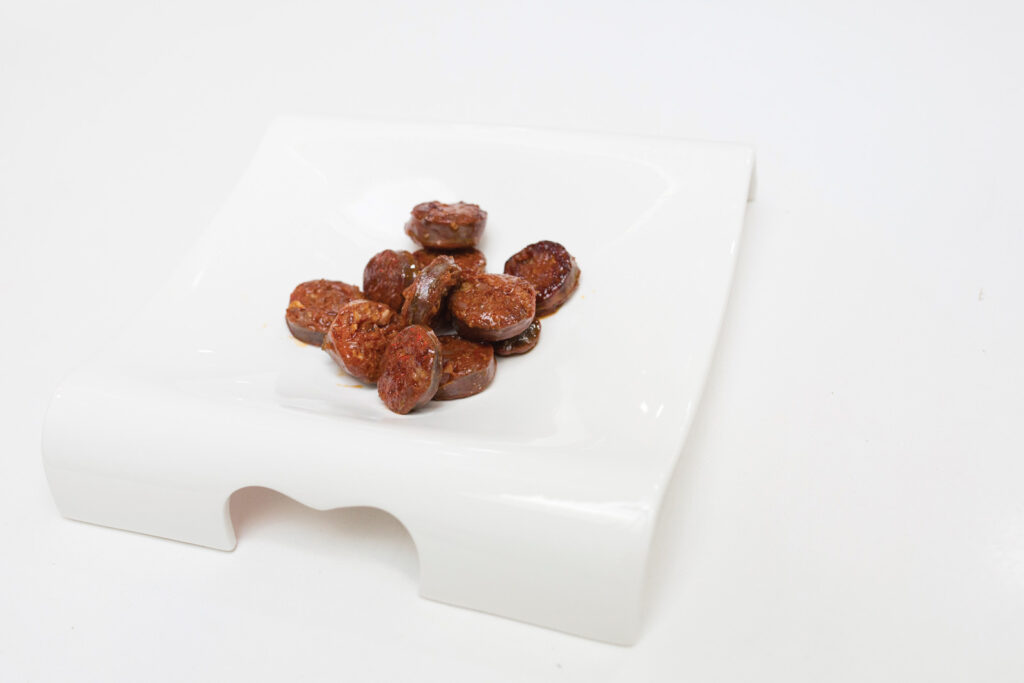
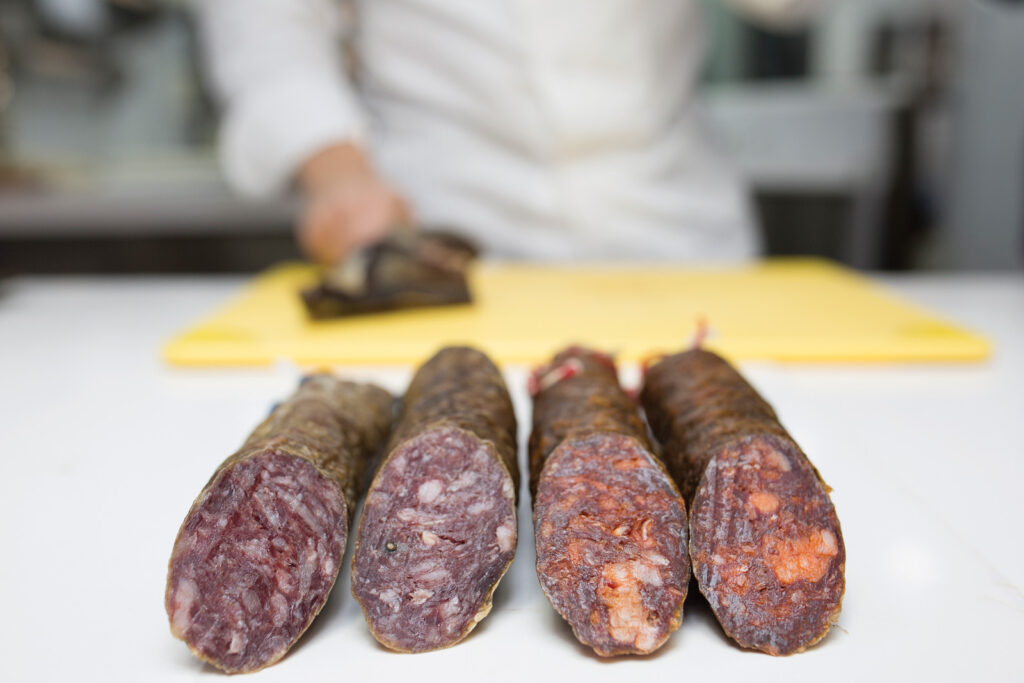
Mario works with two smokehouses, in León and Mostoles, to make four varieties of sausage using the shank, flank and rump of the toro. He has a spicy chorizo with a potent combination of paprika and red pepper. There are two varieties of dried sausage — a yearling toro and a toro of two years — each smoked with the fat of cow, rather than pork, and cured for 3-4 months, a relatively short curing process due to the leaner quality of the toro meat. The result is a robust flavor with juices that pique the taste buds. Finally, he offers an exquisite Cecina, the smoked and cured meat of a 5-year-old toro. The master chef explains that the older the animal, the more delicious the Cecina. Mario laments that a bull that has been killed in a plaza cannot be used to make sausage, prohibited by the same royal decree that put an end to the slaughtering and eating of bulls in small-town festivals. “We want to make a statement of intent to the Ministry,” he said, of plans to formally object to the decree alongside the breeders’ union. “So that this decree is modified, and I have the freedom to work with the toro de lidia.”
Mario’s campaign to promote the meat of the fighting bull will surely gain more aficionados when he re-opens Coque in the trendy Madrid neighborhood of Chamberí this Fall, and increases capacity from 30 to 45, also expanding service to both lunch and dinner every night of the week.
“The virtue of the toro bravo is that you have to know how to treat the meat. Toro bravo has a way that it must be treated that we are going to teach society,” said Sandoval, alluding to a cooking school partnering with the French Le Cordon Bleu that will be housed in his current restaurant.
“You have to cook consciously. So, this implies values of sustainability, values of healthfulness, valuing the ecosystem, and there the toro bravo fills a very important role,” said Mario. Of the new restaurant in Madrid, he adds, “Of course there will always be a place for the meat of the toro bravo, of course, and we will defend her with cape and sword!”