Detroit’s airport is considering a cigar lounge, bucking a national trend of closures and smoking bans. The proposal sparks debate over smoker amenities, public health panic, and airport executives who hope to give the people what they want.
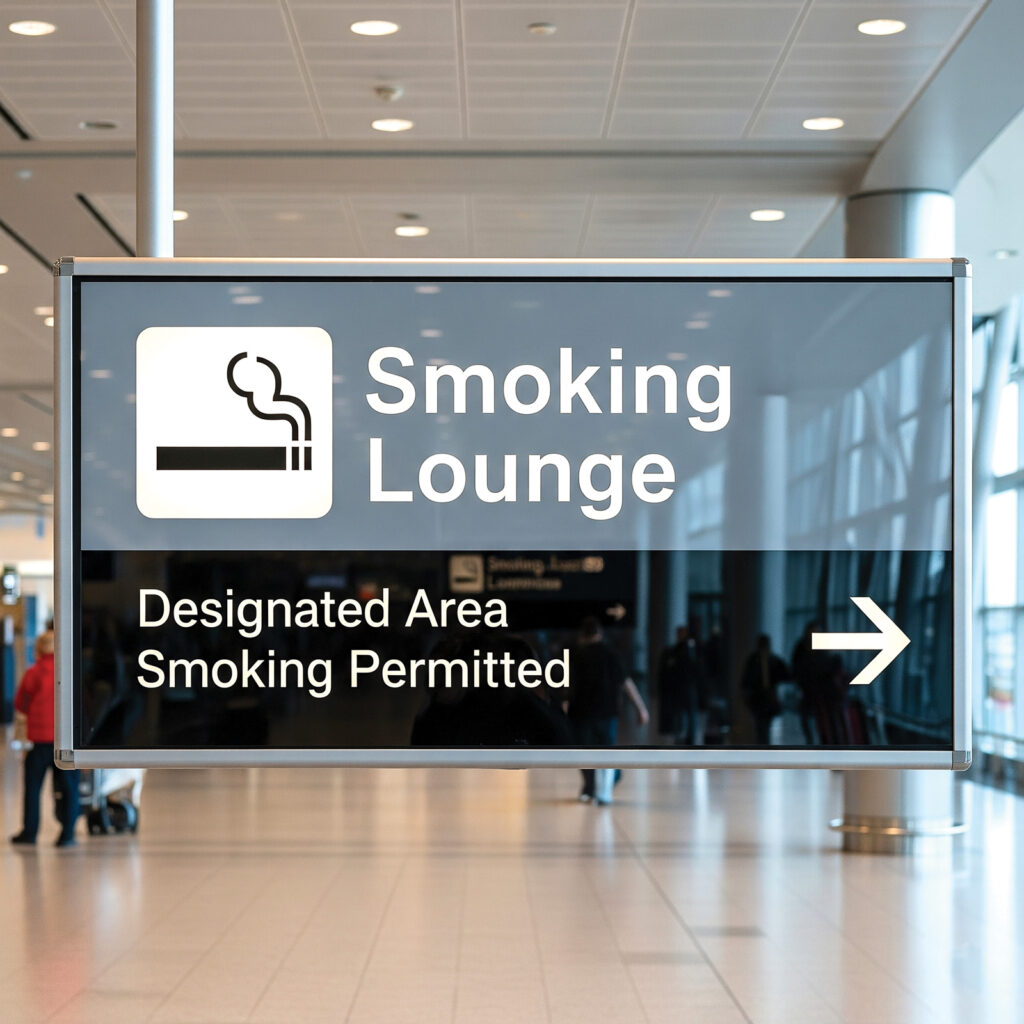
The online playpen is filled with reports on cigar lounges in the U.S., mostly noting their demise.
But Detroit Metropolitan Wayne County Airport, airport code DTW, is ready to stake its claim to airport cigar lounge territory. It’s already got cigar tongues wagging.
“DEN use[d] to have a cigar lounge in the main terminal but I think it’s long gone these days!” lamented a post on a Reddit cigars community.
“The one in Nashville is ok, I see that as a smoke shop, I just flew out of ATL you can only smoke outside…I think maybe MIA have a true lounge fitting,” a Facebook poster claimed in the hackneyed scribbling of social media.
A wait for a trek into the friendly skies leaves most cigar smokers in a bind; some airports feature an eye-stinging smoker’s cubicle, a poorly vented room dominated by cigarettes and, let’s face it, a less than desirable clientele.
These spaces sometimes even provide windows onto the terminal, a public shaming of blue fog where tobacco op- ponents can ridicule individual choices. The overseers of the airport in Detroit, though, are bucking the anti-smoking zealots with a proposal for a cigar lounge at DTW.
Airports are “difficult places to do business in general.The airport authorities are very powerful.
It’s a controlled environment and they regard what they have as very special…” Paolo Garzaroli, president of the Graycliff Cigar Company
In December, the Wayne County Airport Authority rolled a conversation about a cigar lounge into a special meeting called to attract potential vendors, bur- ied among discussions that included a coffee shop, a quick serve restaurant and a food hall.
“Cigar bar lounge and restaurant” is how it framed the proposed venue. The word hit quickly and among the first to be interested was Wild Bill’s Tobacco, the state’s largest tobacco retailer and host of the annual Great Lakes Cigar Festival.
“We’ve been in contact with folks [at the airport authority] and they will put it up for pitches,” says Jonathan Welzel, chief marketing officer of Wild Bill’s.
Airport cigar lounges, a formal setting with minimal cigarettes, hopefully a selection of fine beverages, are now defunct in the U.S. The reasons are manifold but are due foremost to the bizarre pride cities now take in banning smoking.
“Denver International Airport Goes Smoke-Free with Closure of Last Remaining Smoking Lounge,” read a 2018 press release from the management at DEN, where the lounge was removed. It joined a cigar lounge in the Cincinnati/Northern Kentucky International Airport in demise, as local rule-makers appeased well-funded smoking opponents.
There remains an outpost: While the internet buzzes with cigarette options, in Nashville, the Travelers Post Smoking Lounge promises on the airport’s website that “Travelers can enjoy one of life’s pleasures – a glass of wine, beer, liquor of choice, or a unique blend of coffee – with a great cigar.” A phone call to a number connected to Travelers goes nowhere, as does an email to the Metropolitan Nashville Airport Authority. But this is the lone verifiable cigar-oriented location among
U.S. airports. Photos warn that one should prepare to endure some cigarette smoke.
Internationally, lounges are more prevalent but a listing is fraught; given the politics of smoking, a lounge that is noted today may well be gone tomorrow.
Airports in Singapore, Tokyo, Frankfurt and Abu Dhabi are reported, with vague sourcing, to have dedicated cigar lounges.
In 2013, Paolo Garzaroli, president of the Graycliff Cigar Company, was bullish on airport cigar lounges both domestic and international.
“Right now we have four lounges, but we shall have another six very shortly, so it will be a total of 10,” Garzaroli told The Tribune in Nassau, Bahamas, his hometown paper. “We’re just finalizing details now, and as soon as that finishes, we should be good to go.”
His locations included Nashville and Cincinnati/Northern Kentucky. He was rolling, encouraged by the possibilities.
Until he wasn’t. All of Garzaroli’s plans were thwarted, falling prey to bureaucracy, smoking foes or a combination of both.
Endangered: Airports are increasingly banning all smoking
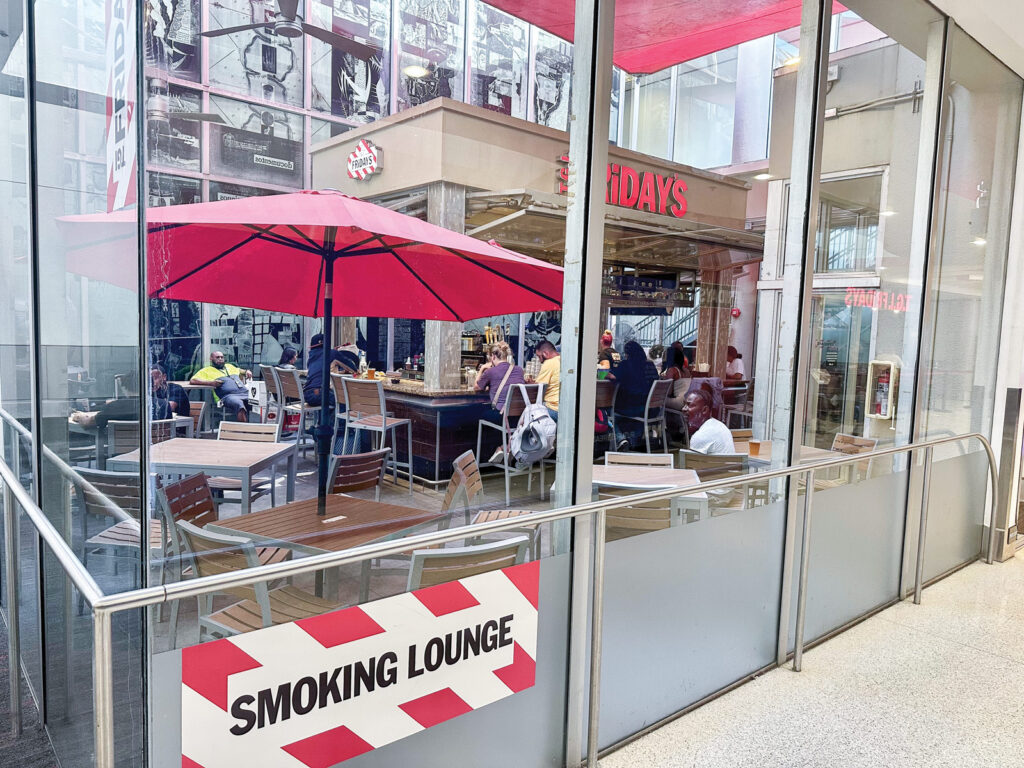
Photo credit: Cigar Snob Magazine
Garzaroli won bids for lounges in Orlando, Atlanta and Houston, none of which materialized.
“I won the bid in Atlanta and then it was good, went through the mayor’s office and the city council secured funding,” he says. “The next thing I know is I get some calls from different individuals connected to the city who said this will never get through.”
They were right; in 2019, the Atlanta City Council passed an indoor smoking ban to include the airport, following through on the threats from city officials.
“I tried to work the system a little bit with some influential people in the city, but I knew that this was just ‘give it up,’” Garzaroli tells Cigar Snob. Airports, he added, are “difficult places to do business in general, as I think the airport authorities are very powerful. It’s a controlled environment and they regard what they have as very special and say, ‘look, I am bestowing this honor on you and by that I am allowing you the opportunity to make so much money you have to pay me an exorbitant amount for that to happen.’ It’s a great idea in principle but for the op- erator, it is among the most ridiculous experiences you ever want to have.”
Garzaroli’s frustrations speak to a broader tension between opportunity and reality in the airport business. Even if you could secure the space and swallow the costs, there was still the question of whether the concept itself made sense for travelers.
“On one hand, with today’s travel sucking at such a high level, waiting for flight delays you could probably muster some traction for a cigar lounge,” says David Haddad, a cigar consultant and owner of Fumar Cigars in Phoenix. While today’s advanced air filtration systems can ensure smoke won’t bother passers-by, he has doubts that air filtering could be sufficient to keep patrons free of a tobacco scent.
“If I am a cigar smoker and about to get on an airplane, I do not want to be smelling like a cigar,” he says. On the other hand, in the airplane passenger world, where people smell of fast food, cologne/perfume overdoses, cheap booze and just plain stank, a touch of cigar scent has its place among some fliers.
For the proposed DTW lounge, the devil so far has been the smoking prohibitionists, who conjured a relatively new strain of poison that stems from smoking: third-hand tobacco smoke. “Second-hand smoke is extremely harmful to human health, and even the THIRD-HAND smoke that comes off of smokers’ clothing is harmful as well,” posted one tobacco control advocate on the DTW Facebook page in January.
Third-hand smoke research focuses on cigarettes, and findings of harm have been inconclusive.
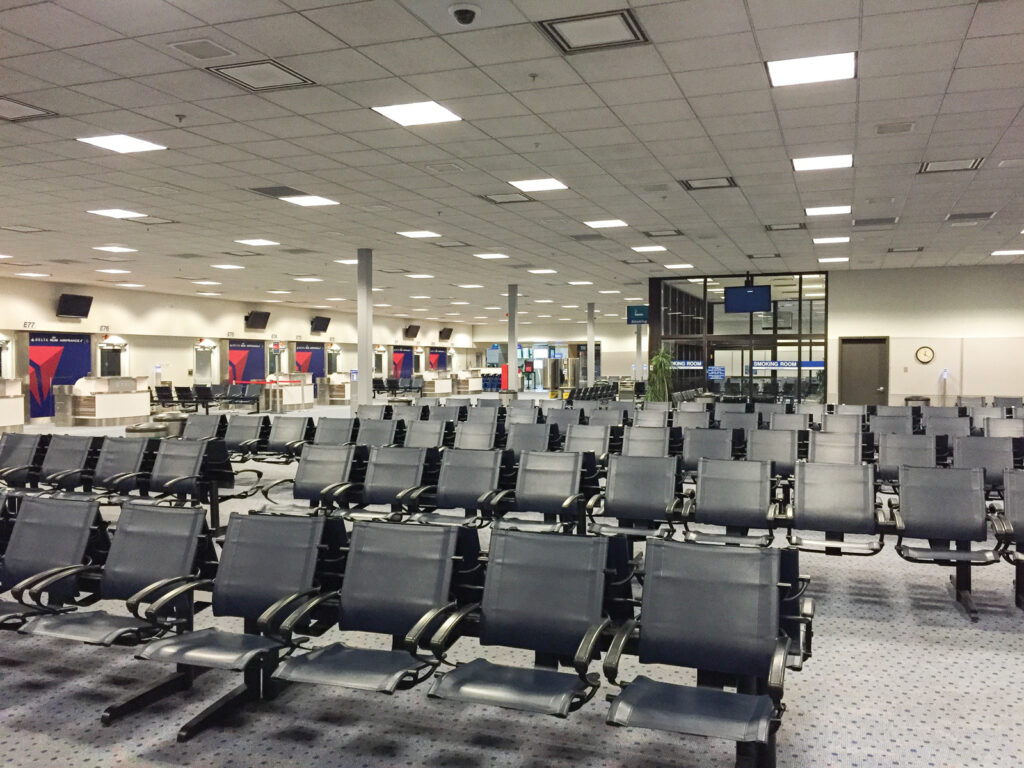
Photo credit: Famartin, CC BY-SA 4.0 <https://creativecommons.org/licenses/by-sa/4.0>, via Wikimedia Commons
Opposition to Detroit’s proposed airport cigar lounge has been loud and organized. The lounge, first mentioned at the airport authority’s July 2023 meeting, was not presented to the public as a potential business opportunity until more than a year later, giving it some time for some under-the-radar discussion. The airport officials have done their best to keep things quiet on the lounge, no doubt anticipating the outrage from the tobacco abolitionists.
The Detroit Wayne Oakland Tobacco Free Coalition bought billboards near the airport with the image of a child coughing, begging the public to “Stop the cigar lounge at DTW.”
An April oped in the local Detroit News, co-written by an agent from the American Heart Association, claimed that “Secondhand cigar smoke contains the same toxic chemicals that secondhand cigarette smoke does…” and insisted that “there is no proven economic benefit from cigar bars.”
The airport authority has hunkered down in the wake of the controversy after several smoking foes came forward at the authority’s July board meeting. Airport leadership contends in a statement given to local news that the idea for a lounge came “in response to the community and local businesses, especially as it relates to the international nature of the airport.”
Matt Morawski, director of communications at the Wayne County Airport Authority, said in an email, “We are in the early stages of the solicitation process.” He declined an interview request.
Wild Bill’s declined further requests for comments, shutting down communication shortly after a brief interview. Graycliff’s Garzaroli, who says his airport lounges performed well for the most part, is a cautionary tale for applicants for the DTW lounge: “You will have so much political nonsense,” he says. “I will never do business in an airport again.”