Midnight in Havana
This piece was published in the January/February 2015 issue of Cigar Snob.
Changes in U.S.-Cuba policy conjure up old Cold War images, but the island dictatorship’s authoritarian grip is tight as ever.
It’s midnight in Havana and I can’t find Jorge Luis García Pérez (or “Antúnez” as most people know him). I’m not exactly in great shape thanks to my American diet and general lack of discipline. And my skin doesn’t look like that of a young guy who’s spent a lifetime browning under the Cuban sun. I’ve never felt so conspicuous.
I’m also scared shitless. It’s my first time in Cuba. Being the yuma walking around a Cuban neighborhood in the middle of the night with a suitcase is one thing. It’s quite another when that suitcase is actually a care package for the man widely regarded as the communist island’s Mandela. He was only released from prison a couple of years before our meeting (after serving 17 years), which means visiting him is an easy way to brand myself an enemy of the revolution—even if I am only carrying clothes for his kid, along with medicine and a cell phone for him. All things that the Castro government has made it practically impossible for the peaceful activist to get his hands on without outside help.
A dark figure pops out onto the sidewalk. “¿Me estás buscando a mí?” Are you looking for me? Thank God.
For the next couple of hours, Antúnez gives me a rundown of life in Cuba from his vantage point (a unique one, to be sure). He lifts his shirt to expose a number of scars he says were left there by dogs that prison guards let loose on him for daring to oppose Castro’s government—especially after all that the revolution had done for blacks.
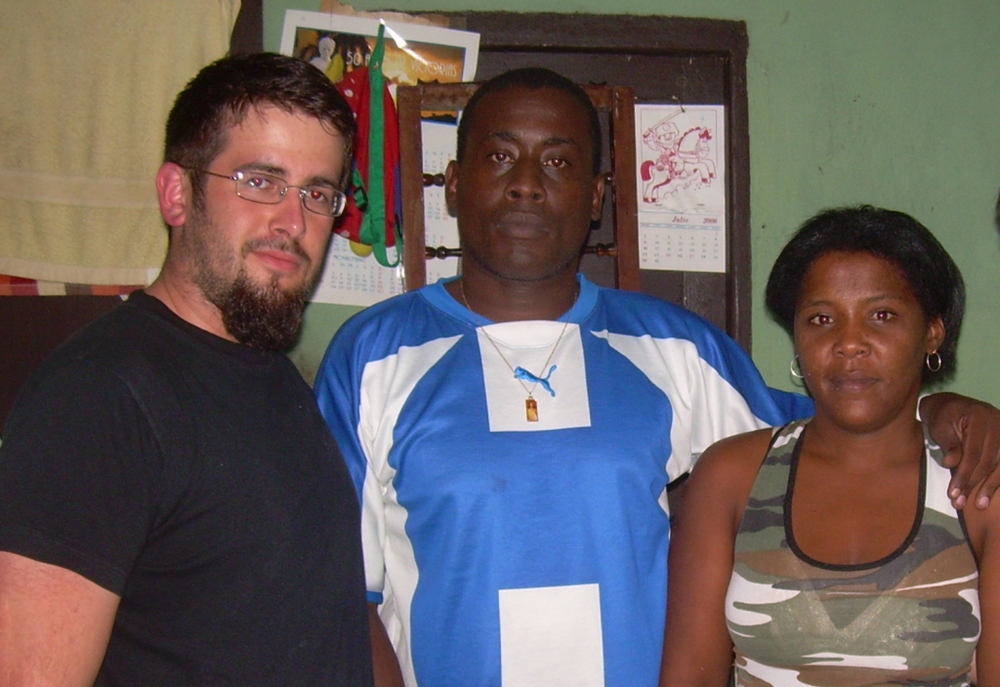
And when he’s asked about what he hopes Cuba might look like in the future, he launches into an entirely unplanned, Cubanized version of Martin Luther King’s I Have A Dream speech. We’re in a small, poorly lit room in a dark corner of Havana. There’s no audience and no microphone. I get chills anyway. We’re just days from Martin Luther King, Jr. Day, which makes it all the more surreal.
That was 2008, during my first trip to Cuba. After a few more trips, the Cuban government appeared to have put me on some kind of blacklist, as I was turned away at Havana’s airport upon arrival for what would be my final trip at the tail end of 2009. A little student activism, volunteer work, and meetings with journalists and opposition leaders were enough to land me (as well as some friends) on Cuban blacklists. I’ve even seen video of internal meetings in which regime officials refer to the youth empowerment organization I was part of as engaging in cyber terrorism.
Changes to U.S.-Cuba policy have a lot of people talking about Cuba in the past tense. Cold-War-this and 56-years-that. Images are conjured of missile crises and classic Chevys. But what’s Cuban life like now for the people who live there? And, what becomes of the people and projects that seek to change that reality for the better?
It’s not easy being freaky
On Dec. 17, 2014, Barack Obama announced changes to U.S. policy toward Cuba that would, among other things, allow travelers to Cuba to return with $100 worth of cigars. Naturally, American smoke shops were abuzz with rumors and speculation. When would we see Cuban cigars in our stores’ humidors? How do we get to Cuba to pick some up for ourselves? It seemed everyone was curious about just how far the limits had been pushed.
Cuban artist Tania Bruguera was, apparently, a little curious as well. On Dec. 31, just a couple of weeks after the announcement of the Cuban government’s “humanitarian” offer to release USAID contractor Alan Gross and 53 political prisoners, she began what has become perhaps her best-known performance. She announced that she’d be making her way to Havana’s Revolution Square (the iconic plaza that’s served as a venue for everything from the Castros’ marathon speeches to papal Masses to rock concerts) and setting up for a performance piece she calls “Tatlin’s Whisper #6.” The idea is pretty simple. There’s a podium and a microphone, and pretty much anybody can step up to express himself or herself for one minute. She’s done it once before, and there’s video online that shows some of Cuba’s best-known dissident bloggers taking their turns at the mic. It wasn’t about to happen a second time.
“They arrested her three times in three days,” said multimedia and event producer Diddier Santos. “The third time they had to jail her because every time she was released she would continue to insist on doing her work. Afterward, she kept demanding that people who were arrested for going to her performance be released. Those are the attitudes that will create a space and continue to push the boundaries.”
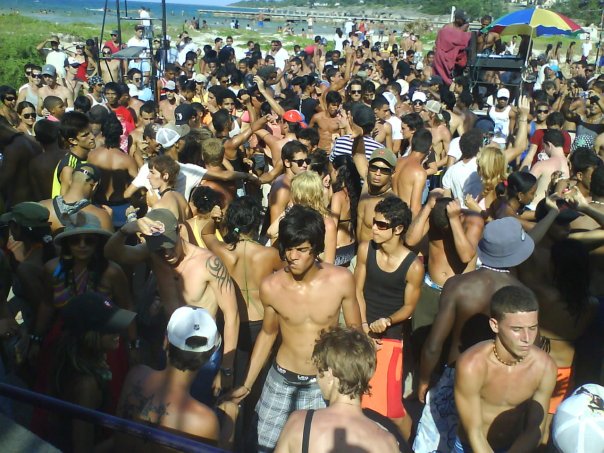
Diddier knows firsthand about the stifling effect that Cuba’s dictatorship has on creative types. As we sit across from each other at a Coral Gables bookstore café, he tells me about his work in the Cuban arts world. As a longtime member ofMatraka (an independent production group in Cuba) Diddier is one of the founding producers of Rotilla. Think of Rotilla as Cuba’s beachy, electronic equivalent of Burning Man or Lollapalooza.
“I started doing production work in 2005 in Cuba, organizing different music concerts,” said Diddier, taking a sip from his espresso. “We were doing that kind of work. In 2007, I met one of the members of Matraka, Adriel Monzón. He lived nearby, so we’d meet up and talk about art and film and do different projects at home. We started getting closer through that work.”
Diddier was soon working with Matraka on a project-to-project basis, starting with a documentary about Cuban prostitution. In 2008, Diddier was offered a role as the producer of Rotilla, which was starting to see significant growth.
“It was a good challenge for me. From then on, I also produced the Festival Puños Arriba, which is a rap festival in Cuba, along with about ten other events a year with Matraka.”
In Cuba, there are lots of independent production groups (calling them companies doesn’t fit since, technically, they don’t operate legally). But few achieve the success that Matraka did with Rotilla. The event was known all over the island, even garnering favorable coverage on state-run TV news.
As Diddier explains, “[The festival had] always been committed to promoting culture and creating spaces. It’s not for commercialization, but rather an umbrella for emerging art. The principal motive of Rotilla was to promote electronic music, which was censored at that time in Cuba because it came from Europe and was seen as an ideological diversion. We were pioneers in that space. We also did that with rap—creating spaces, supporting rappers on various projects.”
As Rotilla became more popular, it was increasingly seen as a threat by the Cuban government. Not only were they drawing huge crowds to see DJs at an event the government hadn’t created, but they were also offering a platform to acts like Los Aldeanos, a duo of (arguably) Cuba’s best and most outspoken rappers, Aldo and El Bi. Consider these lyrics from their song La Naranja Se Picó.
Yo sé que hay leyes, pero perdone.
No controlan la emigración
ustedes están alimentando tiburones.
Esto peor se pone y quieren obligarme a que concuerde
No pienso doblegarme a su Cosa Nostra verde
Es que no entienden lo que hacen.
Los cuerpos están aquí
pero las mentes a 90 millas continuan en trance.
Ahorita los cubanos empiezan a tatuarse
el mapa de Cuba en todo el cuerpo a ver si pueden escaparse.I know there are laws, but excuse me.
You’re not controlling emigration,
you’re feeding sharks.
Things only get worse and they want to force me to agree.
I don’t plan to bend to your olive green Cosa Nostra.
The people don’t know what they’re doing.
Their bodies are here,
but their minds are in a trance 90 miles away.
Soon, Cubans will start tattooing
a map of Cuba all over their bodies to see if they can escape.
Not exactly the kind of thing anyone expects the most durable dictatorship in the hemisphere to put up with.
“Literally, they stole [the festival] rather than censor it,” said Diddier. When Matraka refused to abide by the regime’s conditions for the event (namely government control of the set list), “they kept doing the event with the same structure. At first, they were even using our name, but we took some legal action and they at least backed down on that, renaming it Verano en Jibacoa(Summer in Jibacoa).”
Partly out of a desire to broaden the scope of their work, and partly (maybe mostly) out of necessity in the face of government censorship of their events, Matraka went about creating documentaries. One of those, titled Ni Rojo, Ni Verde, ¡Azul! (Not Red, Not Green, But Blue!), tells the story of the Cuban government’s Rotilla takeover.
You can watch Ni Rojo, Ni Verde, ¡AZUL! here. Turn on the closed captions if you don’t speak Spanish.
“Until [2011], the press praised us as one of the biggest independently run events. For our security, our logistics,” said Michel Matos in an interview for the documentary. “We have plenty of examples we can show of this. Today, the press goes silent when faced with the scandal of our claims. Second, it goes toVerano en Jibacoa and doesn’t bother to mention its predecessor. It’s as if it had been a novel idea [the government] came up with all of a sudden.”
For many young Cubans, the government takeover of Rotilla was a major encroachment. “They’ve taken away one more thing. Us freaky people don’t have rights in this country,” said one festival fan in Diddier’s documentary. Freaky is a commonly used term in Cuba referring to youth subculture. “This was one of the only spaces where people could come to be themselves without any concerns, and it doesn’t exist anymore.”
Donald Duck as ideological diversion
It’s noon on a Saturday in 2015 and I’m looking for Antúnez again, this time in broad daylight. I’m walking up and down the hallways of one of the most Cuban apartment buildings I’ve ever been to. Cuban music, Spanish-language news and telenovelas blare from inside each unit. I was told he’d be in there somewhere, but he’s not answering his phone.
A burly black dude doing his laundry in the communal, outdoor washer bro-hugs his very old, white, shirtless neighbor. It’s like Dr. King’s dream, but Cuban. And more sweaty.
Oh. And this is Miami.
I’m told to wait in a ground-level apartment right near where the bro-huggers are hanging out. A man even older-looking than the shirtless one outside sits at a dining table fiddling with the knobs of his radio. He doesn’t look like he’s listening for anything in particular. It just seems like he doesn’t have much else to do today.
“You know,” he tells me after introducing himself as Blaz, “I’ve been Antúnez’s right hand for years now.”
And that’s when it hits me. I know this man’s face. I’m flashing back to 2008, when I met Antúnez … and a much smaller, frail-looking old man to whom Antúnez had introduced me. I’d been struck by the juxtaposition. One big, one small, one young, one old, one black, one white. An odd couple brought together by a shared struggle.
Here Blaz and I were all these years later. Sharing coffee and gearing up for another interview. Some things really don’t change.
“In some ways, we have to contend with the way life is lived in the United States,” says Antúnez as we ride in my car to our interview. “Here, there’s a routine of working until 4 or 5 in the afternoon, then heading home. On Saturdays and Sundays, you rest. In Cuba, it’s not like that. We’re struggling 24 hours a day. And we need 24-hour support from people in the United States, because repression doesn’t take breaks.”
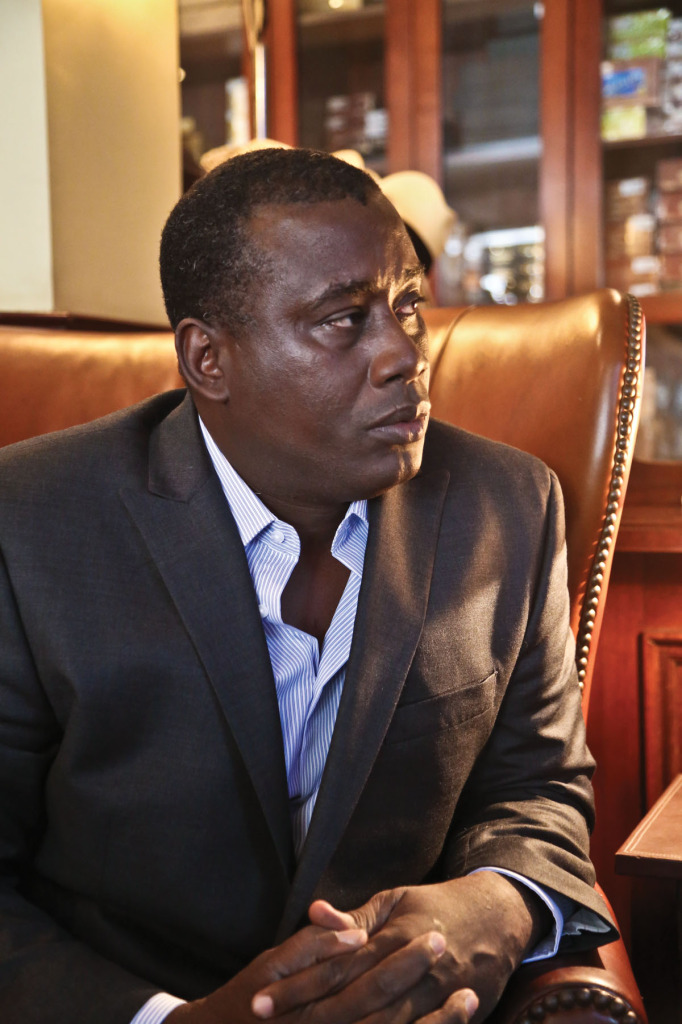
I’m trying to get as much out of Antúnez as I can. Luckily, I’m his ride home from this Little Havana cigar shop. When I first met him, we were in a run-down house and he was lifting his ratty t-shirt to show me the scars he has all over his body — mementos from 17 years of run-ins with dogs and guards in the Cuban gulag. Today, it’s a different story. He’s visiting Miami from Cuba and has about a month left in his trip. The leather cigar shop chair and the charcoal gray suit jacket he’s in are a radically different image, but the way he gets fired up about the evils of Cuba’s regime and his hope for the future tell me I’m talking to the very same guy.
“Cuban youth, unlike my generation, is harder to manipulate,” he says, pointing out that young people like Diddier and the kids who flocked to his festival lived a different Cuban youth. When he was a kid, Antúnez said, he couldn’t watchDonald Duck cartoons because the regime saw them as an ideological diversion. He didn’t see Superman until he got out of prison in 2007. And he read the classics, like the work of 19th century French poet and novelist Victor Hugo, in prison. Cuban libraries on the outside were packed with Marxist books. He calls Cuba’s political prison system his university.
Travel to Cuba and you’ll see that sort of thing is still going on. State-run TV is crammed with pirated American programming, to be sure. But Cubans are generally presented with American entertainment that paints life to the north as brutal, shallow and depraved. Think Law & Order: Special Victims Unit and Grey’s Anatomy, but not Band of Brothers and Everybody Loves Raymond.
“But Cuban youth today have more information. Their parents can’t lie to them. And even their parents — who have struggled financially, were sent to labor camps and had to fight in Angola — are tired,” he said. “These young people don’t identify with the regime because they were never really formed by that regime’s ideas.”
Still, Antúnez knows that today’s regime is no less despotic, no less bent on controlling life on the island than the one that had him locked up for close to two decades for speaking his mind. Last year, about a month after he returned to Cuba from a trip abroad, he was assaulted at his home in the rural town of Placetas by government thugs who he says took a number of his few possessions, including his television and personal photographs that had nothing to do with his activism.
“The so-called Revolution has lost the most important thing: enthusiasm. A revolution without enthusiasm can’t exist. You can’t fool all of the people all of the time. Whenever an opponent of the government dies in a hunger strike and the government calls them mercenaries, the regime discredits itself. When you discredit every one of your opponents, you really only discredit yourself. This is a regime that doesn’t recognize any of the merit of any of its adversaries. Even those who diverge just moderately from the party line are ‘mercenaries.’ The regime has helped us that way, with their brutality and with their stupidity. They’ve been stupid. They’ve gone too far. When you ransack a house and take the computers, the documents, and that sort of thing, it’s unjustifiable, but it’s understandable. That’s what dictators do. But when you go into a house and take a TV, house keys, family photos, and all without a warrant, you’re the one who looks bad. When they do all this with impunity, they help us, because they’re breaking the law. Not just international law, but even their own law.”
Indeed, the Cuban government continues to put its intolerance of dissent on display, although the tactics have changed somewhat. Long-term political sentences like the one Antúnez served have become less common, giving way to targeted, strategic detentions that tend not to be quite so damaging to the global image of a regime that depends on tourism dollars to sustain itself.
When the regime has pursued long-term sentences, international pressure has won out. In 2008, it jailed Gorki Aguila, frontman of the underground punk rock group Porno Para Ricardo, for pre-criminal social dangerousness (a crime as ridiculous as it sounds), which carries a maximum sentence of four years in prison. International media attention led to the government’s settling for a public disorder charge. He had to pay a $30 fine.
That leaves him free — at least until the next arrest — to sing lyrics like these, from the song El Comandante.
El comandante quiere que yo trabaje
pagándome un salario miserable.
El comandante quiere que yo le aplauda
después de hablar su mierda delirante.
¡No, comandante!
No comas tanta pinga, comandante.The comandante wants me to work
while he pays me a miserable salary.
The comandante wants me to applaud him
after he talks all his delirious shit.
No, comandante!
Don’t eat so much dick, comandante.
In 2014 alone, there were more than 8,000 political detentions in Cuba. The vast majority were short term. Planning to attend a controversial concert on the other end of the island? Detained. Got a meeting to plan a protest? We have a few questions for you. You’re coming with us. These are the sorts of detentions they used against bloggers and activists who had planned to participate in Tania Bruguera’s performance piece. By the time the police are legally obligated to let you go because they have nothing to charge you with, they’ve met their objective of keeping you from your work. What’s more, the international press doesn’t see much news in a few hours’ worth of jail time, so next to nobody even finds out what’s happened.
We cross the street from the cigar shop to Máximo Gómez domino park (yes, that exists in Miami). Despite his having been in South Florida for a while now, it’s Antúnez’s first time in Little Havana and he wants to make sure he checks this place out before he leaves town for Tampa and Washington, D.C., where he’ll be speaking to Cuban exiles and lawmakers about his struggle back home.
If there’s a place in the world outside of Cuba where Antúnez will be recognized, it’s this domino park. We meander through the domino tables where old Cuban men are too focused on their next moves to look up and notice him. As we leave the small park, Antúnez mentions how much he’s looking forward to showing people back in Cuba the photos and videos of this place. He says the regime has convinced Cubans that life in America is cold, lonely, and antisocial. His friends and neighbors will be surprised to see a park in Miami where strangers come together to play dominos … just like in Cuba.
Just then, a man near the park gate nods in agreement and says, “Hey. You’re from Placetas, right?” Antúnez confirms it. “Are you Antúnez?”
A wide smile comes over the man’s face and he proudly shakes Antúnez’s hand. He’s been in the States since his parents sent him here in Operation Pedro Pan in the ‘60s. As we walk away from the park, the fan rushes to tell his buddies what they’d missed while their heads were buried in dominoes.
Things are going to get better
Diddier hasn’t moved to the U.S. permanently, either. He’s still living in Cuba. Just taking long trips to the States, making sure not to exceed the two-year limit that the Cuban government set on travel abroad when it started allowing more citizens to venture away from the island (one of the few real concessions it’s made in the last decade or so).
“I think that, in the long term, [the recent policy changes announced by Obama] will be good for civil society. In the long term,” Diddier said. He pauses a moment as he thinks about what the changes might mean more immediately. “In the short and medium term, I can see how in art or other areas it might be helpful. It might be easier to get support from the U.S. government. I hope that the Cuban government doesn’t set some kind of double standard, where it’s OK for them to benefit financially from openings and not all right for others.”
Antúnez, as you might guess, has his mind pretty well made up on what the new policy means for change in Cuba. He recalls an exchange he had in a Miami shopping center. A woman recognized his face and asked whether he thought things would get better on the island as a result.
“I told her, ‘Yes. They’re getting better for the oppressive regime.’ They’ll have more resources with which to oppress the people,” he said. He leaves no room for confusion about his hard-line position. “There will be increased Internet access for people at government institutions and less for those who oppose them,” he said. “There will be development, but it will be unequal. The beatings, the incarcerations, and the invasions of our homes will continue, because the regime will consider itself to have been vindicated morally and economically.”
“I think the United States is breaking from more than 50 years of a policy of solidarity (with Cuban civil society),” he continued.
For all their differences on U.S. policy, both men seem to agree on at least these key points.
First, the core of the Cuban system of government has got to change. Like the broader Cuban community on and off the island, Antúnez and Diddier have different ideas about how we get there. But they both hope to see a Cuba free from the shackles of communism. Until that’s changed, there will be plenty of hunger for something new in Cuba.
“There are things that need to be rescued, things that need to be replaced,” Diddier said, “and things that need to be eliminated completely from Cuba.”
Second, change in Cuba is primarily the problem of Cubans. It’s not something that can be imported or imposed. In fact, depending too heavily on other governments to help can prove costly.
“If (after Obama) there’s a new U.S. government with another agenda, maybe an embassy opens today and closes tomorrow,” said Diddier. “It’ll be a political game. But that’ll be their problem. We, as a civil society, need to focus on capitalizing on any opportunities we might have.”
Third, Cuban civil society is better off with friends in the United States. And it’s not just about the embargo. For example, Antúnez says it used to be the case that he and others in Cuban civil society could head to the U.S. Interest Section in Havana and present evidence identifying Cuban government operatives who participated in beatings and other repressive activities. That was enough to keep those individuals from being able to obtain permission to travel to the States. That created a strong disincentive for people to participate in so-calledactos de repudio, or acts of repudiation, which are government-organized mobs put together to harass dissidents like Antúnez as they walk down the street or sit in their homes.
Under Obama, he says, his and others’ claims have fallen on deaf ears, and Cubans are more easily tempted to throw stones (often literally) when they know that it won’t hurt their chances of getting out of the country later on.
Finally, they both agree that change is on the way. When and how it arrives is another matter, but they agree that something’s got to (and will) give.
“I won’t leave (Cuba) or be silent because I have faith that change is coming,” Antúnez said. “Maybe I would leave if these were different times, with different possibilities and if I had faith in something else. I’m not interested in being a martyr. I don’t want to die. But I believe that this is my duty and I see a light of liberty at the end of the tunnel.”
We hear over and over that Cuba is “frozen in time.” But to suggest that Cuba’s been unchanged since 1959 misses the point. The island has been falling to pieces for more than half a century. Even people who travel frequently to see family will tell you that they notice the decay getting worse from trip to trip. From the paint peeling off of practically every structure in Havana to the antique cars that Cubans see as necessary evils while tourists (especially Americans) admire them nostalgically from their rented Kias and Peugeots, the country is blanketed in evidence that it’s gone too long under a system that’s effective only insofar as it’s managed to perpetuate itself. That is to say, the only thing that’s “frozen” in Cuba is the Castro regime. The rest of it has been slowly melting away.
Someday, we’ll all be able to travel to Cuba and exchange freely with everyone from our cab drivers to rappers to activists and bloggers—even independent tobacconists and cigar makers. For now, though, we’re still dealing with the same Castros, and they’ve made it pretty clear they’re not OK with that sort of thing. Here’s hoping that light at the end of Antúnez’s tunnel gets brighter in a hurry.
Nicolás Antonio Jiménez is the senior editor of Cigar Snob Magazine.
Email him at [email protected] or connect with him onTwitter or Instagram.