American Made
As the lines between geographically-defined rum styles blur, can U.S. distillers carve out an identity for themselves?
Rum is the most malleable of spirits. It’s a liquid shape-shifter that can vary by region and culture, from the full-bodied double-retort pot still rums of Jamaica to the grassy agricoles of Martinique to the crisper, drier rums of Puerto Rico.
Add to the family another style, one just now getting more attention: American-style rum, crafted by distillers across North America who’ve been exploring different profiles for the past decade or two.
But does an American-style rum exist? If so, what defines it?
“I’m curious about American-style rum in that I’m not certain what it is yet,” says Tim Russell, the owner of Maggie’s Farm Rum in Pittsburgh. “I’m not certain American rum knows what American rum is yet.”
American rum has been feeling its way forward for a while now. Phil Prichard, who launched Prichard’s Rum in 1997, was among the first who set out to make and market an American-style rum. “We spend almost every waking hour attempting to define the American rum, versus what we refer to as the tropical types of rum,” Prichard told me in 2004. ”We stake our claim on producing an authentic American rum.” His early advertising featured the “Spirit of 1776,” the iconic 1891 painting of three bedraggled Revolutionary musicians marching beneath a tattered flag. Not a beach umbrella in sight.
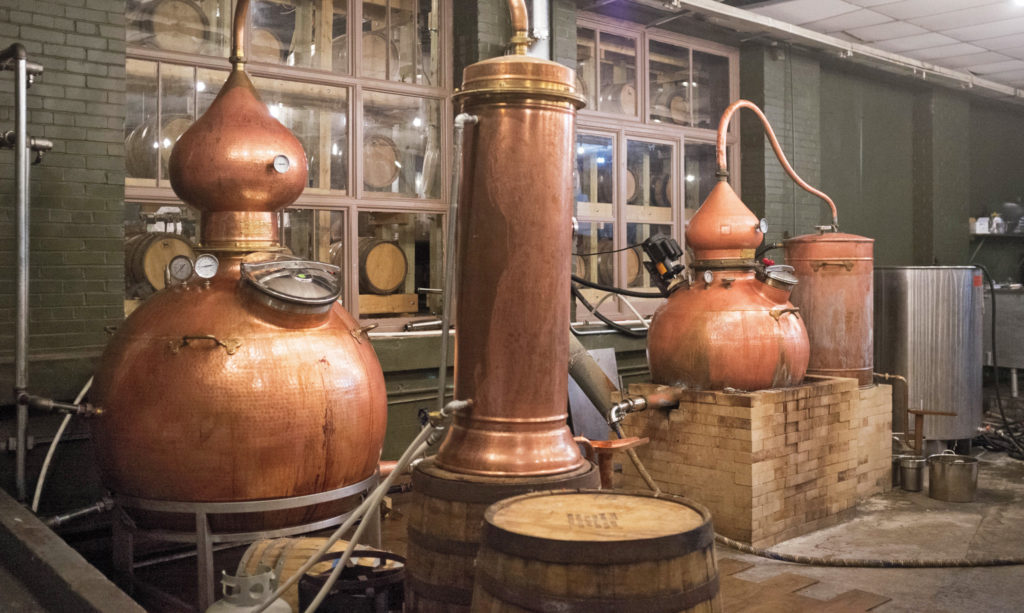
Prichard was the second rum distiller to open in the craft-spirits revival, and he’s been joined by many others since. (This past spring, I counted at least 217 American distillers now producing rum.) And rums made in America have been marked not only by impressive volumes, but by a wide variety of styles.
All rums made on American soil may be called American rums; on that, everyone seems to agree. But how much that matters is subject to debate. Indeed, rums have been moving away from simple place-based categories (Barbados, Jamaican, Puerto Rican), in part because changes in recent decades have muddied once distinct variations in styles, and changes in production have trended toward a certain homogenization.
As a replacement for place-based rum descriptors, there’s been a quiet push toward a classification based on production methods. Most notable is the “Gargano classification” created by Luca Gargano, a rum importer based in Italy. His categories range from “pure single rum” (made entirely in a pot still) to “industrial rum” made entirely in a modern column still, with subcategories for rums made with blends of the two, as well as for fresh-pressed sugarcane rums. This approach acknowledges that geographic styles are no longer as well defined as they once were and that the source material often comes from global commodity markets, making locally based sugarcane varietals less of a factor in flavor.
“Caribbean rum should now be called ‘Caribbean-style rum’ because the islands now don’t grow their sugar anymore,” says Erik Vonk, founder and head of Richland Rum in Georgia. “The sugar is no longer truly originated in the Caribbean and doesn’t have Caribbean terroir. The distilleries are still located there, and that’s it.” For his part, Vonk doesn’t emphasize American rum in marketing his product so much as “single estate rum” — he stakes a claim on being the only American producer who grows his own sugarcane specifically to make rum.
Is there an identifiable flavor profile of rums made in North America? “American rum doesn’t come from the same cultural experience and tradition of the Caribbean, so it does have a different flavor and taste,” says Maggie Campbell, CEO and distiller at Privateer Rum in Massachusetts. Some of that difference may come not just from tradition and attitude, but also from latitude. Northern production, Campbell says, may contribute to a different flavor profile, thanks to both different fermenting and aging conditions. “Cooler climate fermentation and cooler climate aging can lead to a higher purity of a flavor, with a bit more delicacy and a bit more definition,” she says. “Warmer climate rums are going to have softer flavor definition — more mingled, ethereal flavors that blend together.”
Rums made by Montanya Distillers in Colorado are distilled and aged at 8,900 feet. The impacts are wide-ranging, including a lower boiling point that has an impact on distillation and the local climatic conditions that affect barrel aging. “Temperatures in mountainous climates fluctuate daily and allow the flavors in the barrel to meld differently than they do at sea level,” says owner Karen Hoskin.
Elgin Distilling in Arizona, founded in 2014, works with elevation, aridity and heat as part of their rum production process, resulting in their award-winning Regalo de Vida Gran Rum. “Our ultimate goal is to produce world-recognizable rum that is clearly Arizona, clearly American and most importantly unique,” says co-founder Gary Ellam.
Elevation, climate and water can each have an impact on production, resulting in flavor variations that can range from subtle to immense. But within that range, one bit of loose consensus is often heard in discussions of the flavor profile of “American-style rum.” Simply put, it’s that these often have more of a whiskey profile than traditional West Indian rum. It’s less sweet tasting, and carries over more of the oak from the barrels.
“Style-wise, they tend to be a little bit drier,” says Campbell at Privateer. “Americans are used to a lot of oak, and the big bold flavors of bourbon are common. I also see a lot of people getting into rum from whiskey backgrounds, myself included.”
Most Caribbean rums also age in ex-bourbon or rye casks, and so, what’s the difference? Beside climate, there’s intent. While it’s not uncommon for West Indian rum makers to add a small amount of sugar to smooth the rough edges and add mouthfeel, many United States craft rum producers are quick to publicly eschew additives and stress the relative dryness of their product.
“I often refer to ours as ‘a whiskey drinker’s rum,’” says Nathan Greenawalt of Old Sugar Distillery in Madison, WI. “Ours is heavily oaked and unsweetened [and has] got all the wonderful flavors from oak and caramelization that people like in whiskey, without the graininess.” Greenawalt says he designed a rum around what he liked in a spirit, even if he had trouble finding examples before he started production. “I don’t care for spirits that are too buttery and silky — they taste like glycerin to me,” he says, noting that he finds this in some Barbados rums. “If I had to give a description of American rum, it would be oaky and unsweetened and a little rough around the edges, like ours.”
Erik Vonk at Richland says that his rum tends to come off the still with a sweeter-tasting profile naturally, as it’s made from cane syrup rather than molasses. Molasses has more unconverted sugars, which he says results in “more fruity notes, more elements typical for agricultural rums.” Yet he strives to tame this with his choice of cooperage. “What may give it an Americanized character is by our using new American white oak barrels, similar to what bourbon makers do. That makes a big difference and can make a rum that is closer in flavor to a bourbon.”
While American rum may be emerging as the missing link between sweeter, Caribbean-style rums and the dry, tannic bourbons loved by many Americans, it’s still evolving and finding its place amid the melting pot of craft rum styles cropping up almost daily — from the new agricole rums being made from Louisiana sugarcane, to the high-ester, dunder-inflected rums increasingly arriving on the market (from Roulaison Distilling Co. and Wigle Whiskey, among others).
“Like most everything American, I believe that the style takes the best from all of the world and melds it into an indefinable, but yet immediately recognizable profile,” says Ellam from Elgin Distilling. “It is our belief that we are honoring tradition, yet moving past that with innovations in fermentation, distillation, aging, blending and bottling.”
“We’ve never marketed our product directly as ‘American rum,’” says Tim Russell at Maggie’s Farm. “But if someone tells me they don’t like rum, it’s usually an opportunity to tell them why ours is different from whatever they got sick off of in college or some situation like that.”
Russell suggests that innovation and change may be among the more notable qualities of American rum. “Taking innovative steps on rum while trying to maintain tradition is important to me,” he says. “I suppose that’s what would make us an American rum.”
———————————
Wayne Curtis is a freelancer whose work you can find in Imbibe, The Atlantis, The American Scholar and Bon Appétit, to name just a few publications that have benefitted from his deep knowledge of booze (he knows and writes about other things, too). Wayne is also the author of the book “And a Bottle of Rum: A History of the New World in Ten Cocktails”
This piece was published in Distiller (distilling.com) in January 2019.