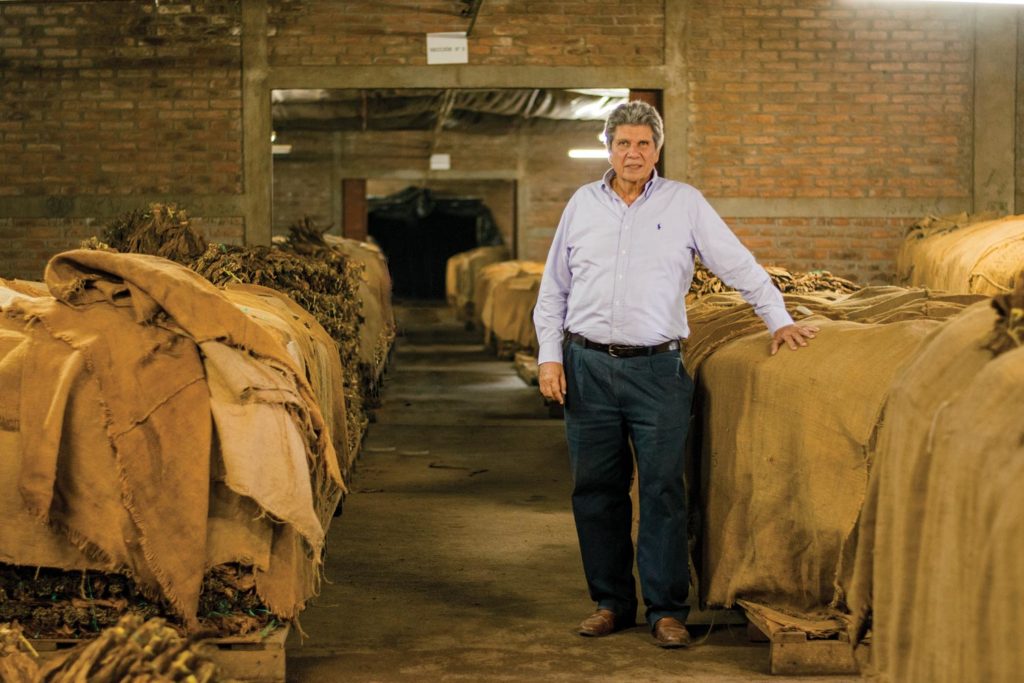
Aganorsa
Eduardo Fernández took a pizza fortune and built a world-class tobacco business. Now he’s ready to take his cigars to the next level.
Photography by Ricardo Acuña
She looks tired and disinterested, unwilling to come over and pose for a photo. Still, we want the shot, so we have a young employee at the factory drag her over to a wall, where we figure the uniform pattern of the bricks will juxtapose nicely with all the curves and wrinkles of her saggy body. She’s not exactly the most beautiful bitch you’ve ever seen, but she’s Aganorsa’s bitch and they’re proud to show her off.
So much so, in fact, that the Aganorsa bulldog has a cigar named for her: Guardian of the Farm. She’s the first one to greet you when you drive through the gates, even if unenthusiastically.
Then again, maybe she’s just tired from all the guard-dogging. After all, she’s got a lot on her plate keeping watch over Estelí’s sleeping giant.
The secret is still in the dough
“We’ve been labeled the sleeping giant,” said Aganorsa founder Eduardo Fernández after a tour of his factory and some of his farms. “In the sense that we have this great leaf, great capacity to produce it, yet we don’t make that many cigars and we’re not well known. But that’s going to start changing.”
Especially if you’re just a casual smoker, you can be forgiven for not knowing who Eduardo is. For starters, while his cigar business is vertically integrated, its names are a little confusing. You see, Aganorsa is an agriculture conglomerate. Among many other things, it’s one of the largest growers of premium cigar tobacco in Nicaragua. Eduardo sells most of his harvests, then produces cigars at his Estelí factory, Tabacos Valle de Jalapa, S.A., (or TABSA for short) and at his Miami factory, Tabacalera Tropical (which he bought in 2002 from cigar legend Pedro Martín, who continued to work as a blender and tobacco broker for Aganorsa after the sale). Some of those cigars are made for clients who run some very successful boutique brands, while others end up in his own cigar portfolio under the Casa Fernandez and JFR family of brands.
Yes, it’s a little confusing, which is part of why the company is moving to streamline the branding for its farming and manufacturing under the “Aganorsa” banner. Like Eduardo said, things are going to start changing.
Still, even absent changes, this is a celebrated cigar maker. Case in point, this magazine’s list of the Top 25 Cigars of 2017 included three cigars made at the company’s factories: Casa Fernandez Miami Aniversario Serie 2015 (No. 2), Sindicato Miami Edition (No. 14) and San Isidro by HVC (No. 15). The first two are made at Tabacalera Tropical, and the last is made at Tabacos Valle de Jalapa.
The story of Eduardo’s journey into tobacco and cigars is unlike that of just about any other cigar maker. While so many other Cuban-born cigar men cite long family histories on tobacco farms or extensive careers that started in Havana factories, Eduardo, who arrived in the U.S. at 10 years old and eventually settled with his parents in Ft. Lauderdale, attended a boarding school in Connecticut and later graduated from the Wharton School of Business.
“I was right next to the Connecticut valley,” he said of his boarding school days. “So often I would see the buses of tobacco pickers — mostly Puerto Ricans — going to pick tobacco. Little did I know at that time — I was 14 to 17 years old — that that would be my life’s calling down the road.”
After graduation from Wharton, Eduardo ended up in New York to pursue a career in international banking. He lived there 10 years before being transferred to Miami. Throughout, Eduardo knew he had an entrepreneurial itch that needed scratching. He, along with his brother Leopoldo, finally got to scratch when they saw an opportunity in Spain.
“When I lived in New York, I used to eat a lot of pizza because there was almost a pizza on every corner. You would always eat a slice. Spain was and still is a very traditional, excellent food experience, but fast food was just appearing. So we seized the opportunity. I felt like Hernán Cortés. I burned my ships and sold my house. I lived in Pinecrest, which was an up and coming area [in Miami] with a very good school district. I sold my car and went to open a pizzeria in Madrid.”
To say that Eduardo “opened a pizzeria” is an understatement. His and his brother’s company, Telepizza, introduced the concept of the pizza delivery chain to Spain in 1987. Within 10 years, the company had opened 300 stores. They went public in 1996, becoming the first restaurant company on the Madrid Stock Exchange. By 1999, shares of Telepizza were up 990 percent from their initial offering.
“We were a huge success,” he said. “Domino’s Pizza, we beat the hell out of them. They all came thinking big and that they could conquer us, and they were just not able to. Still, the business exists. I learned marketing there. We used to work 17 hours a day because everything happened very quickly.”
Eduardo sold stock in Telepizza and went into an early retirement, settling back into the financial world and later moving to London. When he got tired of reading stock prices, he contemplated whether this was how he wanted to spend the rest of his days.
“I was 48. I had always liked farming. From early on, when I was kid, I always cut grass and planted trees and I had a nursery. I even looked at that business early on in Davie, outside of Ft. Lauderdale.”
As you might have figured, though, his plans for a new career in agriculture became much bigger than South Florida plant nurseries. The idea of a future in farming had been swirling in his head for a while. Ever the long-term planner, he’d visited Central America to scope things out well before Telepizza even went public. Costa Rica wasn’t for him. Most places were too far from the ocean, he says, and the Costa Rican people are, by and large, too “aloof” for his liking.
But Nicaragua… Even in Estelí, you’re never too long of a drive away from the sea, and the people made him feel a bit more at home. What’s more, Nicaraguans needed help in rebuilding their country, so they were receptive to the idea of foreign investors. As he made his way around the country to get the lay of the land and scope out opportunities, he met Nestor Plasencia.
“He said that tobacco was great business. He introduced me [to the idea that] it’s very Cubanesque and that the soils of Nicaragua were first class. That to me was very important.”
When the time finally came for Eduardo to move forward setting up shop in Nicaragua, he knew he would need more expertise behind the new venture than he could bring to the table. Rather than look for talent in Nicaragua, he went to “the source”: Cuba. Eduardo sought talent specifically from Vuelta Abajo, the famed Cuban tobacco growing region. He also found Cubans in Nicaragua who had been working on contracts through the Cuban government. Among them was Jacinto Iglesias, who has now been the general manager for Aganorsa’s farming and production for 10 years.
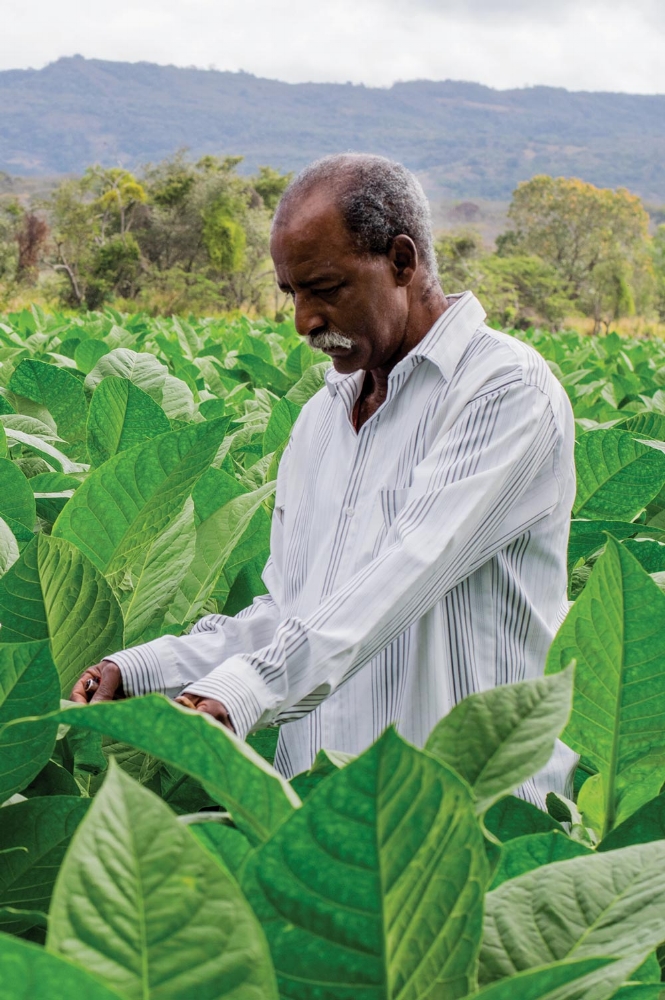
“I got to Nicaragua in 1997 and I started working with another company on the island of Ometepe,” said Jacinto, who is an engineer specializing in resistance to disease. “And, coincidentally, in 1998, I meet Eduardo. I’ve been working for Eduardo since January 1999. We started in Jalapa planting covered tobacco.”
In 1999, though, the Cuban government forced Jacinto and other tobacco men to return to Cuba rather than stay in Nicaragua. So he and others found ways off the island to return to Nicaragua and Aganorsa. By the end of 2001, Jacinto was back in the saddle in Estelí, this time totally disassociated from the Cuban government.
“Nicaragua has the resources and it has the human capital to deal with [the normal problems of a farming operation]. In Cuba, it’s a problem of allotment and bureaucracy,” said Jacinto. “If I’m a farmer and I need to use a fertilizer or some product like that now, there might not be product available immediately. Maybe they’ll get it to me in two or three days. But by the time it gets to me, the crop is destroyed. The conditions are right for Nicaraguan tobacco to be the best in the world. Tobacco is a short-cycle crop. You plant it and about 45 days later, you’re harvesting. If you don’t give the plant what it needs in those 45 days, it’s not going to come out right.”
After learning the hard way that it’s best to own the farm yourself rather than contracting farmers to grow for you exclusively, Eduardo began to invest heavily in farmland, and his team of Cuban experts went to work ramping up production of the tobacco that would later become the foundation of his company’s identity. Other growers in the region took notice, wondering who was growing all this tobacco on land worked by Cubans. The cigar industry behaves a bit like a high school cafeteria sometimes, and as word spread of these farms and the fact that nobody in Estelí was buying all that tobacco, some even speculated that it was being sold to the Cuban government.
“We used to have a saying,” said Eduardo, recalling his pizza days in Spain. “The secret is in the dough.”
These days, the secret is in Aganorsa’s Criollo 98 and Corojo 99. In particular, Aganorsa’s Corojo 99 is among the most recognizable aromas in the cigar industry. Its signature sweetness is unforgettable and its aroma cuts through a room full of smokers so you always know when someone’s lit up around you.
But when you do smell it, it’s not necessarily burning in a Casa Fernandez cigar.
Tested in the fighting arena
It seems like any time you walk through a really great cigar factory, you notice something different about the way its owners have chosen to do things. Some quirk or nuance that lets you know the people who built the place didn’t just follow a paint-by-numbers guide to making cigars.
In the case of Casa Fernández, it didn’t take me long to find that quirk. As is the case in most every factory in Nicaragua and the Dominican Republic, cigars are made by pairs of rollers. The first, the buncher, prepares the filler and binder to go into a mold, where it sits a while — usually several hours — before being opened back up by the buncher’s partner, who applies the wrapper.
The bunchers at Casa Fernández, I realized, went through an extra step. It’s quick, but it’s there. Every time binder is applied to the filler, that bunch is placed on a digital scale to ensure it’s the right weight before it goes into the mold. At most other factories, cigars are weighed in bundles of 25 or so. If your bundle weighs what it should, there’s always a chance that one cigar’s a little overfilled, another a little underfilled. Not here. Aganorsa weighs every single cigar. It’s a system that was put in place by Cuban master and Aganorsa master blender Arsenio Ramos, who blended by weight rather than leaves and fractions of leaves. And they weigh each stogie more than once. Cigars are weighed at least twice: once by the buncher and once by quality control.
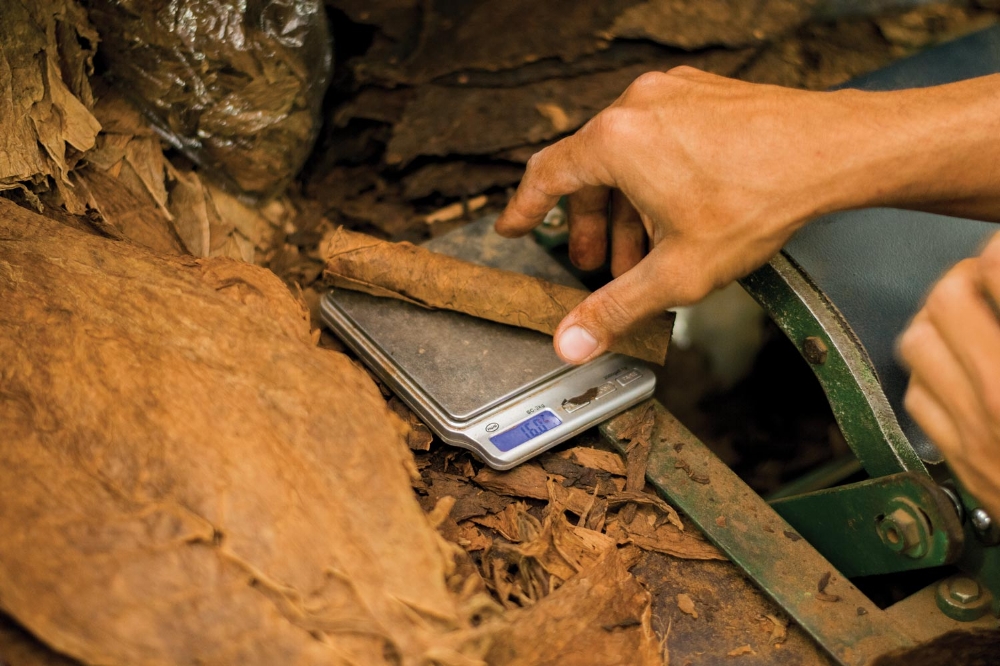
A select few are weighed three times.
“We pay attention to the weight. We have one customer, Dion Giolito… When that cigar goes to his store, I imagine him always at the counter weighing the cigars,” said Eduardo.
Dion was in the room for the interview. He nodded his head as if to say, “You know me too well.”
“And he gives me a call as well [if a cigar’s weight is off],” Eduardo continued. “Which is good! He’s the final control. To us, weight is extremely important and I’m extremely sensitive to it.”
Dion has a special stake in the weight of the cigars. As the founder of Illusione Cigars, he’s relied on Aganorsa tobacco to help set his product apart from everything else on the market. And it’s worked. Illusione is one of the most highly regarded boutique brands in the business. It’s the name behind Fume D’Amour, Rothchildes, and many more. On this trip to Estelí, Dion was — among other things — checking in on production of OneOff, a revival of a brand that had a cult following in the early 2000s and was recently acquired by Illusione.
“It’s a real special relationship that a brand like mine has with Aganorsa and Eduardo,” Dion said. “Eduardo has really extended the luxury of letting me root through his entire business. He’s really entrusted a person like me to be able to go look at pilones and tobacco. That’s 90 percent of what I do here — just making sure that the tobacco, from the quality standpoint that I look for, makes its way to the galera floor. Having that ability and access to be able to put my hands on any and all of his tobaccos is a rare opportunity for a person like me in this business.”
Dion isn’t alone in having access to that tobacco. Eduardo has managed to put together a group of clients who all — despite not having their own factories — are recognized in the cigar world for having real credibility on cigars and tobacco. Also on the factory floor during my visit was Nick Melillo, who launched Foundation Cigars in 2015.
“Having lived here in Nicaragua since 2003 and not being on the sales and distribution side, it was very important for me to express my love for Nicaragua. So I really wanted to make a blend that was a hundred percent Nicaraguan and a brand that really expressed the heart and soul of what Nicaragua was to me, but also the Nicaraguan people,” said Nick, who had previously worked for Drew Estate as a blender and tobacco purchaser. “I had purchased a lot of tobacco over the years from Aganorsa, and so I was very familiar with the tobacco. I knew in order to make a hundred percent Nicaraguan cigar, the key to that was going to be the wrapper. Having a Nicaraguan wrapper is not an easy thing because of the sun exposure and the land. Wrappers are usually coming from Ecuador, from Mexico, from other parts of the world, and I knew that the team here at TABSA and Aganorsa had been working on growing wrapper for many, many years. For me, it was the best wrapper for El Güegüense, the Wise Man, that I was going to launch. So that was crucial.”
Credible, familiar faces like Dion’s and Nick’s — as well as Eduardo’s son Max, who plays a major role in managing the day to day operations of the factory — give the factory a feeling of familial collaboration. These are all people who not only respect one another, but enjoy each other’s company.
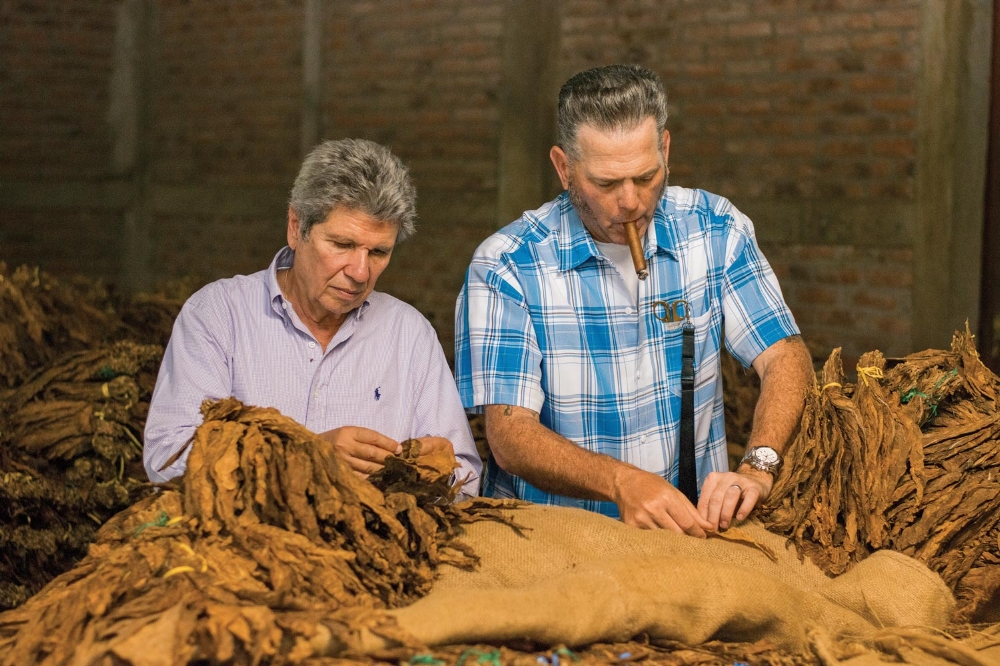
Other Aganorsa clients include Viaje, Warped and HVC, all well respected brands releasing acclaimed cigars. As we sat around a long table to enjoy a roasted whole hog (naturally, an Aganorsa pig; remember that they do more than tobacco) with Eduardo, some of his team and a number of his private label clients (including a small delegation from a factory in Moscow), it was clear that he is looking for partners he can treat like family. He’s observed that these people can not only be trusted with access, but also that they fit in with a seat at the table… whether for a blending session or a Cuban feast.
Side note: This might have been the best Cuban-style lechón I’ve ever had.
“People prove themselves in the fighting arena, which is the marketplace,” said Eduardo. “With their vision, we make the best cigar in their profile. Some take that opportunity and take it to another level with their vision. To me that’s a great sense of pride and accomplishment. Because I’m not the only guy in the world who knows how to do something well. Other people bring a lot to the table.
“I love that people take our leaf and do something with their own vision. I take pleasure in people making our leaf even more beautiful, even more expressive. That, to me, is an accolade.”
The business of tradition
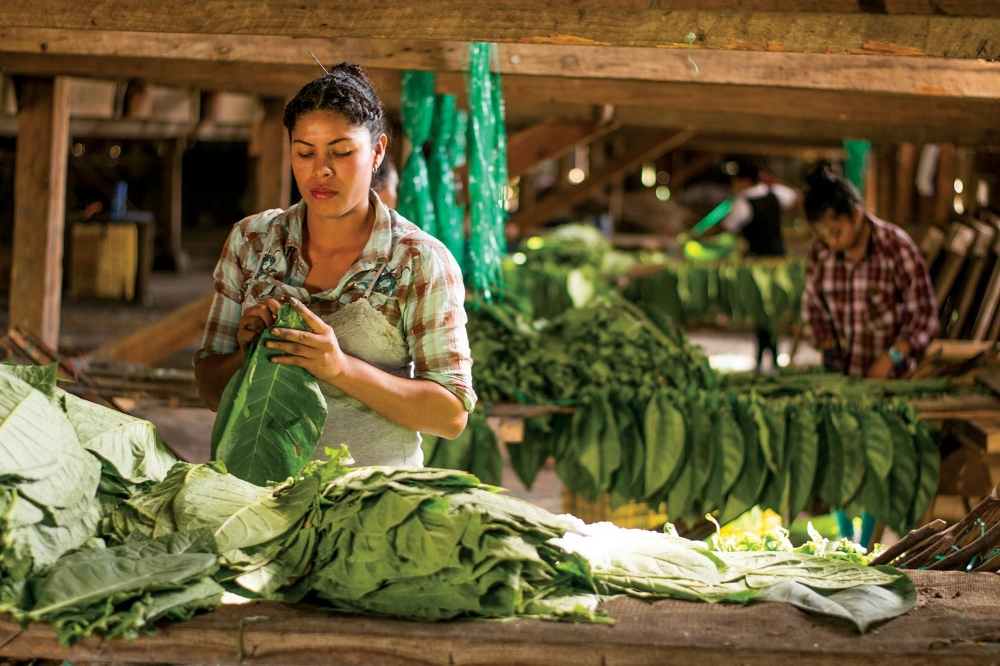
Moving forward, Aganorsa is poised to tell its story and earn even more accolades for cigars that bear its own name. The tobacco, as Eduardo puts it, has its own identity.
“We sell Aganorsa leaf. We don’t sell tobacco leaf,” he said. “It has a personality, it has a name, it has a backing to it, a culture behind it, a vision. To us it’s extremely important.”
Whatever you call it, Aganorsa is churning out a whole lot of it. All together, the company’s 1,000-plus acres of Nicaraguan farm land in Jalapa, Condega and Estelí produce 13,000 bales of tobacco. To give you a sense of scale, that’s enough for them to sell off about 85 percent of their harvest and still have enough for their own factory to make 20,000 cigars every day.
“We’re not one of the huge factories. We’re boutique-ish,” Eduardo said. “We aim to do things right, not just produce massive numbers of cigars. Our trajectory is to keep growing, but always have quality in mind. [José Orlando] Padrón taught me that … It’s not just about producing cigars. It’s producing great cigars year in year out.”
“Eduardo is a good friend of my family’s. He had a good friendship with my father, and many of the people who work with him are also good friends of ours. It’s a good thing he’s here in Nicaragua,” said Jorge Padrón of Padrón Cigars.
As the company works to build its name recognition among smokers, Terence Reilly, who recently joined the Aganorsa team on the sales and marketing side after a long tenure at Quesada Cigars, will play a pivotal role.
“We have a great selection, but there’s that signature flavor that permeates all of them to varying degrees,” Terence said. “So that’s what I think is our focus, is to express that flavor profile in different ways. We’re for a certain smoker that enjoys Nicaraguan tobacco with a clear Cuban influence. If you’re into other profiles, that’s great, but you’re probably not going to be into what we’re doing.”
Pedro Martín died in 2010 and, when I visited Nicaragua for this story, Arsenio Ramos was ill in Cuba. By now, Eduardo has soaked up enough knowledge to walk, talk and act like a genuine tobacco man himself.
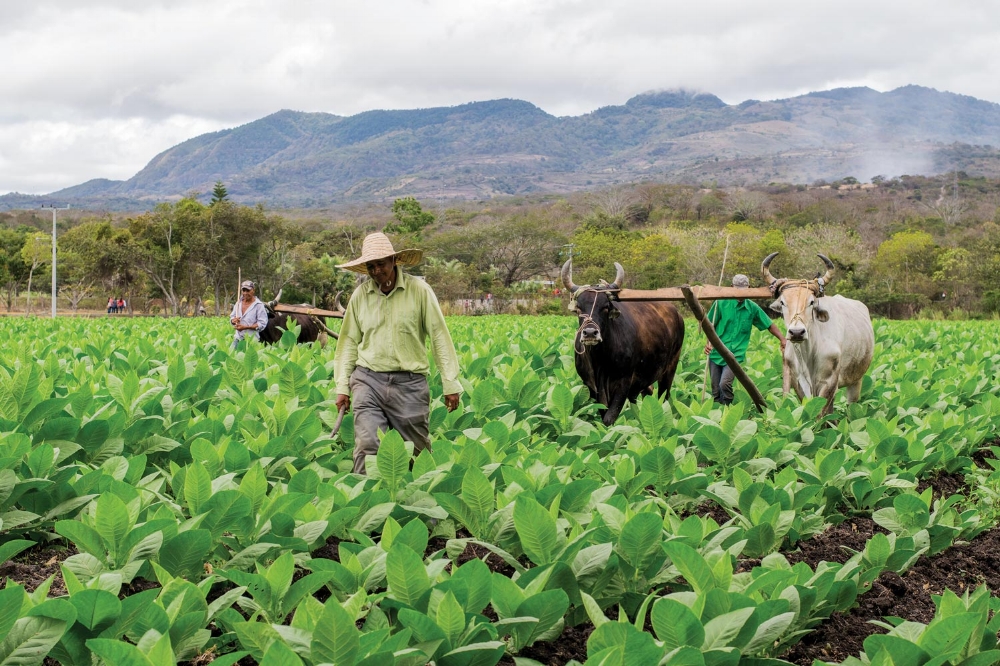
“Nobody’s born with knowledge. You have to acquire it, in tobacco especially. Tobacco teaches you because every year is different. Things behave differently, people behave differently, so you have to adjust and that knowledge takes time to acquire. Maybe five or six years ago, things started really coming together.”
As Eduardo moves into a new chapter for Aganorsa tobacco, he can look confidently back on the plunge he took in the late ‘90s and know that it paid off. And that might be the most incredible thing about this company that showed up relatively recently considering it’s so damn big in the premium cigar tobacco space. Eduardo left pizza delivery and international finance for a much quieter life in a much quieter place.
And despite his having caught lightning in a bottle all over again, Eduardo still talks about it as the quiet retreat of a business he was looking for in his early retirement.
“My vision grew to do things the old-fashioned way,” he said. “I don’t experiment with new tobacco or new flavors. [The idea is] to do what was done for hundreds of years in Cuba. If I can do that, I’m the happiest man in the world.”